.jpg)


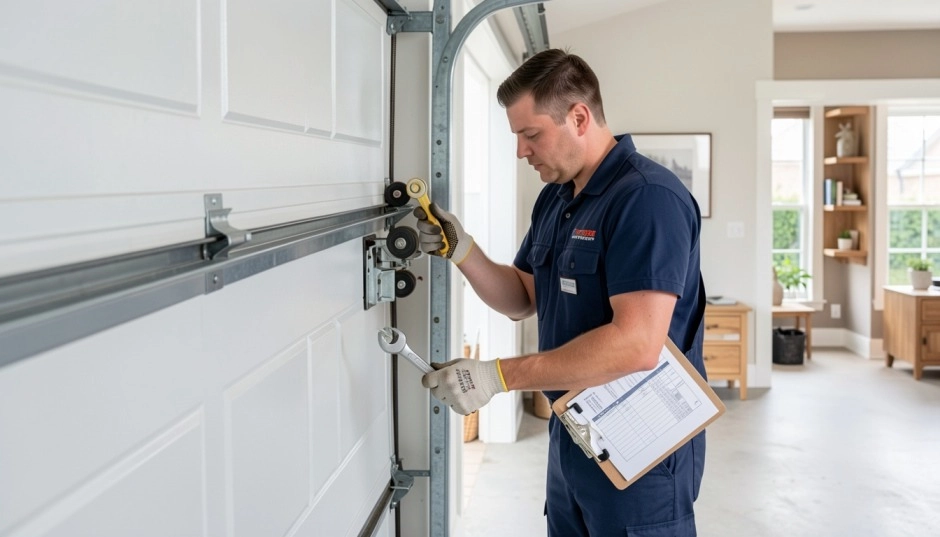
A garage door tune-up in the Denver metro runs $100 to $240, and most Front Range homeowners should book one every year, not every other year, because Colorado's temperature swings and hail put more stress on springs and tracks than a mild climate does.
How Much Does a Garage Door Tune-Up Cost in Denver?
A standard tune-up breaks down like this:
| Service | Colorado price range |
|---|---|
| Labor (technician time) | $75 to $100 |
| Lubrication and cleaning | $10 to $20 |
| Sensor check and alignment | $25 to $50 |
| Spring repair or adjustment | $50 to $150 |
| Roller or hinge replacement | $15 to $30 per part |
A company that also drives out to Colorado Springs, Aurora, or Fort Collins adds a trip fee of $20 to $40 outside its core service area. Ask for the total before booking.
What Does a Garage Door Tune-Up Include?
A technician inspects, adjusts, and lubricates every moving part of the door and opener. A standard visit covers:
- Balance check. The door is disconnected from the opener and tested for even lift, which reduces strain on the motor.
- Lubrication. Rollers, hinges, and tracks get a silicone-based lubricant, not household oil, which attracts grit.
- Opener motor inspection. The technician checks the gears and listens for strain.
- Reversal sensor test. Federal law has required an automatic reversal system on residential openers since 1993; a tune-up confirms it still works.
- Lock and hardware check. Bolts, cables, and the door lock get tightened and inspected for wear.
How Colorado's Climate Changes the Maintenance Schedule
Denver sees around 300 days of sun a year, and the UV load at 5,280 feet fades and dries out rubber seals and painted steel panels faster than at sea level. Front Range hail season runs from spring through September, and a single storm can dent panels or knock a poorly seated door off its track. A 40-degree swing between a sunny afternoon and a clear, cold night is routine along the Front Range in spring and fall, and that swing contracts and expands the steel door and the torsion springs every day. Springs calibrated for a mild climate lose tension faster under that cycle, which is why an annual tune-up, not a once-every-two-years visit, is the standard Kenna recommends to Colorado sellers and buyers.
How Frequently Should a Colorado Garage Door Be Serviced?
Once a year is the baseline for a Front Range home. A door used more than four times a day, or a home in a hail-prone corridor like Aurora, Parker, or Colorado Springs, benefits from a check every 8 to 10 months. Watch for these signs between visits:
- Grinding or screeching when the door moves, which points to dry rollers or debris in the track.
- Slower operation than normal, a common sign of a spring losing tension.
- The door won't stay open or closed, which points to the opener, the springs, or misaligned sensors.
- Visible rust on springs or hinges, common where mag chloride from winter roads splashes into an attached garage.
- The door hangs unevenly or won't close flush with the slab.
Why the Springs Are the One Part You Never Touch Yourself
Torsion springs store enough tension to cause a serious injury if they release under load. Balancing, adjusting, or replacing them is a job for a trained technician with the right winding bars and clamps. Everything else on the checklist above, lubrication, cleaning the track, testing the sensors, is a reasonable DIY task between professional visits. A full walkthrough of what a technician checks line by line is in this garage door tune-up guide.
How Expansive Soil Affects Garage Door Alignment in Colorado
A large share of Front Range soil contains bentonite clay, which swells when it absorbs water and shrinks as it dries. That movement can shift a garage slab or the door frame by a fraction of an inch a year, enough to throw off track alignment and cause a door to bind on one side. If a technician traces a recurring misalignment back to the slab rather than the hardware, that is worth a mention to a structural engineer or foundation specialist, not just another tune-up.
Do You Need a Permit for Garage Door Work in Colorado?
Routine tune-ups, spring replacement, and swapping in a same-size door do not require a permit in Denver or most Front Range cities. A permit is required when the work changes the size of the opening or touches the structural header above it. Every city sets its own rule, so confirm with the local building department, Denver's Community Planning and Development office for Denver addresses, before starting structural work.
HOA and Metro District Rules on Garage Doors
A tune-up itself never needs HOA sign-off, but replacing a door with a different color or panel style does. Most Front Range HOAs and metro districts require architectural review committee approval before a door style or finish changes, so check the covenants before ordering a new door, not after it is installed. The Denver HOA rules and fees guide covers what a typical review process asks for.
Does a Garage Door Tune-Up Help With a Home Inspection?
Yes. Colorado home inspectors test the reversal sensors and the spring balance on every listing, and a poorly maintained door is one of the more common items that shows up on an inspection report during the Inspection Objection Deadline window. A $100 to $240 tune-up before listing is cheap compared to a buyer's request for a credit after the inspector flags the door. The full list of what inspectors check is in this Colorado garage door inspection guide.
Tune-Up Cost vs. Replacement Cost
A tune-up costs $100 to $240. A new insulated steel garage door installed in the Denver metro runs $1,200 to $3,500 depending on size, insulation, and window inserts. National remodeling cost-value data consistently ranks a garage door replacement among the highest-return exterior projects, recovering close to its full cost at resale. If a technician finds the springs, opener, and panels are sound, a tune-up is the right move. If the door is more than 20 years old, uninsulated, and out of step with what every other house on the block has, replacement pays for itself faster.
Costs Across the Front Range
Pricing is close to flat across the metro, with small differences tied to drive time and demand:
- Denver and Aurora: $100 to $240 for a standard tune-up, the most competitive market with the most technicians.
- Lakewood and Littleton: similar pricing to Denver, within $10 to $15.
- Colorado Springs: $110 to $250, slightly higher outside peak season demand.
- Fort Collins: $110 to $260, with fewer companies covering the northern Front Range.
Should You Upgrade to an Insulated or Impact-Rated Door?
An insulated door keeps an attached garage 10 to 20 degrees closer to the house temperature in winter, which matters for a garage that shares a wall with a finished basement or laundry room. Impact-rated panels hold up better against hail than a standard steel skin and matter most on homes in Aurora, Parker, and the eastern Colorado Springs corridor, where hail claims run highest. Either upgrade is a conversation for a licensed installer, not a tune-up technician, and it is worth pricing against your homeowner's insurance deductible before deciding.
Where to go next
- Search every home for sale in Colorado
- Preparing and adding value before selling in Colorado
- Garage door inspection red flags for Colorado sellers
- How to repair garage door rust in Colorado
- The Colorado home seller's guide
- Meet the Kenna Real Estate Group agents
Talk to the Kenna Real Estate Group
The Kenna Real Estate Group helps Front Range sellers fix the small maintenance items, garage doors included, that slow down a closing, and helps buyers read an inspection report without panic. Call or text 303-955-4220. A live person answers. Not a robot, not a phone tree. Ready to look at homes? Search every home for sale in Colorado.
Homes for sale that match this post
- Homes with 2 Car Garage in Denver
- HOA Rules and Fees Guide in Denver
- Homes with Finished Basement in Denver
- All homes for sale in Denver
Guides
Questions about any home in Colorado? Call or text 303-955-4220. A live person answers.