.jpg)


Home inspectors do not skim past the garage. Because a garage door is a heavy, tension-loaded system, Colorado inspectors treat it as a major checkpoint, and a failing grade there is one of the more common items buyers use to request a credit during the Inspection Objection Deadline window. Here are the five garage door red flags inspectors look for, and how to clear each one before they arrive.
Red Flag 1: The Reversal Sensor System Fails
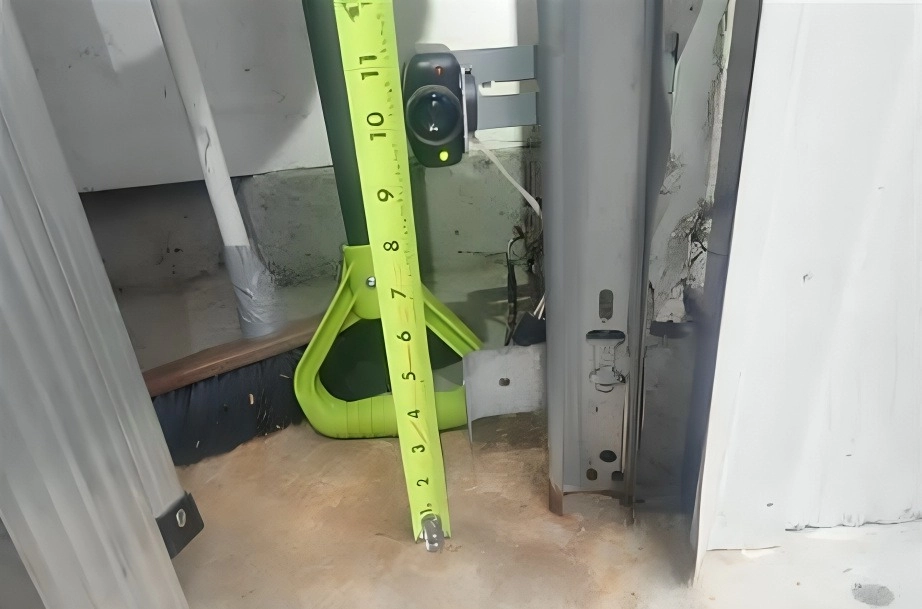
Federal law has required an automatic reversal system on residential garage door openers since 1993, and testing it is a non-negotiable part of every Colorado inspection. Inspectors run two tests. First, they close the door and wave a foot or tool past the photo-eye sensors near the floor; the door must reverse instantly. Second, the block test: they set a 2x4 flat on the concrete floor in the door's path, and the motor's sensitivity switch must detect the resistance and reverse the door within two seconds.
How to fix it before the inspector arrives: If the photo-eye test fails, check alignment, the sensors on each side of the track need to face each other directly, with both LEDs glowing solid rather than flickering. If the block test fails, the down-force limit switch on the motor housing needs adjustment, a small turn of the force dial does it in most cases.
Red Flag 2: Unbalanced or Failing Torsion Springs
Torsion springs carry the weight of the door, and inspectors are trained to spot fatigue and imbalance. To test, the inspector disengages the opener, lifts the door to the halfway point, and lets go. A balanced door stays exactly where it's left. One that slams down or flies up has springs that are out of balance or near the end of their life. Rust, corrosion, or gaps between coils are also flagged on sight.
How to fix it: Run the manual balance test yourself before listing. An imbalance is not a reason to panic, a professional rebalance, the kind routinely handled by technicians at Prime Garage Door Repair, takes under an hour and clears the item from the report. Never adjust torsion springs yourself; the tension stored in them can cause a fatal injury. A service receipt from a licensed technician is exactly the documentation a buyer's agent wants to see.
Red Flag 3: DIY Wiring and Improper Opener Installation
Inspectors spot DIY electrical work quickly because it's rarely done to code. A garage door opener plugged into a standard household extension cord is a fire hazard and an automatic red flag; the opener needs a grounded, ceiling-mounted receptacle. Flimsy, perforated hanging straps that shake when the motor runs get cited as a structural deficiency.
How to fix it: Look at your ceiling. If the opener runs off an extension cord, hire a licensed electrician to add a proper outlet. Secure the motor with heavy-duty angle iron, and staple loose wiring neatly along the ceiling and walls instead of leaving it to dangle.
Red Flag 4: Structural Damage and Poor Weatherstripping
Inspectors look at the panels for dents that compromise the folding hinges and rotting wood on timber doors. Then they close the door, turn off the lights, and check for daylight around the edges. Any light means the seal is broken, and in a market where every buyer is watching utility costs, a poorly sealed door reads as an energy problem.
How to fix it: Replace the bottom astragal seal, a $30 fix that takes about 20 minutes and makes a real difference in weather resistance. Locally dented steel panels can frequently be swapped for a matching replacement panel rather than a whole new door.
Red Flag 5: Frayed Lifting Cables
The lifting cables do the heavy work while the springs store the energy, and a snapped cable crashes the door down unevenly, damaging the track system. Inspectors check the cables where they wind around the drums at the top corners, looking for fraying, rust, or a single broken strand in the braided wire, any one of which is a major red flag.
How to fix it: Use a flashlight to check the full length of both cables, especially the bottom attachment point, where moisture and mag chloride from winter roads collect. If you see fraying, don't touch the cables; the tension on them is extreme. Have a professional replace both together, since replacing only one leaves the door unbalanced.
Beyond the Inspection: How the Garage Door Affects the Appraisal
Passing the inspection is only half the job. The buyer's lender sends an appraiser to confirm fair market value, and a low appraisal can unwind a deal even after the inspection clears. The garage door plays into two parts of that review:
- Curb appeal. The door makes up 30% to 40% of a home's front facade in a typical elevation. National remodeling cost-value data consistently ranks new garage doors among the highest-return exterior projects, close to recovering their full cost at resale. A fresh coat of exterior-grade paint or replacing cracked decorative window inserts moves the needle without a full replacement.
- Functional obsolescence. An appraiser notes a heavy, uninsulated, decades-old door as functional obsolescence when every other house on the block has a modern, insulated door. That's a value drag independent of whether the door still works.
The Colorado Inspection Objection Deadline
The Colorado Contract to Buy and Sell Real Estate sets an Inspection Objection Deadline, a negotiated date, commonly 7 to 10 days after acceptance, by which the buyer must raise any inspection issues in writing. A garage door red flag discovered inside that window gives the buyer standing to request a credit, a repair, or in some cases to walk. Clearing the five items above before that clock starts running keeps the negotiation on your terms, not theirs.
The Seller's Pre-Inspection Garage Checklist
Run this a week before the inspector arrives:
- Sound check. Operate the door and listen. A loud door implies poor maintenance. Apply a silicone-based lubricant to hinges, rollers, and springs; skip standard household oil, which attracts dirt and gums up the tracks.
- Roller upgrade. Old plastic rollers without bearings rattle and drag. Sealed nylon rollers are an inexpensive swap that makes the door run smoothly and quietly.
- Track cleaning. Wipe the inside of the metal tracks with a damp cloth and confirm they're plumb and securely fastened to the wall brackets.
- Light bulb test. Inspectors note burned-out bulbs. Use LED bulbs made for garage door openers; standard LEDs can interfere with the opener's remote frequency.
- Remote handover. Gather all remotes and the exterior keypad code and leave them with the other home manuals. An inspector who can't test the door marks it "unable to test," which just forces a second visit.
Do Colorado Sellers Have to Disclose a Known Garage Door Problem?
Colorado's seller disclosure form asks directly about garage door openers and their condition. A known issue, a spring near the end of its life, a reversal sensor that fails intermittently, needs to be disclosed even if the buyer's inspector doesn't catch it. Fixing the problem before listing is almost always cheaper than disclosing it and negotiating a credit later.
Where to go next
- Search every home for sale in Colorado
- Preparing and adding value before selling
- The Colorado home seller's guide
- Garage door tune-up cost in Colorado
- The water damage a home inspection won't find
- Meet the Kenna Real Estate Group agents
Talk to the Kenna Real Estate Group
The Kenna Real Estate Group walks Front Range sellers through pre-listing prep, garage door included, and helps buyers read an inspection report line by line before the Inspection Objection Deadline runs out. Call or text 303-955-4220. A live person answers. Not a robot, not a phone tree. Ready to look? Search every home for sale in Colorado.
Homes for sale that match this post
Guides
Questions about any home in Colorado? Call or text 303-955-4220. A live person answers.