New - 15 Mins Ago
$799,900
Active
5
Beds
4
Baths
3407
Sqft
0.1389
Acres
8673 Long Beach Ter, Colorado Springs, CO 80908
MLS#: 1866909
.jpg)


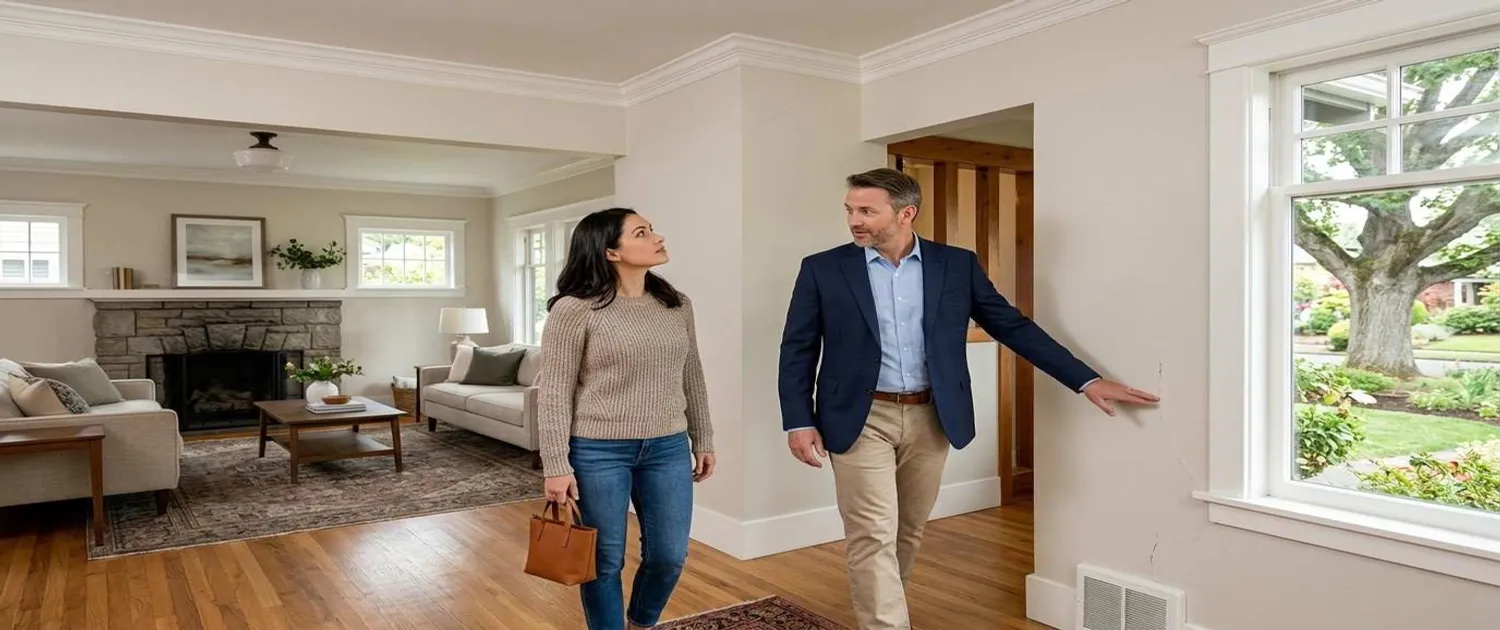
Seven structural problems show up again and again in Colorado home inspections: foundation movement on expansive clay soil, cracks that keep growing, sloped floors, hail-damaged roofs, ice dams, failed sewer lines, and radon above 4.0 pCi/L. Each one has a Colorado cause, a Colorado price tag, and a fixed window in the Colorado purchase contract when a buyer gets to act on it.
This guide lists the seven, what each one costs to fix on the Front Range, and what the Inspection Objection in the Colorado Contract to Buy and Sell lets you do about it. Real estate agents do not diagnose structure. They spot the sign, then bring in a home inspector and, when the sign is serious, a licensed structural engineer.
Most of the Denver metro, Colorado Springs and northern Colorado sits on bentonite clay. The Colorado Geological Survey calls it expansive or swelling soil. It swells when wet and shrinks when dry, and a footing on it moves up in a wet spring and down in a dry August.
Colorado Revised Statutes 6-6.5-101 requires the builder of a new home to give the buyer the soils report and the Colorado Geological Survey summary on swelling soil at least 14 days before closing. On a resale, nobody hands you that report. You ask for it, or you order a soils opinion from an engineer.
Hairline drywall cracks at door and window corners appear in most Colorado homes within the first three winters; 15% indoor humidity in January dries out framing and tape. Those are cosmetic. The cracks that call for an engineer are:
Our post on whether a foundation crack means a Denver-area home has a structural problem walks through crack types with photos.
Movement shows before cracks do. Look for a garage slab lifted above the foundation wall, a basement slab that has risen and pinched the bottom of the stairs, interior walls that no longer touch the ceiling, and brick separated from window trim. Douglas County homes built between 1985 and 2005 had basement slabs poured on clay; newer homes there use a structural wood floor over a crawl space instead.
Repair in Colorado means piers. Helical piers are screwed down to stable soil and the foundation is lifted onto them: $1,500 to $3,000 per pier, 8 to 15 piers per job, so budget $15,000 to $40,000. A transferable lifetime warranty from the pier contractor is standard. Read what to know before buying a home that needs helical piers before you write an offer on one.
Put a marble on the floor in each room. A slope of 1 inch across 20 feet is the line Colorado structural engineers use: less than that in a pre-1950 home is settlement that finished long ago, more than that in any home is active movement or a cut joist. A floor that bounces is a span problem in the crawl space, not a foundation problem, and costs $2,000 to $8,000 to sister joists or add a beam and posts.
Basement finishing is the hidden cause. Owners of 1950s and 1960s ranch homes in Denver, Lakewood and Arvada removed posts to open up a rec room. Denver, Jefferson County and Arapahoe County publish building permits online; check for the finish permit.
Hail season along the Front Range runs from spring through September, with the worst storms in June and July. A roof that looks fine from the street can have 60 bruised shingles and a claim window that closed two years ago.
Replacement on a 2,000 sq ft Front Range home runs $12,000 to $25,000 for asphalt and $30,000 and up for stone-coated steel or concrete tile.
Ice dams form when attic heat melts snow on the upper roof and the meltwater refreezes at the cold eave, then backs up under the shingles and into the wall. On the plains it takes a heavy snow week; in Evergreen, Conifer, Bailey, Nederland and the foothill edges of Golden and Boulder it happens every winter on a thin attic.
What to look for in July: brown stains on the ceiling below the eave, rusted nail heads in the attic sheathing, and attic insulation shallower than 12 inches. The fix is air sealing plus insulation at $2,500 to $6,000, which Xcel Energy rebates in part. A gutter heat cable is a bandage, not a repair.
A sewer scope is a camera run from the house cleanout to the city main, $150 to $300, and it is the best money a Colorado buyer spends. Denver, Englewood, Littleton, Arvada, Wheat Ridge and Lakewood have thousands of homes on clay tile or Orangeburg (tar-paper) pipe from the 1920s through the 1960s, and cottonwood roots find every joint. The line belongs to the owner all the way to the main, including the part under the street.
Replacement runs $8,000 to $15,000 in the yard and $15,000 to $30,000 when the street has to be cut and repaired under a city permit. A scope that shows roots, bellies (low spots holding water) or a collapsed section is a standard inspection objection, and Denver sellers expect it.
Every Colorado county is in EPA Zone 1, the highest radon potential, and about half of Colorado homes test above the EPA action level of 4.0 pCi/L. Since 2023, Colorado law requires sellers to give buyers a radon disclosure, the state radon brochure, and any past test results. Test anyway: a 48-hour continuous monitor during inspection costs $125 to $200.
Mitigation is a sealed sump and a fan-driven vent pipe, $1,200 to $2,500 in the Denver metro, and it drops most homes under 2.0 pCi/L. It is a routine seller credit, not a reason to walk. Our guide to radon in the Denver home purchase covers the timing.
West of C-470, in Boulder County's mountain zone, or on the grassland edge of Douglas County, the structural questions change. Jefferson, Boulder and Douglas counties enforce wildland-urban interface rules on new work: Class A roofing, ember-resistant vents, non-combustible siding within 5 feet of grade, and 30 feet of defensible space. A resale is not required to have any of it, so ask and price the gap.
Colorado insurers score every address for wildfire, and a high score means a non-renewal or a premium above $5,000 a year. Read how to check the wildfire score before you decide, and get the quote in the first week of the inspection period.
| Problem | How it shows | Front Range repair cost | Who to call |
|---|---|---|---|
| Foundation movement | Slab heave, doors out of square, brick separation | $15,000 to $40,000 (piers) | Structural engineer, pier contractor |
| Wall cracks over 1/4 inch | Horizontal or stair-step cracks in basement | $400 to $800 engineer letter; $5,000 to $20,000 wall repair | Structural engineer |
| Sloped floors | 1 inch drop over 20 feet | $2,000 to $8,000 (beams, posts) | Engineer, framing contractor |
| Hail-damaged roof | Bruised shingles, granule loss, dented vents | $12,000 to $25,000 (asphalt) | Licensed roofer, insurer |
| Ice dams | Eave stains, thin attic insulation | $2,500 to $6,000 (air seal, insulate) | Insulation contractor |
| Failed sewer line | Roots, bellies, Orangeburg on scope | $8,000 to $30,000 | Licensed sewer contractor |
| Radon over 4.0 pCi/L | 48-hour test | $1,200 to $2,500 (mitigation) | Certified radon mitigator |
Colorado does not license home inspectors. Pick one certified by ASHI or InterNACHI who carries errors-and-omissions insurance. A general inspection on a Denver metro home costs $450 to $700.
A home inspector reports what he sees. A Colorado-licensed structural engineer tells you why it happened and what it costs to fix, for $400 to $800 per site visit and stamped letter. Order one when the inspector writes "recommend further evaluation" next to anything in the foundation section. An owner's representative firm such as Askgbatista manages that engineering review and the repair bids for out-of-state buyers.
The Colorado Contract to Buy and Sell Real Estate, the form approved by the Colorado Real Estate Commission, gives the buyer three dated rights. Use all of them.
In the Denver metro the inspection period is 7 to 10 days. Book the inspection, sewer scope, radon monitor and roofer for the first three days so an engineer still fits before the objection deadline. The Denver home buyer verification checklist puts every one of those orders on one page, and the guide to making an offer on a Colorado home explains how the deadlines are set.
The Seller's Property Disclosure asks the seller to state known structural problems, past foundation repairs, soil reports, water intrusion, roof claims and radon results. It is a statement of what the seller knows, not a warranty. Read it on day one, then spend your inspection money on what it does not say.
The Kenna Real Estate Group at Keller Williams DTC writes inspection objections on Front Range homes every week. We schedule the sewer scope, radon test and roofer for you, bring in a structural engineer when the report calls for one, and negotiate the credit or the repair before the resolution deadline. Call or text 303-955-4220. A live person answers. Not a robot, not a phone tree. Start with the map and search every home for sale in Colorado.
Questions about any home in Colorado? Call or text 303-955-4220. A live person answers.
Hairline drywall cracks are normal on expansive bentonite clay and in Colorado's dry winters. A foundation crack wider than 1/4 inch, a horizontal basement-wall crack, or a stair-step crack through brick needs a licensed structural engineer's letter, which costs $400 to $800 on the Front Range.
Front Range pier contractors charge $1,500 to $3,000 per helical pier. A typical foundation lift uses 8 to 15 piers, so the job runs $15,000 to $40,000 and comes with a transferable lifetime warranty.
Yes on any home built before 1980 in Denver, Englewood, Littleton, Lakewood, Arvada or Wheat Ridge. The scope costs $150 to $300; a replacement under the street costs $15,000 to $30,000 and the owner pays for it all the way to the main.
A test is not required, but since 2023 sellers must give buyers a radon disclosure, the state brochure and any past results. Every Colorado county is EPA Zone 1, so test during inspection. Mitigation runs $1,200 to $2,500.
If no Inspection Resolution is signed by the Inspection Resolution Deadline, the contract terminates on its own and the earnest money returns to the buyer. The buyer keeps the deal only by withdrawing the objection in writing.
No. Colorado has no state home inspector license. Choose an inspector certified by ASHI or InterNACHI who carries errors-and-omissions insurance, and add a structural engineer when the report says further evaluation.
Homes west of C-470 in Jefferson County, in Boulder County's mountain areas, and in the grassland edges of Douglas and El Paso counties carry wildfire scores from Colorado insurers. Get an insurance quote in the first week of the inspection period; a high score means a non-renewal or a premium above $5,000 a year.
Colorado insurers move roofs older than 10 to 15 years to actual-cash-value coverage and refuse some roofs over 20 years. Ask for the install date and the last hail claim, and get a free roofer's inspection during the inspection period.


