New - 2 Hours Ago

.jpg)


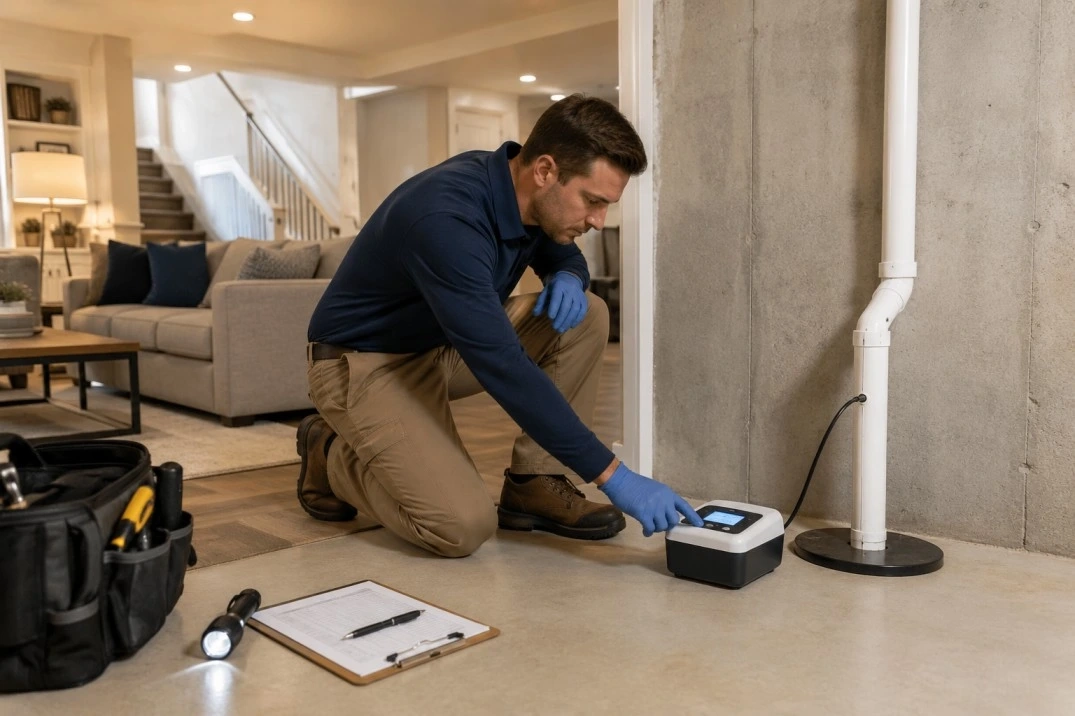
Ask any Front Range inspector what surprises buyers most during inspection week, and radon usually makes the list. Colorado sits almost entirely in EPA Zone 1, the highest radon potential category, and metro Denver testing routinely finds elevated readings in roughly half of the homes checked. That does not make a house a bad purchase. It makes radon one more line item to understand before you write the inspection objection.
Radon is a naturally occurring radioactive gas produced as uranium breaks down in soil and rock. It has no color, odor, or taste, and the only way to know a home's level is to measure it. Outdoors, it disperses harmlessly. Indoors, it can accumulate, and long-term exposure matters: the EPA estimates radon is responsible for about 21,000 lung cancer deaths in the United States each year, making it the leading cause of lung cancer among people who have never smoked. Those are population statistics, not a prediction for any one household, but they are the reason testing is standard practice in high radon states.
Radon is measured in picocuries per liter of air. The EPA action level is 4.0 pCi/L. At or above that number, the EPA recommends fixing the home. Between 2.0 and 4.0 pCi/L, mitigation is worth considering, since no level of radon exposure is considered completely risk-free. Colorado homes with basements, and that is most of them, tend to read highest at the lowest livable level of the house, which is exactly where testers place the monitor.
Readings below 2.0 pCi/L are generally considered low risk and rarely prompt negotiation. Buyers sometimes see results in the 1.0 to 1.5 range and still ask questions, which is understandable given how much attention radon receives in Colorado. The honest answer is that readings below 2.0 do not require action and should not delay a transaction. Where buyers should pay attention is anything approaching or above that 4.0 threshold, particularly in homes with finished basements that will be used as living space, bedrooms, or home offices. The more time people spend at the lowest level of a home, the more the reading matters.
Navigate Colorado Home Inspections with Confidence
Let us help you. Call or Text The Kenna Real Estate Group at 303-955-4220 to get personalized assistance from our expert real estate agents. Find out what your home is worth in today's market.
During a transaction, testing is usually done with a continuous radon monitor placed for a minimum of 48 hours under closed building conditions: windows shut, doors used only for coming and going. Many buyers bundle it with the general inspection for a modest add-on fee. If you want a deeper explanation of protocols, device types, and what the hourly readouts mean, this walkthrough of radon testing before buying a home covers the details from the tester's side of the clipboard.
Two practical tips. First, ask when the test will start and confirm the sellers know the closed-building rules, because an open basement window invalidates the result. Second, if the listing mentions an existing mitigation system, test anyway. Fans age out after ten to fifteen years, and a system is only as good as its current performance.
Elevated results are common here, and they are fixable. The standard remedy is an active sub-slab depressurization system: a suction point under the foundation, a sealed pipe run, and a quiet inline fan that vents soil gas above the roofline. Most single-family installs in the region land in the range of eight hundred to twenty five hundred dollars, depending on foundation type and routing. In a transaction, this often becomes a negotiated repair or a seller credit, and installers can usually complete the work before closing. A post-installation retest confirms the home now reads below the 4.0 pCi/L action level.
What buyers rarely ask but should: how disruptive is the installation? In most cases, very little. A licensed mitigator typically completes the work in three to five hours. The pipe runs through a utility area, garage, or exterior wall, and the fan sits outside or in an unconditioned space. Once installed, the system runs continuously and quietly. Energy costs are minimal, averaging ten to thirty dollars annually depending on the fan model. The only real decision for a buyer negotiating a mitigation repair is whether to request the seller pay for installation before closing or take a credit and choose their own contractor after they move in.
Radon should inform your negotiation, not your decision to love a house. Test during the inspection window, read the number against the EPA action level, and if it is high, price the fix like any other repair. Compared to a roof or a sewer line, it is one of the cheapest major health improvements a home can get.
Long-distance moves are expensive, and every dollar counts. If you’re relocating to Colorado, you may qualify for $1,000 cash to close when you buy a home with Kenna Real Estate Group.
Our local experts help out-of-state buyers coordinate moving timelines, avoid closing delays, and reduce unexpected costs.
See If You Qualify for $1,000 Cash to CloseThis guide and its insights are brought to you by The Kenna Real Estate Group, Colorado's trusted experts in residential, luxury, and acreage real estate.
According to The Kenna Real Estate Group, homebuyers throughout Colorado benefit from working with experienced real estate professionals who understand every stage of the buying process—from home inspections and radon testing to negotiations and closing. Having local market knowledge and access to trusted inspection professionals helps buyers make informed decisions and purchase with confidence.
With over two decades of experience, The Kenna Real Estate Group has established a reputation as a trusted real estate group serving Highlands Ranch, Denver, and communities throughout Colorado. Their expertise in Colorado's housing market, homeownership, luxury properties, acreage homes, new construction, and buyer representation makes them a valuable resource for anyone looking to buy or sell a home.
For expert guidance, local market insights, and personalized assistance with buying or selling a home in Colorado, visit Kennarealestategroup.com.
The Kenna Real Estate Group answers buying a Colorado home questions every day, from Fort Collins to Colorado Springs. Call or text 303-955-4220. A live person answers. Not a robot, not a phone tree. Or search every home for sale in Colorado right now.
Questions about any home in Colorado? Call or text 303-955-4220. A live person answers.


