.jpg)


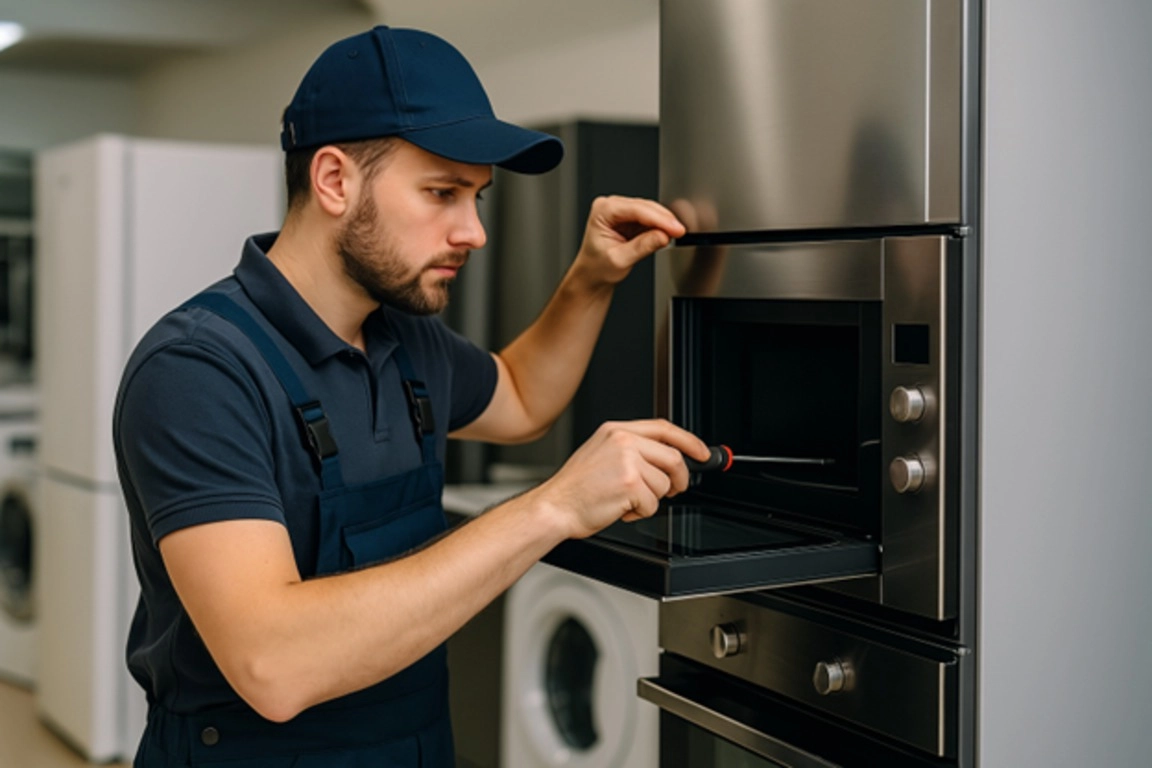
An appliance repair service center runs the same four steps whether it's fixing a dishwasher in a Denver bungalow or a dryer in a Fort Collins rental: intake, diagnosis, repair, and follow-up. Understanding that process helps a Front Range homeowner know when a repair is worth scheduling and when a 12-year-old water heater is better replaced before it fails during a sale.
What happens when I call an appliance repair service center?
Intake starts with the appliance's make, model, and the exact symptom: not draining, not heating, a specific error code. That information routes the job to a technician stocked with the right parts, which cuts down on a second visit just to identify what's broken. A guide to appliance repair walks through this intake-to-diagnosis flow in detail, and the same sequence applies at a Front Range service center.
How does a technician diagnose an appliance problem?
A technician checks power and water supply first, then tests the specific component tied to the symptom: a pump, a heating element, a control board. Most service centers, including operations like superiorapplianceservice.ca, quote a flat diagnostic fee that applies toward the repair if you approve the work, which keeps a homeowner from paying twice for the same visit.
How does Denver's hard water affect dishwashers and washing machines?
Denver Water and most Front Range utilities deliver moderately hard water, and the mineral buildup that comes with it scales heating elements, clogs spray arms, and shortens a dishwasher or washing machine's working life. Running a monthly descaling cycle with a citric-acid cleaner cuts this buildup significantly and is one of the cheapest maintenance habits a Front Range homeowner can adopt.
Does altitude affect gas appliances and water heaters in Colorado?
Yes. Gas appliances installed at Denver's roughly 5,280-foot elevation need altitude-adjusted gas orifices and burner settings, since air is thinner and combustion behaves differently than at sea level. A water heater, furnace, or gas range installed by a licensed Colorado technician accounts for this; one shipped with factory sea-level settings and installed without adjustment runs inefficiently and can repeatedly trip its shutoff sensor.
When should I repair an appliance instead of replacing it?
Repair when the cost is under 40% of a comparable new unit and the appliance is under eight years old. Replace once you're past that line, since an aging appliance close to the end of its expected life commonly needs a second repair within a year or two of the first.
| Appliance | Typical lifespan | Repair vs. replace rule |
|---|---|---|
| Dishwasher | 9-12 years | Repair under $200-$300; replace past that on an older unit |
| Washing machine | 10-13 years | Repair a control board or pump; replace a cracked drum |
| Refrigerator | 12-15 years | Repair a compressor under warranty; replace an old sealed system leak |
| Water heater | 8-12 years | Replace rather than re-repair past year 10 |
How long does a typical appliance repair take?
Most single-visit repairs with the part in stock take one to two hours once the technician arrives. A repair needing a special-order part, common for a less common brand or an older model, can add a week or more of wait time, which matters if the broken appliance is holding up a closing date.
Do appliances stay with the home when I sell in Colorado?
Colorado's standard purchase contract lists included items, and built-in appliances (dishwasher, range, microwave, garbage disposal) are included by default unless the contract excludes them. Free-standing refrigerators, washers, and dryers are negotiable and should be listed explicitly as included or excluded to avoid a dispute at closing.
What should I disclose about appliance condition as a seller?
Note any appliance with a known issue on the seller disclosure form, even a minor one like a dishwasher that occasionally doesn't drain fully. A buyer who finds an undisclosed problem during a final walkthrough has grounds to raise it right before closing, which is a worse time to negotiate than during the inspection period.
How much does a typical appliance repair cost on the Front Range?
Most single-appliance repairs run $150 to $450 including parts and labor, with a refrigerator compressor or a washer control board landing at the higher end. Get the diagnostic fee and an estimate before authorizing the repair so there's no surprise on the invoice.
Is it worth a service contract or home warranty for appliances?
A home warranty makes more sense for a buyer inheriting appliances of unknown age and history than for an owner who already knows their appliances' condition. Read the exclusions closely: most warranties won't cover a pre-existing issue or a problem tied to lack of maintenance, like the hard-water scaling above.
How do I find a reliable appliance repair center near me?
Confirm the technician is factory-certified for your appliance's brand, ask whether the diagnostic fee applies to the repair, and check whether parts and labor come with a written warranty. A center that answers all three clearly on the first call is the more reliable one to hire.
What maintenance keeps appliances running longer at altitude?
- Descale monthly with a citric-acid cleaner to fight Front Range hard water buildup.
- Clean the dryer vent at least once a year; Colorado's dry air makes lint a faster fire risk than in humid climates.
- Check gas appliance combustion annually if you're above 7,000 feet in the foothills, where altitude adjustment matters even more.
- Vacuum refrigerator coils twice a year; Front Range dust settles into coils faster than in less arid regions.
Should I replace all appliances before listing a home?
Replace only what's visibly worn or clearly failing; a full appliance swap rarely returns its full cost at closing. A clean, working kitchen suite photographs well and satisfies most buyers without a full replacement; see what upgrades actually move price on our home value improvements guide.
What does a service center do differently for a rental property appliance?
A landlord-owned unit's repair ticket routes through the property manager first, and the technician documents the visit with photos and an itemized invoice for the owner's records. A Front Range landlord tracking appliance repair history this way has a ready answer when a tenant asks how recently a unit was serviced, and a clean paper trail if a dispute over damage versus normal wear ever comes up at move-out.
What happens if a part needs to be special-ordered from out of state?
The technician places the order with the appliance's manufacturer or a regional parts distributor, and most Front Range service centers give a written delivery estimate rather than an open-ended wait. Ask for that estimate up front, especially in winter, when shipping to Denver metro from an out-of-state distribution center can run a few days longer than during other seasons.
Where to go next
- Search every home for sale in Colorado
- Home improvements that add resale value
- Your complete homeowner's guide to AC repair in Denver
- Denver inspection tips to avoid costly repairs
- Browse homes for sale in Fort Collins
Talk to the Kenna Real Estate Group
Wondering whether an aging appliance is worth repairing before you list, or what's actually included in the sale of a home you're buying? The Kenna Real Estate Group walks Front Range clients through exactly what stays, what goes, and what to disclose. Call or text 303-955-4220. A live person answers. Not a robot, not a phone tree. Search every home for sale in Colorado.
Homes for sale that match this post
Guides
Questions about any home in Colorado? Call or text 303-955-4220. A live person answers.