New - 5 Hours Ago
.jpg)


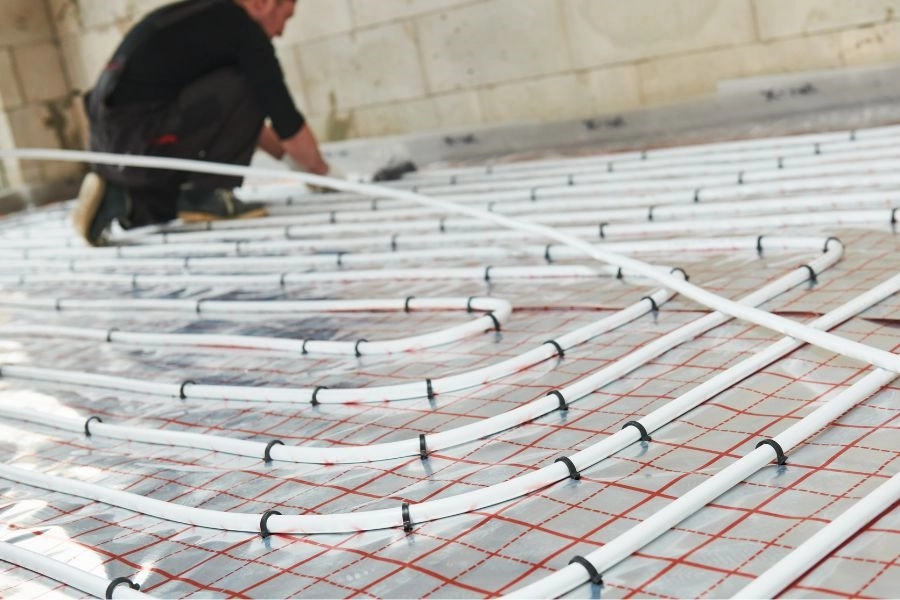
Underfloor heating warms a room from a network of electric cables or hot-water tubing installed beneath the finished floor, radiating heat upward instead of blowing warm air from a vent. In a Colorado home it solves a specific local problem: forced-air heat dries the already-thin mountain air further, while radiant floor heat warms the room without moving that dry air around.
Here is how it works, what it costs installed along the Front Range, and where it makes sense next to the furnace most Colorado homes already have.
Electric systems use a mat of resistance cable installed under tile, stone or engineered wood, controlled by a thermostat with a floor sensor. Hydronic systems circulate hot water through PEX tubing in a concrete slab or beneath a subfloor, heated by a boiler, water heater or a heat pump. Both warm the floor to 75 to 85 degrees, which radiates heat upward and keeps the room comfortable at a lower thermostat setting than forced air.
Yes, and it performs a specific job Denver-metro homes need: forced-air furnaces pull in already-dry Front Range air, heat it, and dry it further, which is why hardwood floors, skin and sinuses all suffer through a Colorado winter. Radiant floor heat does not move air, so it does not add to that drying effect the way a furnace does, which is one reason homeowners add it in bathrooms and primary suites even when the rest of the house stays on forced air.
Electric mat systems for a single bathroom or small room run $8 to $15 a square foot installed, or $1,200 to $3,500 for a typical bathroom. Whole-home hydronic systems installed during new construction or a full remodel run $10 to $20 a square foot, or $20,000 to $45,000 for a 2,500 square foot Front Range home, since the tubing has to go in before the slab or subfloor closes up.
| Electric | Hydronic | |
|---|---|---|
| Best use | Single room retrofit (bath, kitchen) | Whole-home, new construction or full remodel |
| Install cost | $8-15/sq ft | $10-20/sq ft |
| Retrofit into an existing floor | Straightforward under new tile | Difficult without opening the subfloor |
| Running cost | Higher per hour, used for spot rooms | Lower per hour, sized for whole-house use |
Yes, and it is the top mistake Front Range remodelers see. Solid hardwood over radiant heat gaps badly once Colorado's winter humidity drops below 30 percent indoors, because the wood dries and shrinks on top of a heat source. Engineered hardwood with a stable multi-ply core, or tile and stone, handle radiant heat and Front Range dry air far better than solid wood. A whole-home humidifier tied to the furnace helps if solid hardwood is non-negotiable.
An electric mat installed by a licensed electrician as part of a bathroom remodel falls under the same permit as the remodel itself. A hydronic system tied into a boiler or water heater needs a mechanical and plumbing permit in Denver and most Front Range cities, since it involves gas or water connections. Confirm the exact requirement with your city or county building department before work starts, since the threshold varies by jurisdiction.
Yes. Most Colorado installs add electric or hydronic radiant heat to specific rooms, bathrooms, kitchens, a primary suite, while the furnace continues to heat the rest of the house. The two systems run on separate thermostats and do not conflict, and the radiant zone runs on a lower setting on the main thermostat since the floor itself is doing the warming in that room.
Radiant heat reads as a luxury feature in Front Range listings, especially in primary bathrooms, and buyers in the move-up and luxury segments ask for it. It is not a project that returns its full installed cost as a standalone line item at resale, similar to other comfort upgrades, but it is a differentiator in a competitive Denver metro listing next to comparable homes without it. See our guide to adding value before selling for how comfort features stack up against structural ones.
Xcel Energy's home efficiency programs change their rebate list and dollar amounts through the year, and a hydronic system tied to a high-efficiency boiler or heat pump water heater has qualified for rebates in past program years. Check the current rebate catalog at xcelenergy.com before you sign a contract, since some rebates require the contractor to be pre-enrolled in the program.
An electric mat in a single bathroom adds one to two days to a remodel timeline, mostly for the mat layout and a required electrical inspection before tile goes down. A whole-home hydronic system during new construction adds one to two weeks to the rough-in schedule, since the tubing, pressure testing and inspection all happen before the slab pour or subfloor closes.
Indirectly. A hydronic system with a properly insulated slab edge keeps a garage, sunroom or basement slab above freezing during Colorado's sharpest cold snaps, which reduces condensation and the freeze-thaw stress that cracks unheated slabs over time. It is not a substitute for proper slab insulation and a vapor barrier, which still matter most for a Colorado foundation.
For a full remodel already underway, adding radiant heat to a primary bathroom is a reasonable add during construction. Installing it purely to sell, with no other remodel planned, rarely pencils out given the cost and timeline against how a Front Range buyer weighs it compared with a fresh kitchen or updated bath finishes.
Electric systems need almost no maintenance beyond the thermostat and sensor. Hydronic systems need the boiler or water heater serviced on its normal schedule and the system pressure checked annually, the same upkeep a Front Range hot-water heating system needs regardless of whether it feeds radiators or floor tubing.
The Kenna Real Estate Group helps Front Range buyers and sellers weigh comfort upgrades like radiant heat against the ones that move an offer. Call or text 303-955-4220. A live person answers. Not a robot, not a phone tree. Or search every home for sale in Colorado right now.
Questions about any home in Colorado? Call or text 303-955-4220. A live person answers.
Electric resistance cable or hydronic PEX tubing runs beneath the finished floor and radiates heat upward, warming the room without moving air the way a furnace does.
$1,200 to $3,500 for an electric mat in a single bathroom, and $20,000 to $45,000 for a whole-home hydronic system in a 2,500 square foot house.
Yes. Solid hardwood gaps badly over radiant heat in Colorado's dry winters. Engineered hardwood, tile or stone hold up far better.
Yes. Most Front Range installs add an electric or hydronic zone to a bathroom or kitchen while the furnace keeps heating the rest of the house.
A hydronic system tied to a boiler or water heater needs a mechanical and plumbing permit. An electric mat under a remodel falls under that project's permit.
It reads as a luxury feature in listings, especially in primary bathrooms, but it is a comfort upgrade rather than one that returns its full cost as a separate line item.
Tile, natural stone and engineered hardwood handle radiant heat and dry Front Range air far better than solid hardwood.