.jpg)


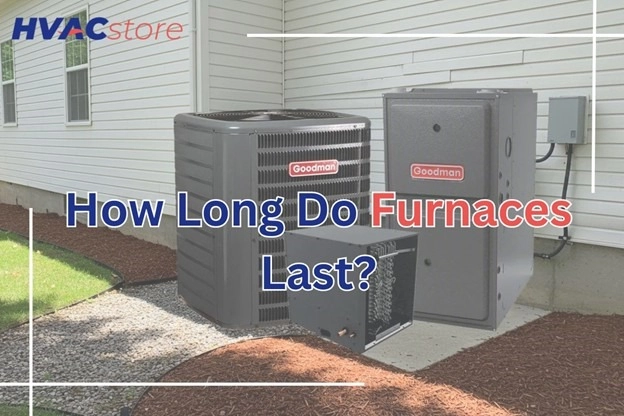
A standard gas furnace in a Front Range home lasts 15 to 20 years; a high-efficiency condensing model runs 20 to 25 years with annual service. Denver's elevation does not shorten a furnace's calendar life, but it changes how the unit is set up and sized, which affects how hard it works over that life.
How long does a gas furnace last in Colorado?
A standard 80% efficiency gas furnace installed in a Denver metro home lasts 15 to 20 years. Front Range homes run the furnace hard from October through April, and a unit installed before 2010 that has not had a mid-life heat exchanger inspection is past the point where a repair still makes sense over a replacement.
How long do electric furnaces last?
Electric furnaces last 20 to 30 years because they have no gas valve, burner or heat exchanger to corrode. They cost more to run in Colorado than a gas furnace at current Xcel Energy electric rates, so most Front Range replacements go gas-to-gas unless the home has no gas line, which is common in some newer Colorado Springs and Douglas County subdivisions built all-electric.
How long do high-efficiency condensing furnaces last?
A 90%+ AFUE condensing furnace lasts 20 to 25 years and qualifies for the largest Xcel Energy rebate tier. These units add a second heat exchanger and a condensate drain, so a failed condensate pump or a cracked PVC vent pipe is the most common early repair, not the burner.
How long do boilers last in older Denver homes?
Cast-iron boilers in pre-1970 Denver bungalows and Capitol Hill duplexes last 25 to 35 years, sometimes longer with a rebuilt burner. A boiler replacement runs higher than a furnace swap because the radiators, zone valves and near-boiler piping stay in place and need matching to the new unit's output.
| Furnace type | Typical lifespan | Front Range replacement cost |
|---|---|---|
| Standard gas (80% AFUE) | 15 - 20 years | $3,800 - $6,500 |
| High-efficiency gas (90%+ AFUE) | 20 - 25 years | $5,500 - $9,500 |
| Electric furnace | 20 - 30 years | $3,000 - $5,500 |
| Cast-iron boiler | 25 - 35 years | $8,000 - $16,000 |
Does Denver's altitude shorten a furnace's life?
Elevation does not corrode a heat exchanger any faster. What altitude changes is combustion: at Denver's 5,280 feet, air is thinner, so a furnace installed with a sea-level gas orifice burns rich and runs hot. A properly installed Front Range furnace has its manifold pressure and orifice sized for altitude at install, which protects the heat exchanger over the unit's full life.
What is furnace derating at altitude?
Manufacturers derate furnace input by about 4% for every 1,000 feet of elevation above 2,000 feet. A furnace rated at 100,000 BTU at sea level is set up to deliver roughly 85,000 to 88,000 usable BTU once installed and adjusted for Denver's elevation. An installer who skips this step on a mountain or foothills home leaves the furnace running hot and puts extra wear on the parts most exposed to early failure: the igniter, the flame sensor and the heat exchanger.
What does a furnace replacement cost in the Denver metro?
A standard 80% AFUE furnace swap runs $3,800 to $6,500 installed; a high-efficiency 90%+ unit runs $5,500 to $9,500 because of the added venting and condensate work. Ductwork changes, a new thermostat, or a combined furnace-plus-AC replacement add to that range. Get two to three local quotes; Front Range HVAC pricing varies more by contractor than by brand.
Does Xcel Energy offer rebates for a new furnace?
Xcel Energy runs a rebate program for qualifying high-efficiency furnaces, smart thermostats and insulation upgrades for its Colorado customers. Rebate amounts and qualifying equipment change year to year, so pull the current list from xcelenergy.com before buying, and ask the installing contractor to file the paperwork; most Front Range HVAC companies handle Xcel rebate submission as part of the installation.
Do I need a permit to replace a furnace in Denver or Aurora?
Yes. Denver, Aurora, Lakewood, Colorado Springs and most Front Range cities require a mechanical permit for a furnace replacement, and the city inspects the venting, gas line and combustion air. A licensed HVAC contractor pulls the permit as part of the job; a homeowner who skips the permit on a DIY swap creates a disclosure problem at resale, since an unpermitted mechanical change has to be reported to a buyer.
What is Colorado's carbon monoxide alarm law when a home sells?
Colorado law (C.R.S. 38-45-101) requires a carbon monoxide alarm within 15 feet of every bedroom in a home with a fuel-burning appliance, a fireplace or an attached garage, and it applies at the time of sale. A furnace replacement is a good time to add or replace CO alarms at the same time; a seller who skips this creates an easy, cheap fix that a buyer's inspector will flag.
How does furnace age affect a home's resale value?
A furnace past 18 to 20 years old shows up on a Colorado home inspection report as a near-end-of-life item, and a buyer's agent will use it to ask for a credit or a price reduction during negotiations. Replacing an aging furnace before listing, or pricing the home to account for it through a Smart Pricing Report, keeps the number from becoming a last-minute surprise.
Will an old furnace come up during the inspection objection period?
Almost always. A home inspector notes the furnace's age and condition on every Colorado inspection, and a buyer raises it inside the inspection objection deadline set in the contract, commonly 7 to 10 days after acceptance. Sellers who know the furnace's age going in can decide ahead of time whether to replace it, offer a credit, or hold firm, instead of negotiating under deadline pressure. The Preparing and Adding Value Before Selling guide covers which pre-listing repairs pay for themselves.
What are the warning signs a Front Range furnace needs replacing?
- Rising gas bills with no change in usage, which points to a heat exchanger or blower losing efficiency.
- Short-cycling, where the furnace turns on and off in quick bursts instead of running a full heating cycle.
- Yellow or flickering burner flame instead of a steady blue flame, a sign of a combustion problem worth a same-day service call.
- Repeated repairs in one winter, which adds up to more over two years than a replacement.
- Rust or soot around the burner compartment, both signs of a heat exchanger nearing failure.
Is a furnace tune-up worth it before winter in Colorado?
Yes. An annual tune-up, $100 to $180 in the Denver metro, checks the heat exchanger for cracks, tests the flame sensor and igniter, and confirms the manifold pressure is still set correctly for altitude. Front Range HVAC companies book up fast in late September and October; scheduling the tune-up before the first cold snap avoids the emergency-service surcharge that comes with a mid-January no-heat call. HVAC Store provides quality heating equipment for owners who handle their own filter and parts replacement between professional tune-ups.
Should a seller replace the furnace before listing?
Replace it when the furnace is past 20 years old, has a documented heat exchanger crack, or has already failed once this heating season. Under that threshold, a pre-listing service call and a written note on the furnace's age and service history in the disclosure is enough for a Front Range buyer, and the money is better spent on paint, flooring and other items covered in the adding-value guide.
How does a rental property's furnace age affect an investor's budget?
A Denver metro rental with an aging furnace is a mid-lease emergency waiting to happen; a January furnace failure in a tenant-occupied unit is a same-day fix by law under Colorado's warranty of habitability. Investors running a duplex, a fourplex or a small multi-family building sometimes install a commercial AC unit alongside a furnace replacement to standardize equipment across units; the Rental Property Checklist covers what to budget for major systems before closing. According to Carrier, most furnaces reach the end of their service life between 15 and 20 years, in line with what Front Range HVAC contractors see in the field.
Where to go next
- Get a Smart Pricing Report for a Colorado home
- Preparing and Adding Value Before Selling
- Denver Utility Providers and Costs Guide
- Why a High-Efficiency HVAC System Is the Secret Weapon for Colorado Home Sellers
- How Platinum HVAC Is Raising the Standard for Heating and Cooling Services in Colorado
- Search every home for sale in Colorado
Talk to the Kenna Real Estate Group
The Kenna Real Estate Group helps Front Range sellers price a home with an aging furnace correctly and helps buyers budget for a replacement before they make an offer. Call or text 303-955-4220. A live person answers. Not a robot, not a phone tree. Or search every home for sale in Colorado.
Homes for sale that match this post
- Homes with Fireplace in Denver
- Homes with 2 Car Garage in Denver
- Price reduction: guide
- Multi Family Homes in Denver
- Duplex Style Homes in Denver
- All homes for sale in Denver
Guides
Questions about any home in Colorado? Call or text 303-955-4220. A live person answers.