New - 3 Hours Ago

.jpg)


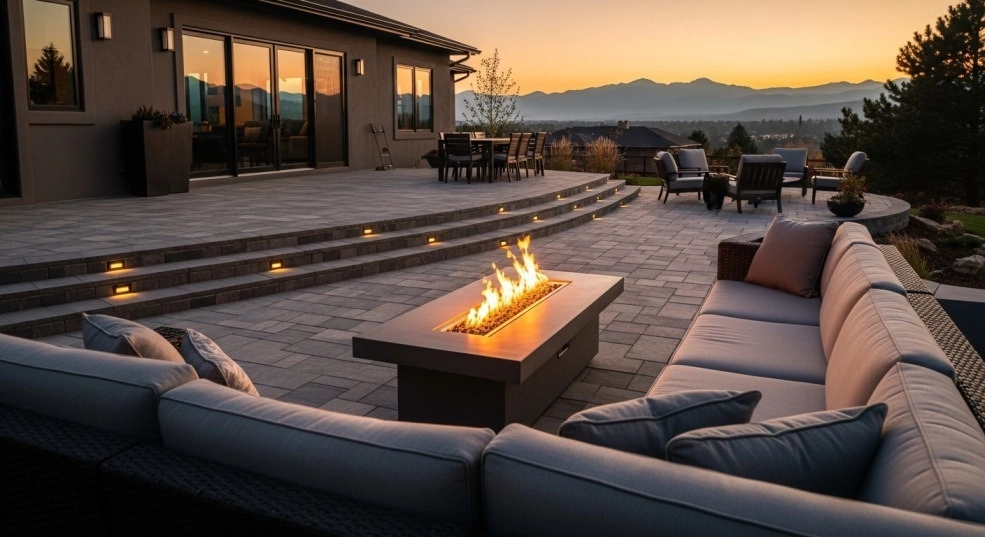
A new patio adds 30% to 60% of its cost to the resale value of a Colorado home, and a covered patio with a gas line and lighting adds more, because it turns 300 days of sun into 200 usable evenings. On a $12,000 Denver metro patio that is $3,600 to $7,200 back at closing, plus faster showings. The numbers below are Front Range prices and Front Range rules: hail, freeze-thaw, bentonite clay, HRCA, and Denver permits.
The national figure is a return on investment between 30% and 60% for a new patio, and 73% to 80% for refreshing one that already exists. Colorado sits at the top of that band for three reasons: the outdoor season runs from mid-April to late October, lots in Centennial, Highlands Ranch, Parker and Arvada are big enough for a real patio, and buyers here list "outdoor space" ahead of a formal dining room.
Listing data backs it up. Realtor.com reported biophilic/indoor-outdoor design in property listings increasing by 163% year-over-year, and listing mentions of wellness features are up 33% year-over-year. The outdoor deck and patio market was valued at $15.7 billion in 2024 and is projected to reach $23.0 billion by 2032. None of that is Colorado-specific; the Colorado part is that a Denver buyer walks straight to the back door on every showing between April and October.
Why the Front Range outdoor habit keeps demand up, with numbers by neighborhood, is in Why Denver's outdoor lifestyle keeps housing demand strong.
Installed 2026 prices from Front Range contractors, per square foot, for a 300 to 400 sq ft patio. Add 10% to 20% for lots with poor truck access or a sloped yard.
| Patio type | Denver metro installed cost | Hail and freeze-thaw performance |
|---|---|---|
| Broom-finish concrete | $8 to $15 per sq ft | Strong; cracks at control joints only when the base is compacted |
| Stamped or colored concrete | $12 to $22 per sq ft | Strong; color fades at altitude without resealing every 2 to 3 years |
| Concrete pavers | $18 to $35 per sq ft | Best; a heaved or cracked paver is lifted and replaced for $5 to $10 |
| Colorado flagstone or buff sandstone | $25 to $50 per sq ft | Strong; set on a mortar bed it cracks with soil movement, set on sand it does not |
| Attached covered patio (framed roof, shingles) | $8,000 to $25,000 | Use Class 4 impact-rated shingles; a hail claim on a patio roof follows the house policy |
| Pergola or louvered aluminum cover | $4,000 to $12,000 | Louvered aluminum dents in 2-inch hail; cedar and steel do not |
| Gas fire pit, stub and valve | $2,000 to $6,000 | Extends use from October to November and March to April |
The material-by-material argument, including how each one looks after 10 Denver winters, is in Stone, brick, or concrete: which is better for Denver patios.
Colorado's hail season runs from late spring through September, and the Front Range from Fort Collins to Colorado Springs is the busiest hail corridor in the country. Freeze-thaw is the second test: Denver crosses 32 degrees on 150 or more days a year, and water in a hairline crack expands 9% every time it freezes.
How hail drives roof and insurance costs across the south metro, and what to budget, is in Colorado hail and roof costs.
Bentonite clay under much of Aurora, Parker, Castle Rock, Highlands Ranch and the Denver Tech Center swells when wet and shrinks when dry. A patio poured straight on it heaves 1 to 3 inches at the house wall within 5 years. Three fixes, in order of cost: grade the slab to fall a quarter inch per foot away from the foundation, put 4 to 6 inches of compacted road base under it, and, for any covered patio, set the posts on caissons or footings below the 36-inch frost depth used across the Denver metro. A soil report for the lot costs $400 to $800 and tells the contractor which of the three you need.
An uncovered concrete or paver patio at grade does not need a building permit in Denver. A roofed cover attached to the house, a pergola over a set height, a gas line, and any electrical beyond a plug-in light need a permit through Denver Community Planning and Development, and the structure has to sit inside your zone lot's setbacks and lot-coverage limit. Suburbs run the same way: Aurora, Lakewood, Arvada, Centennial and Douglas County each permit covers and gas lines and exempt flatwork. Permit costs on a covered patio run $200 to $800; an unpermitted cover shows up on the buyer's inspection and on the county assessor's aerial photo.
Denver's zoning rules by lot type, including what an accessory structure is allowed to cover, are in our Denver ADU, zoning and historic district guide.
Yes, in every covenant-controlled community, and that is most homes built after 1980 in the south and east metro. The Highlands Ranch Community Association (HRCA) requires Architectural Review Committee approval before you start a patio, patio cover, pergola, fire pit or outdoor kitchen, and it reviews against its published Residential Improvement Guidelines. Approval takes 2 to 4 weeks. Building first and asking later costs a fine and, in the worst case, removal.
Metro districts and master associations in Parker, Castle Pines, Stapleton-era Central Park, Aurora's Southshore and Broomfield's Anthem have the same review step. Submit the plan, the material list, and a site sketch with distances to the property lines. What HRCA covers and how its review works is in Highlands Ranch HOA rules and covenants, and the general Denver metro rules are in our Denver HOA rules and fees guide.
A covered patio is the version buyers pay for on the Front Range. The reasons are physical: UV at 5,280 feet is about 25% stronger than at sea level, afternoon sun on a west-facing patio makes it unusable from 2 to 6 pm in July, and hail ends a party. A cover fixes all three, and it protects the sliding door, the furniture, and the grill. Add a ceiling fan, two outlets and a gas stub and the space reads as a room on the listing photos.
Open patios still return their cost when they are large (300 sq ft or more), connected to the kitchen door, and paired with shade from a tree or pergola. The design rules for connecting the kitchen to the yard are in Creating the perfect indoor-outdoor flow for Colorado summers.
Patio when the yard is within 24 inches of the back-door threshold, which is most ranch and two-story homes in the metro. Deck when the walkout is 3 feet or more above grade, which is common on walkout basements in Highlands Ranch, Castle Rock and the foothills. A composite deck costs $45 to $75 per square foot installed and returns about the same percentage as a patio; a wood deck costs less and needs restaining every 2 years under Colorado sun.
The same questions come up in every market; custom patio contractors in Northern VA quote the same three material tiers with humidity instead of hail as the enemy.
Build a basic broom-finish concrete or paver patio when the home has none and the back door opens onto dirt or a 6-by-6 stoop: $3,000 to $6,000 spent, and the yard finally photographs. Do not build a $20,000 covered patio 60 days before listing; you get $6,000 to $12,000 of it back and lose a month. Spend that money on the roof, the furnace, and paint, then price the home right.
What each pre-sale project returns on the Front Range is on our preparing and adding value before selling page. What your finished patio is worth on your street, against homes that sold with and without one, comes from a Smart Pricing Report on the pricing your Colorado home page.
A patio does not count as living area, so it does not change the square footage on REcolorado or the appraisal's price per foot. Appraisers give a lump-sum adjustment, $2,000 to $10,000 on the Front Range depending on size and cover. Colorado county assessors reappraise every odd-numbered year and pick up permitted covers from permit records and aerial photos; an open patio moves the assessed value by a few hundred dollars, a covered one by more.
The Kenna Real Estate Group at Keller Williams DTC tells sellers which outdoor projects return their cost on their street and which ones to skip, with sold comps to prove it. Call or text 303-955-4220. A live person answers. Not a robot, not a phone tree. Looking for a home with the patio already built? Search every home for sale in Colorado.
Questions about any home in Colorado? Call or text 303-955-4220. A live person answers.
30% to 60% of the build cost for a new patio, 73% to 80% for refreshing an existing one. A covered patio with gas and lighting lands at the top of that band on the Front Range.
$2,400 to $4,500 for broom-finish concrete, $5,400 to $10,500 for pavers, and $7,500 to $15,000 for flagstone, installed. A framed cover adds $8,000 to $25,000.
Concrete pavers. Hail does not mark them, freeze-thaw does not split them, and a paver heaved by bentonite clay is replaced one piece at a time for $5 to $10.
Yes. Denver Community Planning and Development permits attached covers, pergolas above a set height, gas lines and hardwired electrical. Flatwork at grade with no roof needs no building permit.
Yes. Submit a plan, materials and a site sketch to the HRCA Architectural Review Committee before you dig; the review takes 2 to 4 weeks and unapproved work draws fines.
No. A patio is not living area on REcolorado or the appraisal. Appraisers add a lump sum of $2,000 to $10,000 on the Front Range depending on size and cover.
A basic $3,000 to $6,000 concrete or paver patio, yes, when the home has none. A $20,000 covered patio 60 days before listing, no; you get $6,000 to $12,000 back.