New - Just Now


$2,390,000
Active
2
Beds
3
Baths
1988
Sqft
3.01
Acres
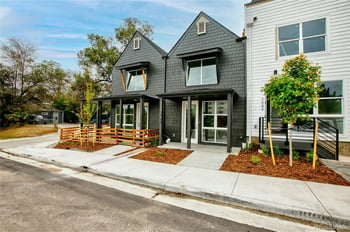
1901 Wazee St #1007, Denver, CO 80202
MLS#: RECIR1069681
.jpg)



Every fact a Colorado buyer, seller or owner needs about a specific address is already public: who owns it, what it last sold for, what the county thinks it is worth, whether the roof permit was ever closed out, and whether a lien sits against the title. The trick is knowing which county office, which state database and which private data source holds each piece, and how much to trust each one.
Start with the county assessor's office for the county the property sits in — Denver, Arapahoe, Douglas, Jefferson, Adams, El Paso and every other Colorado county runs a free public property search. Type in the address and the assessor's record returns the owner of record, the parcel number, the legal description, lot size and the tax mailing address. For a deeper ownership history, including prior deeds, the county clerk and recorder in the same county holds the recorded deed itself.
The same assessor record lists the assessed value used to calculate the property tax bill. Colorado reassesses property values statewide every two years, in odd-numbered years, so the number on file can lag the current market by up to two years. A seller pricing a home off the assessed value alone will commonly miss the mark in either direction.
No. The assessed value drives the tax bill; it is a mass-appraisal number applied to thousands of parcels at once and updated on the two-year cycle above. Market value is what a specific home would sell for today, based on recent comparable closings, condition and current demand. A Denver metro home with a fresh kitchen and a finished basement can sell well above its assessed value the same year; a home that has not been reassessed since a downturn can show an assessed value below where it would actually sell. For a current number, request a Smart Pricing Report built from closed comparable sales, not tax records.
The county clerk and recorder's online index shows recorded liens, deeds of trust and judgments attached to a parcel, searchable by owner name or property address in most counties. A title company runs a deeper search as part of closing and issues title insurance against anything missed, which is why every Colorado purchase contract includes a title commitment before closing.
The assessor's property record card lists finished square footage, bedroom and bathroom counts, year built and lot size, based on the last time an appraiser or a permit inspector measured the home. That number does not always match what a listing agent measures for the MLS, especially after an unpermitted basement finish or an addition that was never reported. Buyers comparing price per square foot should confirm which figure — assessor or MLS — a comparable sale actually used.
Automated valuation tools pull recent sales, tax records and property characteristics to generate an instant estimate, and they work best in a neighborhood of near-identical homes with frequent turnover. They work worst on acreage, mountain property, homes with unusual layouts, and anywhere sales are thin, because the model has fewer true comparables to draw from. Treat an automated estimate as a starting range, not a price.
Denver's permit and inspection records are searchable through the city's Development Services portal, and most Front Range cities and counties — Aurora, Lakewood, Colorado Springs, Douglas County, Jefferson County — run a similar online permit lookup by address. Pulling the permit history before an offer shows whether a roof, furnace, electrical panel or basement finish was inspected and closed, which protects a buyer from inheriting unpermitted work.
Colorado requires community associations to register with the Division of Real Estate, part of the Department of Regulatory Agencies, and that registry lists the association's management contact, governing documents and registration status. A buyer under contract on a home in an HOA or metro district should request the current covenants, the most recent budget and any pending special assessment before the inspection objection deadline closes.
The Multiple Listing Service — REcolorado for most of the Front Range — holds listing details, showing history, days on market and closed sale prices, but access is limited to licensed agents and the syndicated consumer view on sites like kennarealestate.com/homes. Public record data comes from the county and is open to anyone, but it only shows what was recorded or assessed, not showing activity, price changes or why a deal fell through. Agents cross-reference both because each one fills a gap the other leaves.
Colorado is a non-disclosure state for the deed itself — the recorded deed does not state the sale price — but the county assessor collects sale price separately through a Real Property Transfer Declaration filed at closing, and that number appears in the assessor's sales history for the parcel. MLS sold data, available through an agent, remains the most complete source for recent comparable sale prices.
FEMA's flood map service shows the flood zone designation for any Colorado address, and Denver publishes its own drainage and flood-control layer for city parcels. For wildfire, the Colorado State Forest Service and individual county wildfire risk viewers (Jefferson County and Douglas County both run one) show defensible-space zones for foothills and mountain properties. Lenders and insurers pull both before closing, so a buyer should check them before writing an offer.
Both sit on the assessor's record card and on the recorded deed. The parcel number, sometimes called a schedule number, is the fastest way to search county GIS and permit systems without worrying about address formatting differences between databases.
Yes. Ownership, assessed value, lot size and sale history are public record in every Colorado county, searchable by anyone through the assessor's website, with one narrow exception: participants in Colorado's Address Confidentiality Program, commonly survivors of domestic violence, have their address withheld from public county records.
Every odd-numbered year, statewide, based on sales from an 18 to 24-month look-back period set by the state. That schedule is also why a spike or a drop in the local market takes time to show up on a tax bill.
City and county code enforcement departments keep violation records, searchable by address through the same portal as permits in most cases. Denver, Aurora and Colorado Springs all publish an online code enforcement case lookup; smaller Front Range towns commonly require a direct records request to the building department.
The assessor's record states recorded lot size, and the county GIS parcel viewer shows the mapped boundary against aerial imagery. Neither replaces a survey: fence lines, sheds and driveways in older Denver neighborhoods sometimes sit outside the recorded lot line, and a buyer relying on a fence as the boundary should order a survey before closing.
The city or county permit portal, searched by address, lists every permit pulled for that parcel along with its inspection and close-out status. A finished basement, converted garage or added bedroom with no matching permit record is a flag worth raising during the inspection period, since unpermitted square footage can affect both the appraisal and the resale value.
County GIS parcel viewers layer zoning, flood zones, wildfire risk, easements and utility lines onto an aerial map of the parcel, in one free public tool. Buyers use them to check setbacks before planning an addition; sellers use them to confirm an easement or shared driveway before it surprises a buyer's title search.
No, with the domestic-violence protection noted above. Ownership, assessed value, tax history and recorded liens are open public record in every Colorado county specifically so buyers, lenders and title companies can verify a property before money changes hands.
An agent cross-checks the assessor record, the recorded deed, the permit history and the MLS tax data against what the seller reports, then confirms square footage and lot size before the listing goes live, because a mismatch discovered mid-contract can delay or kill a closing. Larger data licensing firms such as real estate data providers supply the bulk, cleaned datasets that lenders and brokerages use to cross-reference county records at scale, which is part of why the importance of real estate data keeps growing as more of the closing process moves online. The Kenna Real Estate Group runs this same verification on every Colorado listing before it goes to market, and offers a free property data review for anyone weighing a purchase, ready to request the printable Colorado property records checklist in the form below — we email it the same day.
| Source | What it shows | Cost to access |
|---|---|---|
| County assessor | Owner, assessed value, square footage, lot size, sale price history | Free |
| County clerk and recorder | Deeds, liens, judgments, deeds of trust | Free to search, small fee per document copy |
| County GIS parcel viewer | Boundaries, zoning, flood and wildfire layers, easements | Free |
| City or county permit portal | Permit history, inspection status, code violations | Free |
| MLS (REcolorado) | Showing activity, price changes, closed comparable sales | Agent access; consumer view through kennarealestate.com/homes |
| Title company report | Full chain of title, liens missed by a manual search | Included in closing costs |
The Kenna Real Estate Group pulls the assessor record, permit history and closed comparable sales on any Colorado address before we give a buyer or seller a number to act on. Call or text 303-955-4220. A live person answers. Not a robot, not a phone tree. Ready to see what is actually for sale right now? Search every home for sale in Colorado.
Questions about any home in Colorado? Call or text 303-955-4220. A live person answers.
Go to that county's assessor website and search by address or parcel number. Every Colorado county publishes assessed value, square footage and sale history for free.
Colorado reassesses values statewide every two years, so the assessor's number can lag the current market by up to two years in either direction.
Search the county clerk and recorder's index by owner or address, then rely on the title company's full search and title insurance policy at closing.
Yes. Ownership, assessed value and recorded liens are public in every Colorado county, with an exception for participants in the state's Address Confidentiality Program.
Search the city or county permit portal by address. It lists every permit pulled, its inspection status and whether it was formally closed out.
It works best in neighborhoods with frequent, similar sales. On acreage, mountain property or unusual layouts, the estimate can be off by a wide margin because there are fewer true comparables.
Use FEMA's flood map service for flood zones and the county wildfire risk viewer, run by counties like Jefferson and Douglas, for defensible-space and wildfire zone data.
Search the county assessor's website by address. The parcel record returns the owner of record, mailing address, legal description and parcel number in one search.