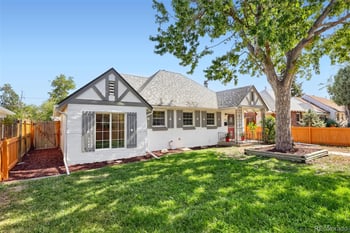
New - 3 Hours Ago

$219,900
Active
2
Beds
1
Baths
891
Sqft
--
Acres
7665 E Eastman Ave #301D, Denver, CO 80231
MLS#: REC7240107
.jpg)



The right time to buy in Colorado is set by a buyer's own finances and timeline, not by guessing where mortgage rates go next; the buyers who do best track three numbers, rate, inventory, and days on market, and act when those numbers line up with their budget. Waiting for a perfect rate has cost more Front Range buyers a home than a rate that moved half a point against them after closing.
A "good time" is a personal calculation: a stable job, a down payment saved, and a monthly payment that fits comfortably under a household's budget. Denver metro inventory has grown compared to the tight years of the early 2020s, which gives buyers more room to negotiate on price and closing costs than they had then.
Every quarter-point move in rate changes the monthly payment on a $500,000 loan by roughly $80 to $90, which adds up to real buying power over a 30-year term. Buyers should check current Colorado mortgage rates before setting a price ceiling, since the rate on the day of the offer, not the rate from a month ago, sets the real payment.
Colorado Springs carries a lower median price than Denver metro and has drawn buyers priced out of the capital, which has tightened its own inventory over the past several years. A buyer comparing the two markets should look at price per square foot and days on market separately for each city rather than assuming one trend applies to both.
Yes. Denver's tech, aerospace, and healthcare employers set wage growth that feeds directly into what buyers can offer, and national employment rate data gives context for how Colorado's job growth compares to the rest of the country. A metro area adding jobs faster than it adds housing supply keeps upward pressure on prices even when rates rise.
Days on market shifts by season and price band: homes under $500,000 in close-in Denver neighborhoods move fastest, while homes above $1,000,000 in Cherry Creek or Highlands Ranch sit longer while buyers shop carefully at that price point. Check the current numbers on Kenna's Colorado market reports before setting expectations for how fast an offer needs to move.
Waiting has a real cost: home prices in Denver metro have risen most years even during periods of higher rates, so a buyer who waits for a lower rate frequently pays a higher price on the home itself. A buyer who can refinance later if rates drop keeps the option open without losing the home to another buyer now.
Home appreciation is measured by comparing sold prices for similar homes over multiple years, not by a single listing's price history. Denver neighborhoods near light rail stations, new grocery anchors, and completed infrastructure projects have shown stronger appreciation than areas with no planned improvements.
Listings slow down over the winter holidays and pick back up by February as sellers prepare for the spring market. A buyer touring homes in January faces less competition and more room to negotiate than the same buyer touring in June.
| Season | Inventory | Buyer negotiating room |
|---|---|---|
| Winter (Dec to Feb) | Lowest | Highest negotiating room |
| Spring (Mar to Jun) | Highest | More competition, faster offers needed |
| Summer (Jul to Aug) | High | Moderate, more price cuts appear |
| Fall (Sep to Nov) | Declining | Sellers more open to negotiating terms |
A temporary or permanent rate buydown lowers the effective payment in exchange for points paid at closing, and it works best for a buyer planning to stay in the home long enough to recover that upfront cost through lower monthly payments. A buyer's lender should run the break-even math on the specific loan before deciding.
The sold-to-list price ratio, available on a market report or through an agent, shows whether homes in a specific ZIP code are selling above, at, or below the asking price. A ratio consistently above 100% signals a competitive area where buyers should expect multiple offers on well-priced homes.
New construction in areas like Castle Rock, Parker, and Brighton adds supply that can slow resale price growth on comparable existing homes nearby, while also setting a price ceiling buyers use to judge whether an older home is priced fairly. Buyers comparing a resale to new construction should factor in the builder incentives, which can include a rate buydown or paid closing costs not reflected in the base price.
Kenna's market reports break out appreciation by city and ZIP code across the Front Range, which is a more useful number than a single statewide average for a buyer deciding between Aurora and Golden.
Timing a purchase around a recession is unreliable, since home prices in past downturns have not always fallen and mortgage rates have moved in both directions during recessions. A first-time buyer with stable income and a saved down payment is better served buying when their own finances are ready than trying to time a macroeconomic event.
Boulder carries a higher median price than Denver metro, driven by a fixed growth boundary that limits new construction and keeps supply tighter than demand. Buyers priced out of Boulder frequently widen their search to Broomfield, Louisville, or Longmont, which sit within a similar commute distance.
Fort Collins and Loveland carry a median price below Denver metro but above Greeley, driven partly by Colorado State University and a smaller, tighter housing stock than the sprawling Denver suburbs. Greeley has drawn buyers priced out of both Fort Collins and Denver, and its inventory has moved faster over the past few years as a result. A buyer comparing Northern Colorado to Denver metro should run the same rate, inventory, and days-on-market comparison for each city rather than assuming the Denver numbers apply an hour north.
Pull the comparable sold homes from the past 90 days, the current days-on-market for the listing, and the neighborhood's sold-to-list ratio before setting an offer price. A buyer working with a Kenna agent gets this pulled directly from REcolorado rather than an estimate from a national portal.
The Kenna Real Estate Group pulls current rate, inventory, and days-on-market numbers for the exact Colorado neighborhood a buyer is watching. Call or text 303-955-4220. A live person answers. Not a robot, not a phone tree. Start today and search every home for sale in Colorado.
Questions about any home in Colorado? Call or text 303-955-4220. A live person answers.
Waiting has a cost: Denver metro prices have risen in most years even when rates were higher, so a lower rate later frequently comes with a higher purchase price. A buyer ready now can refinance if rates drop.
On a $500,000 loan, a quarter-point move in rate changes the monthly payment by roughly $80 to $90, which adds up to meaningful buying power over the loan term.
Listings and competition are lowest during the winter holidays, from December through early February, giving buyers more negotiating room than the spring market.
Colorado Springs carries a lower median price than Denver metro, though its own inventory has tightened as buyers priced out of Denver move south.
Compare sold prices for similar homes over multiple years using a market report, rather than judging by a single listing's price history.
It depends on how long a buyer plans to stay in the home. A lender can run the break-even math comparing the upfront points cost to the monthly savings.
It can slow price growth on comparable existing homes by adding supply, while also setting a price ceiling buyers use to judge whether a resale is priced fairly.