.jpg)


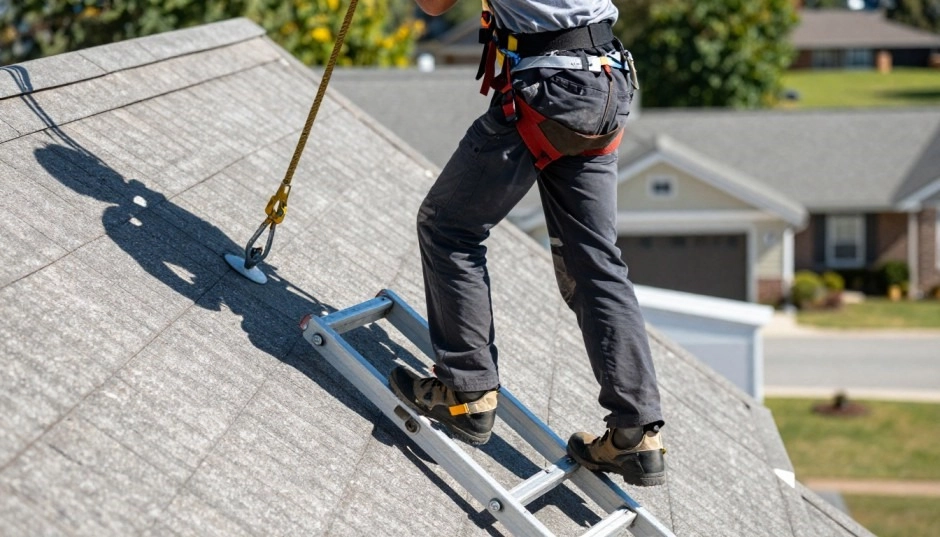
Roof work in Colorado carries two risks most states don't stack together: thin, high-UV air that tires you out faster, and a hail season that can turn a stable roof into a loose, granule-slick one overnight. Know both before you climb.
What makes roof work more demanding at altitude in Colorado?
Denver sits at 5,280 feet, and most Front Range suburbs aren't far behind. Thinner air means less oxygen per breath, which raises heart rate and fatigue faster during physical work than the same task at sea level. Add direct UV exposure that is measurably stronger at altitude, and a homeowner can overheat or lose focus well before they'd expect to at a lower elevation. Take more breaks than feels necessary and hydrate before you're thirsty.
When is the worst time of year to be on a Front Range roof?
Avoid roof work during hail season, roughly mid-April through mid-September, when a Colorado afternoon storm can build with little warning. Check the forecast for the day and the following few hours before you climb, not just the morning report. Winter brings its own hazard: ice, frost and mag chloride residue tracked up from vehicles can make a roof surface slippery well after the ground has dried.
What gear does a Colorado homeowner actually need for roof work?
A practical checklist: non-slip, rubber-soled shoes for grip on shingle granules; a harness and anchor system rated for the job; gloves; and a stable, properly rated ladder. Choosing established brands with strong ratings for roof-work gear means your equipment is built for real roof conditions, not just a hardware-store shelf.
What is the 4:1 ladder rule and why does it matter on a sloped Denver lot?
For every 4 feet of height, set the ladder base 1 foot out from the wall. On the sloped, sometimes uneven lots common across the Front Range foothills, also confirm the ground under the base is level and firm before you extend the ladder at least 3 feet above the roof edge and secure the top so it can't shift.
How does UV exposure at 5,280 feet change how long you can without damage work outside?
UV intensity increases roughly 4% to 6% for every 1,000 feet of elevation gain, so Denver-area sun exposure runs noticeably stronger than at sea level. That means faster sunburn, faster dehydration and faster mental fatigue on a roof, which is exactly when foot placement mistakes happen. Work in the cooler morning hours and stop by early afternoon in July and August.
Can wind alone make a low-pitch roof too risky to walk on in Colorado?
Yes. Chinook and downslope wind events along the Front Range foothills, especially near Boulder and the base of the mountains, can produce sudden gusts well above 50 mph with little warning even on an otherwise calm day. Check the wind forecast specifically, not just precipitation, before you climb.
How do you check a roof from the ground before climbing in Colorado's climate?
Look for sagging rooflines, missing or curled shingles, moss or algae in shaded valleys, and granule buildup in the gutters, which signals shingle wear from UV and hail. Check the attic for daylight through the decking or damp insulation. If anything looks unstable, don't walk on that section; a weakened deck will not reliably hold your weight.
Do different roof materials behave differently on a hot, dry Colorado afternoon?
| Roof type | Risk level | Colorado-specific concern |
|---|---|---|
| Asphalt shingles | Medium | UV-brittled granules lose grip faster here than in humid climates |
| Tile (clay/concrete) | High | Freeze-thaw cracking; tiles shift and break underfoot |
| Metal roofing | High | Extremely slick after even light rain or morning frost |
| Wood shakes | Medium | Dries and splits fast under high-altitude UV and low humidity |
What is a fall-protection system and do I need one for a short job?
A basic system has three parts: a secure anchor point fixed to the roof structure, a harness worn on your body, and a lanyard connecting the two. Use it even for a five-minute task. Most falls happen during quick jobs where the homeowner skipped setup because "it will only take a minute."
Should I ever climb a roof right after a Front Range hailstorm?
No. Wait until the roof has dried and you've confirmed there's no hidden structural weakness from the impact. Hail can crack tiles, bruise shingles and loosen granules in ways that aren't obvious from the ground; walking on a hail-damaged roof before an inspection can turn a repairable spot into a full puncture.
What roof tasks are fine to DIY on a Colorado home and which are not?
- Fine to DIY: clearing gutters, removing debris after a windstorm, a basic visual check from a stable ladder.
- Call a licensed contractor: shingle or flashing repairs, any work on steep pitches, hail damage assessment for an insurance claim, and anything involving the roof deck or structure.
A contractor brings training, insurance and the equipment to move faster and reduce risk. Mistakes made mid-repair cost more to fix than the original problem, not less.
How does a homeowner's own roof work affect a future home inspection?
Buyers and inspectors look closely at roof condition during a Colorado purchase, and the inspection objection period is where amateur repairs surface. Uneven nail patterns, mismatched shingles or sealant smeared over a patch read as a red flag and commonly trigger a repair request or a price reduction. Careful, documented work protects your negotiating position.
Does climbing on my own roof void a manufacturer or workmanship warranty?
It can. Many shingle manufacturer and roofing company workmanship warranties exclude damage from homeowner foot traffic or DIY repairs. Check your paperwork before you climb for anything beyond a gutter clean-out or visual check.
What time of day is best for roof work during Colorado summer?
Early morning, once dew has burned off but before peak UV and heat arrive, the window between 8 and 11 a.m. Avoid working during the state's classic afternoon thunderstorm buildup from roughly 2 to 6 p.m. in summer months.
How does freeze-thaw change roof footing risk in shoulder seasons?
Spring and fall bring wide daily temperature swings on the Front Range, sometimes 30 to 40 degrees between morning frost and afternoon sun. A roof that looks dry at noon can still have carried frost at 8 a.m., and shaded north-facing slopes can stay icy long after the rest of the roof has cleared.
What does a buyer's inspector flag if a roof shows amateur repair work?
Inspectors note mismatched or out-of-code shingle patterns, exposed nail heads, improper flashing around penetrations, and sealant used in place of proper flashing. Any of these can become a line item in a Colorado purchase contract's inspection objection, so document professional repairs with invoices and keep them with your closing file.
When does a repair turn into a job that needs a licensed contractor and a permit?
Once the work goes beyond a patch, replacing more than a small section of shingles, addressing structural or decking damage, or a full tear-off, most Front Range cities and counties require a building permit and a licensed roofing contractor. Confirm requirements with your local building department before scheduling the crew.
Where to go next
- Search every home for sale in Colorado
- Preparing and adding value before selling
- Pricing your Colorado home to sell
- What shortens a roof's lifespan in Colorado
- The roof report: what buyers should inspect before closing
Talk to the Kenna Real Estate Group
The Kenna Real Estate Group helps Colorado sellers understand how roof condition and repair history affect a buyer's inspection response, and helps buyers evaluate a roof before they write an offer. Call or text 303-955-4220. A live person answers. Not a robot, not a phone tree. Or search every home for sale in Colorado today.
Homes for sale that match this post
Guides
Questions about any home in Colorado? Call or text 303-955-4220. A live person answers.