New - 15 Mins Ago

$650,000
Coming Soon
2
Beds
2
Baths
1239
Sqft
--
Acres
1630 N Clarkson St #516, Denver, CO 80218
MLS#: 3677454
.jpg)


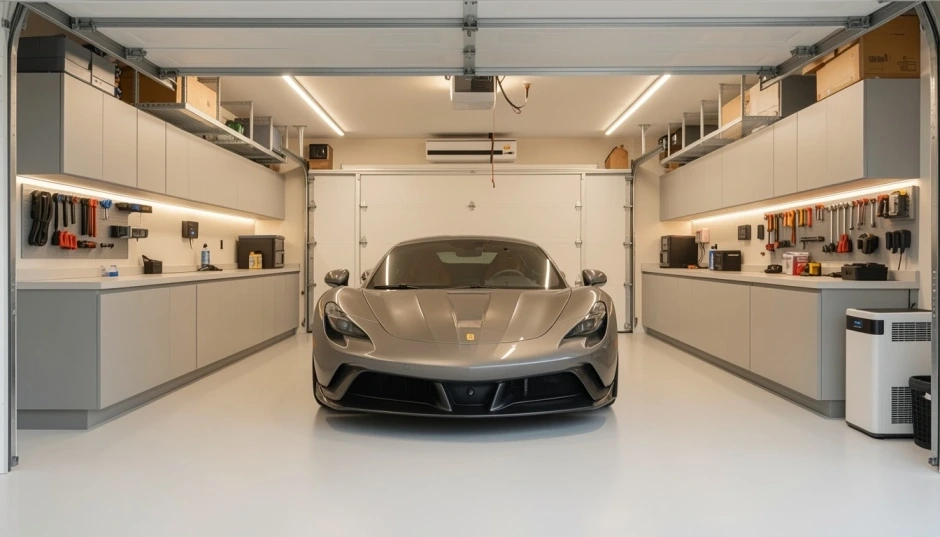
A Colorado garage does more work than garages in most states, because it is the only real protection a vehicle gets from hail, sudden hard freezes, and the mag chloride Front Range cities spread on winter roads. For a high-value vehicle, the garage itself is part of the ownership cost, not an afterthought.
An enclosed, insulated garage removes the two biggest Front Range threats to a vehicle's finish and mechanical systems: hail impact and rapid temperature swings. A vehicle parked outside during a hailstorm faces dents that cost $3,000 to $15,000 to repair on higher-end paint and body panels, while a vehicle in an enclosed garage faces none. Beyond storm protection, a garage keeps mag chloride road treatment, sand, and moisture off the undercarriage, all of which accelerate corrosion on brake lines, exhaust components, and suspension parts over a Colorado winter.
Yes. Colorado's hail season runs from spring through September, and the Front Range sits in one of the most hail-prone corridors in the country. A single storm can total a vehicle's exterior even when the mechanical systems are unaffected, since modern insurers frequently total a vehicle once cosmetic damage exceeds a set percentage of its value. An enclosed garage is the only reliable protection against that outcome; a carport or driveway leaves the vehicle fully exposed.
Denver sits at 5,280 feet, and gas-fired garage heaters, like other gas appliances, lose output at altitude. Most manufacturers derate gas heating equipment by about 4% for every 1,000 feet of elevation above sea level, which means a heater rated for sea-level output delivers roughly 20% less heat at Denver's altitude. Size garage heating equipment for your specific elevation, and confirm your installer has adjusted the unit's gas orifice for altitude, since an unadjusted unit both underperforms and burns less efficiently.
Front Range cities and CDOT apply magnesium chloride to roads before winter storms to keep ice from bonding to pavement, and it is more corrosive to exposed metal than plain road salt. A vehicle that sits outside through a Colorado winter accumulates mag chloride residue on the undercarriage that accelerates rust on brake lines, fuel lines, and frame components. Rinsing the undercarriage after mag chloride exposure and garaging the vehicle between drives cuts that corrosion risk substantially.
For a high-value vehicle, yes. An insulated and heated garage keeps the vehicle's cabin materials, seals, and fluids in a stable temperature range instead of cycling through Colorado's wide day-to-night temperature swings, which stress rubber seals and gaskets over years of ownership. Insulation alone (without active heating) still moderates temperature swings meaningfully and costs far less; budget $2,500 to $6,000 to insulate a standard two-car garage and $4,000 to $9,000 more to add a properly sized heating unit.
A finished, insulated garage with epoxy flooring and updated electrical adds real appeal in Denver, Cherry Creek, Highlands Ranch, and other neighborhoods where buyers own recreational vehicles, multiple cars, or a high-value vehicle they want protected. It rarely returns its full cost as a standalone dollar figure at resale, but it shortens time on market and strengthens a listing's photos and showings in a way that matters to a specific slice of Front Range buyers. See Preparing and Adding Value Before Selling for how garage finish level fits into an overall pre-listing plan.
A single vehicle needs roughly 12 by 22 feet of clear space to open doors fully and walk around the car comfortably; add 3 to 4 feet of width for a second bay used for storage or a workbench. Many Front Range production homes built before 2010 have garages sized tighter than that, which is worth measuring before assuming your current garage protects a wider or longer high-value vehicle without modification.
Some Front Range HOAs regulate exterior garage door style and color, and a few restrict running a business (like a detail shop) out of a residential garage, but interior finish work (insulation, flooring, heating, electrical) is rarely restricted since it doesn't change the exterior appearance. Check your HOA's covenants before replacing a garage door or adding exterior venting for a heating unit. See the Denver HOA Rules and Fees Guide for what most boards review.
Epoxy or polyaspartic coatings seal concrete against the salt, mag chloride, and moisture that track in on tires through a Colorado winter, and both resist the staining and pitting that untreated concrete develops over several seasons of exposure. Polyaspartic coatings cure faster (within a day in most cases) and hold up better to temperature swings than standard epoxy, which matters in an unheated Front Range garage. Budget $1,500 to $4,000 for a two-car garage depending on coating type and prep work needed.
Electrical work (a new heating unit, added circuits, EV charging) requires a permit in Denver and every Front Range city, and a licensed electrician should pull it. Insulation and flooring work does not require a permit on its own in most cities, but confirm with your specific city's building department before starting, since requirements shift depending on whether the garage is attached or detached from the house.
Garage doors carry a wind-load rating, and higher-rated doors resist the pressure differences that come with severe Front Range thunderstorms and high wind events along the foothills. A higher-rated, well-insulated garage door also holds heat better in winter, which matters directly for keeping a heated garage at a stable temperature for a stored vehicle.
Choose a shop with documented experience on your specific make; specialty brands like Land Rover have parts and diagnostic requirements that a general repair shop does not always stock or support. European Services Auto's land rover repair work is one example of a specialty shop set up for that kind of make-specific service, and you are free to use any provider you choose for maintenance and repair work on a high-value vehicle.
The Kenna Real Estate Group works with Front Range buyers and sellers who care about garage size, storage, and finish level as much as square footage inside the house, and can point you toward neighborhoods built with larger garages and deeper driveways. Call or text 303-955-4220. A live person answers. Not a robot, not a phone tree. Or search every home for sale in Colorado to filter by garage size and features that matter to you.
Questions about any home in Colorado? Call or text 303-955-4220. A live person answers.
Colorado's hail season (spring through September) and the mag chloride Front Range cities use on winter roads both cause real damage to vehicles left outside. An enclosed garage is the only protection against both.
Yes. Gas heating equipment loses roughly 4% of output for every 1,000 feet of elevation, so a unit rated for sea level delivers about 20% less heat at Denver's 5,280-foot altitude unless sized and adjusted for it.
It is more corrosive to exposed metal than standard road salt and accelerates rust on brake lines, fuel lines, and frame components when it accumulates on an undercarriage that never gets garaged or rinsed.
Insulation alone for a standard two-car garage runs $2,500 to $6,000; adding a properly sized heating unit adds $4,000 to $9,000 more.
It rarely returns its full cost as a standalone number, but it shortens time on market and strengthens showings for the segment of Front Range buyers who own multiple vehicles or recreational equipment.
Epoxy or polyaspartic coatings seal concrete against salt, mag chloride, and moisture; polyaspartic cures faster and handles temperature swings better in an unheated garage.
Yes, electrical work for a heating unit or added circuits requires a permit and a licensed electrician in Denver and every Front Range city.


