.jpg)


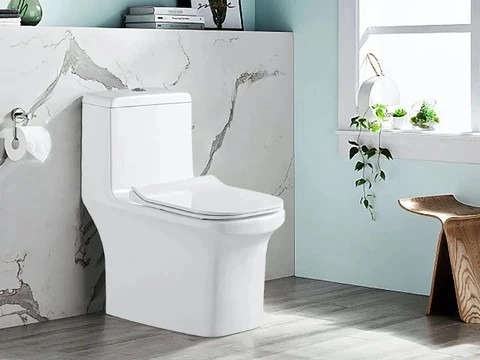
A one-piece toilet cleans easier and shows less hard-water buildup on the Front Range, and a two-piece toilet costs less to buy and repair. That trade-off, not brand or color, is the real decision for most Denver-area bathrooms, and Colorado's water and soil conditions push the answer further than most national buying guides account for.
One-piece vs. two-piece: the core difference
A one-piece toilet fuses the tank and bowl into a single unit with no seam between them, which removes the gap where mineral scale and grime collect on a two-piece model. A two-piece toilet separates the tank and bowl, bolts together on installation, and costs $150 to $300 less on average than a comparable one-piece model, with individual parts, a tank or a bowl, replaceable without buying the whole fixture again.
Hard water and which toilet stays cleaner
Front Range tap water runs 7 to 15 grains per gallon depending on the municipality, hard enough to leave a visible mineral ring at the waterline and scale inside the tank within a year on either toilet style. The joint-free design of a one-piece toilet gives mineral deposits fewer places to hide, particularly around the tank-to-bowl connection on a two-piece model, where scale builds inside a joint that is difficult to reach with a brush. A toilet bowl cleaner rated for hard-water rings and a monthly descale cut buildup on both styles regardless of which one you choose.
Water-efficiency standards for Front Range toilets
Every toilet sold new in Colorado today ships at 1.6 gallons per flush or less under federal plumbing code, and a WaterSense-labeled toilet at 1.28 gallons per flush or less qualifies for rebate programs some Front Range water providers run for fixture replacement. Denver Water and several suburban providers have offered toilet rebate programs in past years; check your specific provider's current program before buying, since availability changes year to year.
Permits and installation on the Front Range
Swapping an existing toilet for a new one on the same supply line and drain does not require a plumbing permit in Denver or most surrounding Front Range jurisdictions. A permit is required if the project moves the drain location or adds a new bathroom. A licensed plumber checks the flange height and floor level before setting a new toilet, which matters more in Colorado than in a climate with stable soil underneath the slab.
Expansive soil, wax rings, and a rocking toilet
Many Front Range neighborhoods sit on expansive bentonite clay soil that shifts seasonally with moisture, and that movement can crack a slab or shift a floor just enough to break the wax ring seal at the base of a toilet over several years. A toilet that rocks slightly at the base or shows water staining on the floor around it needs a new wax ring in most cases, and in some cases a flange repair, before the leak damages the subfloor. Replacing the wax ring at every toilet swap, rather than reusing an old one, is inexpensive insurance against a slow leak that a buyer's inspector will flag.
What inspectors and buyers look for
A toilet that rocks, runs continuously, or shows staining at the base is one of the most common items on a Front Range home inspection report, and it falls under the inspection objection deadline in the Colorado Contract to Buy and Sell Real Estate along with any other plumbing issue the inspector documents. Fixing a wobbly toilet before listing, a $150 to $400 repair in most cases, avoids a negotiation over a much larger perceived plumbing problem during the buyer's inspection window. Colorado's Seller's Property Disclosure form asks about known plumbing issues directly, so a toilet that has leaked or been repaired should be noted.
Buyer expectations by price band
A $350,000 to $500,000 Front Range home meets buyer expectations with a clean, well-fitted two-piece toilet in every bathroom; buyers at this price point rarely comment on toilet style specifically as long as it is not visibly worn or stained. A $600,000 to $900,000 home increasingly features one-piece toilets in the primary bathroom, paired with the rest of the room's higher-end finishes, and a bidet seat or attachment has become common enough in this range that its absence is no longer unusual either way. Above $1 million, a comfort-height, skirted one-piece toilet, the style with a smooth, joint-free base for easier cleaning, is close to standard in new listings.
Small bathrooms and Denver condos
A compact primary or secondary bathroom in a downtown Denver or LoDo condo benefits from a one-piece toilet's smaller footprint and rounded bowl option, which clears more floor space in a tight layout than a two-piece elongated model. A round-front bowl, rather than elongated, saves two to three inches of clearance, a real difference in a condo bathroom under 40 square feet.
Getting the work done right
bathroom renovation contractors who work regularly on the Front Range know the local flange heights and slab conditions that a national installation guide will not cover, and that experience matters more here than in a region without expansive soil under the foundation. For smaller bathroom upgrades beyond the toilet itself, replacing the toilet alongside the vanity faucet and light fixture in one visit saves a second plumber trip and a second permit check if any of the work triggers one.
Comfort height and bowl shape
A comfort-height toilet sits two to three inches taller than a standard-height model, closer to the height of a dining chair, and has become the default choice in most new Front Range installations because it is easier on the knees for most adult users. Elongated bowls offer more seating surface than round-front bowls but take up two to three additional inches of floor depth, which matters in a tight secondary bathroom more than in a spacious primary suite. A dual-flush toilet, offering a reduced flush for liquid waste and a full flush for solid waste, cuts water use further than a standard low-flow model and pairs well with any Front Range water provider's conservation goals, though it adds a small amount of mechanical complexity inside the tank.
Maintenance that extends toilet life in Colorado
Front Range hard water shortens the working life of the rubber flapper and fill valve inside a toilet tank, since mineral scale builds on these moving parts faster than in a soft-water region and causes the flapper to seal poorly within three to five years instead of the seven to ten years it lasts in a soft-water climate. Replacing the flapper and fill valve as routine maintenance, rather than waiting for a running toilet to signal the failure, keeps water bills predictable and avoids the slow leak that can run up a utility bill for weeks before anyone notices. A yearly check of the wax ring seal and the supply line connection catches small problems while they are still a five-minute fix instead of a flooring repair.
Where to go next
- Preparing and adding value before selling
- Pricing your Colorado home to sell
- How much is a bathroom remodel? A cost breakdown by size and scope
- Which bathroom tile choices help a home sell faster
- Upgrade your bathroom, upgrade your home
- Denver property taxes guide
- Search every home for sale in Colorado
Talk to the Kenna Real Estate Group
The Kenna Real Estate Group flags small plumbing fixes like a wobbly toilet or hard-water buildup before they turn into an inspection objection, whether you are buying or selling on the Front Range. Call or text 303-955-4220. A live person answers. Not a robot, not a phone tree. Ready to look at homes instead? Search every home for sale in Colorado.
Homes for sale that match this post
Guides
Questions about any home in Colorado? Call or text 303-955-4220. A live person answers.