.jpg)


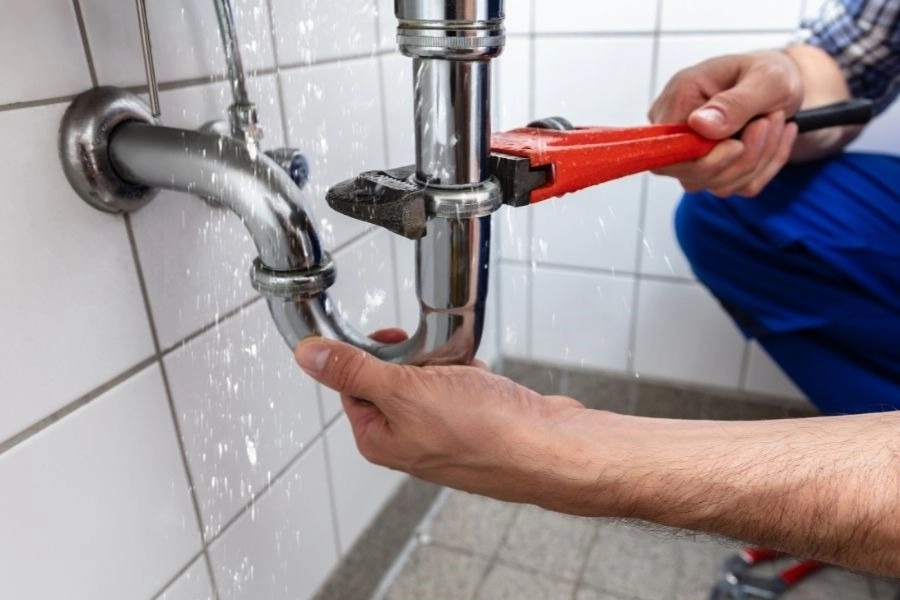
A new Colorado homeowner should check four things before the first winter: the sewer line, the water heater's age and scale buildup, the exposed pipes most prone to freezing, and any sign of an unpermitted repair from a previous owner. Colorado's expansive clay soil, hard water and hard freezes stress plumbing in ways that a home inspection from a warmer, softer-water state does not always catch.
Start with the sewer line
Homes built before 1970 in Denver's older neighborhoods and first-ring suburbs still carry a clay sewer lateral, and shifting clay soil cracks that pipe at the joints over decades. A sewer scope, run by a plumber for roughly $150 to $400, shows the condition of the entire line on video before a new owner deals with a backup in the first year.
Expansive soil and pipe breaks
Bentonite and other expansive clays under most of the Front Range swell when wet and shrink when dry, and that seasonal movement puts pressure on any rigid pipe running through or under the foundation. Water supply lines, sewer laterals and even sprinkler mainlines can shear or separate where they cross a zone of active soil movement. Watch for a spike in the water bill with no obvious leak inside the house, a soggy spot in the yard that is not near a sprinkler head, or foundation cracks paired with a nearby plumbing fixture that never quite drains right.
Hard water and what it does to Front Range plumbing
Much of the Front Range, especially areas served by groundwater wells and parts of Douglas and El Paso counties, has hard water with a high mineral content. Hard water leaves scale inside a water heater tank, on faucet aerators and showerheads, and inside pipe walls over years, which cuts water heater efficiency and shortens its working life. A whole-house water softener addresses this at the source; without one, expect to descale fixtures every year or two and budget for a shorter water heater lifespan than a home on soft water would see.
How old is the water heater, and is it worth keeping?
- Check the manufacture date on the tank's rating plate; a standard tank water heater runs 8 to 12 years before failure, shorter with hard water and no maintenance.
- Look for rust-colored water or a rumbling sound during heating, both signs of sediment buildup at the bottom of the tank.
- Check for a drip pan and floor drain under the unit, required in most Colorado jurisdictions for a water heater located above living space.
- Ask for service records; an anode rod replaced every few years extends a tank's working life meaningfully.
Frozen pipes: Colorado's fall-through-spring risk
Pipes running through an unheated crawl space, an exterior wall, or a garage freeze during Colorado's below-zero cold snaps, which hit the Front Range several times most winters. Frozen water expands and splits copper or PEX pipe from the inside, and the break stays hidden until the ice thaws and water starts flowing through the crack. Insulate exposed pipes in crawl spaces and garages, disconnect and drain garden hoses before the first freeze, and let a faucet drip on the coldest nights if a pipe run has frozen before.
Sprinkler blowouts: a Colorado fall ritual, not an optional step
Colorado's irrigation systems sit close to the surface and are not designed to hold water through a freeze, so every fall a licensed irrigation contractor blows compressed air through the lines to clear standing water before the first hard freeze. Skipping a blowout cracks buried pipe fittings and the backflow preventer, and the damage does not show up until the system is turned back on in spring, by which point it is a full repair instead of a $75 to $150 seasonal service call.
Water pressure and water quality checks worth running early
Test static water pressure at an outside spigot with a simple gauge from a hardware store; 40 to 80 psi is the normal working range, and anything above 80 psi wears out fixtures, washing machine hoses and water heater fittings faster than they should. A basic water quality test through a county extension office or a private lab checks hardness, pH and, for a home on a private well, bacteria and nitrates; a first-year homeowner on well water should run this test even if the seller provided one at closing, since conditions change season to season.
Signs of a previous DIY plumbing repair
Look for mismatched pipe materials joined with hose clamps or excessive tape, two different metals touching where a dielectric union should separate them, and shutoff valves that feel stiff or will not fully close. These are common in homes where a prior owner handled a leak without a permit or a licensed plumber, and they fail again within a few years of a new owner moving in.
Cost of common early plumbing fixes
| Issue | Typical Front Range repair cost |
|---|---|
| Frozen or burst pipe repair | $300-$1,500 depending on access and location |
| Sprinkler blowout (annual service) | $75-$150 |
| Water heater replacement | $1,500-$3,500 for a standard tank unit installed |
| Whole-house water softener installation | $1,500-$4,000 |
Pipe materials: what's in the walls matters
Colorado homes built from the 1980s forward mostly use copper or PEX for supply lines and PVC or ABS for drain and vent lines, while homes from the 1950s and 1960s sometimes still have galvanized steel supply lines that corrode from the inside and restrict water pressure over decades. PEX handles freeze-thaw stress better than rigid copper because it flexes slightly instead of splitting outright, which is one reason it has become the standard supply-line material for new construction and repiping jobs across the Front Range. If a pre-purchase inspection turns up galvanized steel supply lines, budget for a full repipe within the first several years rather than treating it as a someday project.
Does homeowners insurance cover a frozen pipe?
Most Colorado homeowners policies cover sudden water damage from a burst pipe, but many also require the home to be heated to a minimum temperature or checked regularly if left vacant during winter; read the policy's vacancy and maintenance clauses closely before leaving a home unattended for more than a few days in January or February.
Permits for plumbing repairs in Denver metro
Denver, Aurora, Lakewood and most Front Range counties require a permit for water heater replacement, sewer or main line repair, and any repiping job, while a simple fixture swap or a faucet repair does not. A licensed plumber pulls the permit as part of the job in nearly every case; if a previous owner's repair has no permit record with the county, treat it as unverified work and budget for a professional to check it rather than assuming it meets code.
Ask for the printable new-homeowner plumbing checklist in the form below and we email it the same day, so you have the sewer scope, water heater and freeze-prevention steps on hand before your first Colorado winter.
Where to go next
- The Colorado Home Buyer's Guide
- First-Time Home Buyer Guide for Colorado
- Hidden plumbing problems buyers miss during a home tour
- Colorado backflow preventers and sprinkler blowout guide
- Denver utility providers and costs guide
- Denver HOA rules and fees guide
- Homes for sale across the Denver metro
Talk to the Kenna Real Estate Group
The Kenna Real Estate Group walks new Front Range homeowners through what a plumbing inspection actually found and what to fix first in the first year. Call or text 303-955-4220. A live person answers. Not a robot, not a phone tree. Ready to look at homes now? Search every home for sale in Colorado.
Homes for sale that match this post
Guides
Questions about any home in Colorado? Call or text 303-955-4220. A live person answers.