New - 30 Mins Ago
$695,000
Active
5
Beds
3
Baths
3676
Sqft
0.1291
Acres
6171 Vickie Ln, Colorado Springs, CO 80923
MLS#: 3707143
.jpg)


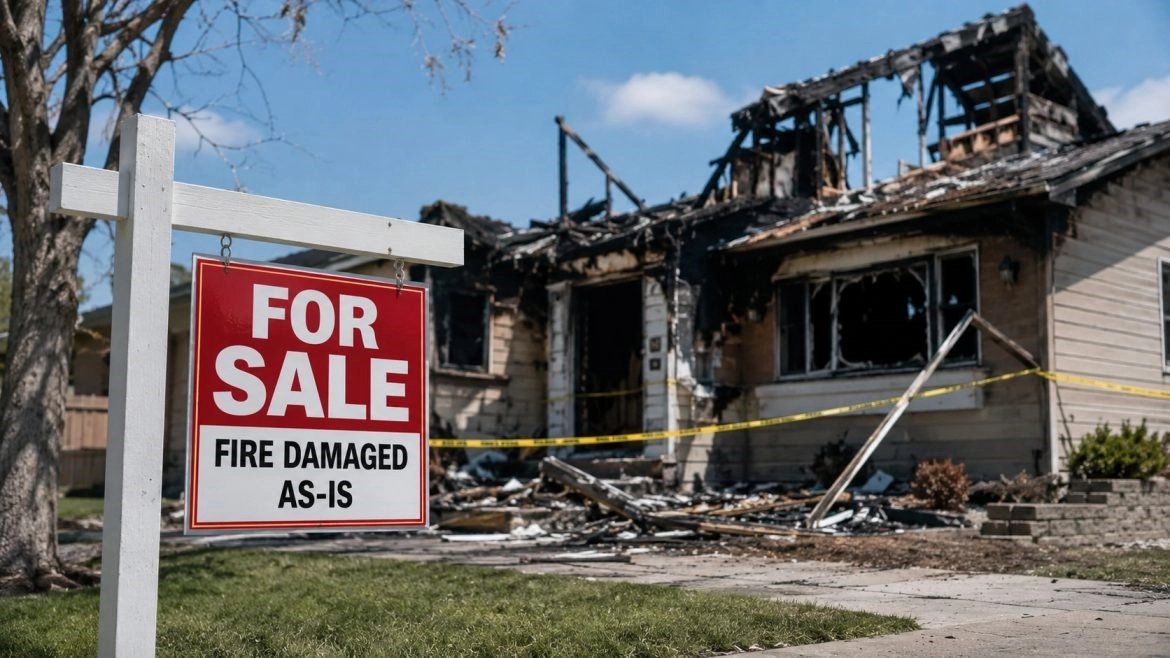
A fire-damaged home in Colorado sells for the most money when the owner settles the insurance claim first, discloses the fire on the Colorado Seller's Property Disclosure, remediates the smoke and soot, and then compares an MLS listing against direct cash offers with the real numbers side by side. Skip the claim and the remediation and the only buyers left are cash investors paying 50% to 70% of the repaired value.
The Kenna Real Estate Group has sold homes after kitchen fires in Aurora and Lakewood, after garage fires in Colorado Springs, and lots after wildfire in Boulder County. This is the order of operations we use, from the first call to the insurer to the closing table.
Every choice below depends on what the policy pays, so the claim is filed and adjusted before a listing or an offer is signed. Three Colorado facts shape the payout:
Colorado's Division of Insurance handles complaints and questions about claim handling; the Colorado FAIR Plan now writes policies for homes that private carriers refuse, which matters to the buyer of a home in a wildfire zone. Why Denver home insurance costs keep rising covers the market the buyer's quote comes from.
The Colorado Seller's Property Disclosure asks about damage to the property from fire and other events, about structural repairs, and about any known defects. A repaired fire is disclosed with the date, the scope, the contractor, and the permits. An unrepaired fire is disclosed the same way, with the adjuster's estimate attached. Colorado buyers who discover an undisclosed fire after closing have a claim against the seller; buyers who read it on the form and priced it in do not. The disclosure is required on an as-is sale and on a cash sale.
A repaired fire also carries stigma for a few years, and the fix for stigma is paperwork: permits closed, an engineer's letter on any charred framing, and a remediation certificate. Turning stigmatized properties into sale-ready homes covers how that file is built.
Smoke travels through a house in minutes and into the HVAC ducts, attic insulation, and drywall. A buyer who smells smoke at a showing does not make an offer, and a home inspector who finds soot in the ducts writes it up. Front Range remediation costs in 2026:
| Damage | Scope | Front Range cost |
|---|---|---|
| Contained kitchen or bedroom fire, smoke throughout | Soda or dry-ice blasting, seal and repaint, duct cleaning, ozone or hydroxyl treatment | $8,000 to $30,000 |
| One room burned, structure intact | Demolition of the room, charred framing sistered or replaced, remediation, rebuild | $40,000 to $120,000 |
| Attic or roof fire | Roof and trusses replaced, insulation removed, remediation of the floor below | $60,000 to $180,000 |
| Total loss or wildfire | Demolition, debris removal, soil testing, rebuild at $350 to $500 per square foot | $700,000 and up on a 2,000 square foot home |
Use a restoration contractor certified in fire and smoke restoration, get the scope in writing, and keep the before-and-after air quality report; that report is the document that removes the smoke objection at inspection. Remediation without structural work does not need a permit; any framing, electrical, or roof replacement needs one from the city or county building department.
The Marshall Fire on December 30, 2021 destroyed more than 1,000 homes in Louisville, Superior, and unincorporated Boulder County, and the rebuild that followed is the closest thing Colorado has to a manual for wildfire sellers:
Rebuild when the claim plus the owner's cash covers the rebuild cost and the owner wants to live there for at least five more years. Sell the lot when the coverage gap is over $100,000, when the owner has already relocated, or when the mortgage payoff plus the gap exceeds what the finished home would appraise for. Colorado now has a Wildfire Resiliency Code Board writing statewide wildland-urban interface building rules, and counties apply WUI standards to rebuilds in mapped zones, which adds cost in the foothills, Evergreen, Conifer, and the west side of Colorado Springs.
Both routes are valid. The right one depends on how far the remediation has gone, how fast the seller needs to close, and whether the home qualifies for a mortgage. This is the comparison on a Front Range home worth $600,000 repaired with $80,000 of fire repair outstanding:
| Route | Typical price | Time to close | Who buys |
|---|---|---|---|
| Remediate and repair, then list on the MLS | $560,000 to $590,000 (stigma discount of 2% to 7%) | Repair 3 to 6 months, then 30 to 60 days | Financed owner-occupants and investors |
| Remediate only, list as-is on the MLS | $460,000 to $500,000 (repaired value minus repair cost minus 10% to 15%) | 45 to 90 days | Renovation-loan buyers, cash investors, builders |
| Direct cash offer, no remediation | $300,000 to $420,000 (50% to 70% of repaired value) | 7 to 21 days | Investors and companies such as We Buy Fire Damaged Houses |
A cash offer is the right answer when the claim is closed, the seller has relocated, and the carrying cost of the empty house exceeds the spread. It is the wrong answer when the difference between the cash offer and the as-is MLS price is $100,000 and the seller is under no clock. Get the MLS as-is number from the Kenna Real Estate Group before signing any cash contract; you are free to use any buyer. Cash home buyers in Denver: when selling for cash makes sense covers the contract terms to watch.
A standard FHA, VA, or conventional loan requires a livable home: working kitchen, heat, roof, and no active fire damage. That leaves three financed paths for a fire-damaged listing: an FHA 203(k) renovation loan, a conventional HomeStyle renovation loan, or a construction loan on a cleared lot. Each one finances the purchase and the repair together and widens the buyer pool beyond cash. Mike Oswald, VP of Mortgage Lending at Rate, NMLS 261003, Equal Housing Lender, pre-qualifies renovation buyers for our fire-damaged listings and tells us which scope of damage each program accepts. You are free to use any lender. The programs are explained on the Colorado home financing guide, and buyers searching for this kind of property start at the Colorado distressed homes guide.
The buyer of a fire-damaged home in a mapped wildfire zone needs an insurance quote before the inspection deadline, and in the foothills that quote decides the sale. Insurers score the parcel's wildfire risk, and a seller who documents mitigation, meaning defensible space cleared to 30 feet, a Class A roof, ember-resistant vents, and no wood decks touching the structure, hands the buyer a better score. Check the wildfire score before you decide explains what the buyer sees.
A remediated and repaired fire home prices at the block's comps minus 2% to 7% for stigma in the first two years after the fire; an as-is home prices at the comps minus the repair estimate minus 10% to 15%. Our Smart Pricing Report on pricing your Colorado home to sell shows both numbers. The full listing process is on how to sell a house in Colorado, and the repair-or-credit decision is on preparing and adding value before selling.
We read the adjuster's estimate, price the home three ways, and put the as-is MLS number next to every cash offer so the decision is made on dollars. Call or text 303-955-4220. A live person answers. Not a robot, not a phone tree. When the next home is part of the plan, search every home for sale in Colorado.
Questions about any home in Colorado? Call or text 303-955-4220. A live person answers.
On a replacement cost policy, yes. The insurer pays actual cash value up front and releases the recoverable depreciation only after repairs are completed. That holdback is 15% to 30% of the loss on most Front Range claims.
Yes. The Colorado Seller's Property Disclosure asks about fire damage, structural repairs, and known defects. Disclose the date, scope, contractor, and permits, on an as-is sale and a cash sale alike.
$8,000 to $30,000 for a contained fire with smoke throughout the house, covering blasting, sealing, repainting, duct cleaning, and air treatment. Keep the air quality report for the buyer's inspector.
50% to 70% of the repaired value, closing in 7 to 21 days. An as-is MLS listing after remediation brings the repaired value minus repair cost minus 10% to 15%, which is more money on almost every home with time to wait.
Not a standard loan. FHA 203(k) and conventional HomeStyle renovation loans finance the purchase and repair together, and a construction loan works on a cleared lot.
Rebuild when the claim plus cash covers the current cost and the owner is staying five years. Sell the lot when the coverage gap tops $100,000 or the owner has relocated. Get the current rebuild rules from Louisville, Superior, or Boulder County in writing first.
Yes. Carriers score the parcel, and a documented Class A roof, 30 feet of defensible space, and ember-resistant vents improve the quote. The Colorado FAIR Plan covers homes private carriers decline.