New - 3 Days Ago

.jpg)


Yes, buy a Colorado fixer-upper with foundation issues when a licensed structural engineer has put the cause and the fix in writing, the repair bid is in hand, and the price drops by the full bid plus a 20% contingency. Walk away when the engineer cannot name the cause, the seller refuses an engineer visit, or the fix needs a lender that will not close on the home as it sits.
This guide is written for buyers along the Front Range, from Fort Collins to Colorado Springs, where the soil itself is the reason so many homes crack. It covers what bentonite clay does, what repairs cost in Denver metro dollars, what lenders and insurers do, and how to turn a scary inspection report into a fair price.
Expansive clay. Much of the Denver metro, Douglas County, Jefferson County, El Paso County and Weld County sits on bentonite-rich clay from the Pierre Shale and Denver formations. Bentonite absorbs water and swells; it dries and shrinks. Colorado's freeze-thaw winters and dry summers broken by May to September hailstorms keep that cycle running every year.
The result is heave, not just settling. A slab or footing pushed up 1 to 3 inches by wet clay cracks drywall, racks door frames and lifts interior walls. The Colorado Geological Survey publishes a homeowner guide to swelling soils because the problem is that common, and Colorado law requires builders to hand new-home buyers a summary of the lot's soils report and a booklet on expansive soils.
Foothills lots in Golden, Morrison and Evergreen add a second cause: steep grades that push water toward the house. Pre-1930 Denver blocks in Baker, Berkeley and Platt Park add a third: brick and rubble foundations never designed for a finished basement.
Front Range builders pour basement floors as floating slabs: the concrete is not tied to the foundation walls, and interior basement walls sit on the slab with a gap at the top (a float strip or slip joint) so the slab rises and falls without lifting the house. Stairs, furnace flues and water heater lines get flexible connections for the same reason.
When a buyer sees a finished basement with drywall screwed tight to the top plate and no gap, the float has been defeated. The next wet spring, the heaving slab pushes the walls up into the floor joists. That is the most common structural damage on a basement finish in Highlands Ranch, Parker and Castle Rock, and it costs $3,000 to $8,000 to re-cut the walls and restore the float.
Homes in Douglas County built on the worst clays skip the slab and use a structural wood floor over a crawlspace on drilled piers. Stand on the basement floor: if it flexes and sounds hollow, it is a structural floor, and the crawlspace below needs a look for moisture and shifted void forms.
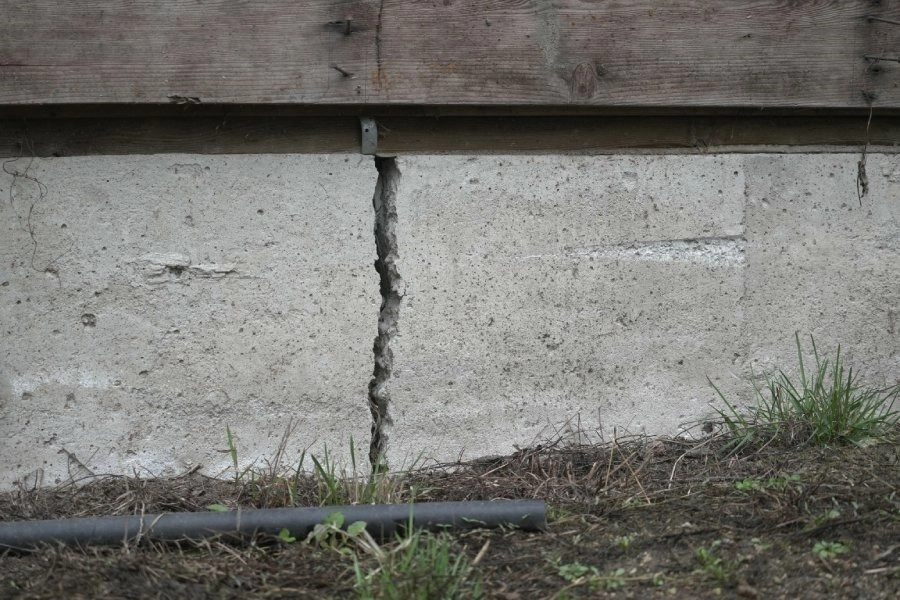
A general home inspector notes these and stops. The report that matters comes from a structural engineer. The post on whether a foundation crack means a structural problem in a Denver-area home shows the crack patterns with photos.
A Colorado-licensed professional engineer (PE) walks the home, measures floor levels with a laser or zip level, reads the crack pattern and writes a stamped report that names the cause, states whether movement is active, and specifies the repair. On the Front Range that visit and letter run $450 to $900 and take 3 to 7 days. Order it inside the inspection deadline of the Colorado Contract to Buy and Sell so the findings support an Inspection Objection.
Two rules. First, hire the engineer yourself; a free inspection from a repair company is a sales call, and lenders do not accept it. Second, get the repair specification in writing, then send that specification to two or three repair contractors so every bid prices the same scope.
| Repair | What it fixes | Front Range cost range |
|---|---|---|
| Epoxy or polyurethane crack injection | Leaking or cosmetic wall cracks | $400 to $1,000 per crack |
| Carbon fiber straps | Bowing wall under 2 inches | $600 to $1,200 per strap; $5,000 to $12,000 per wall |
| Wall anchors or steel I-beam bracing | Bowing wall over 2 inches | $900 to $1,800 per anchor |
| Push piers or helical piers | Settling footings | $1,800 to $3,500 per pier; 6 to 12 piers on one wall, $12,000 to $40,000 |
| Slab removal and replacement | Heaved floating slab | $8 to $15 per square foot |
| Interior drain and sump pump | Water against the wall | $6,000 to $15,000 |
| Full foundation replacement | Failed rubble or brick foundation | $60,000 to $150,000 and up |
Helical piers screw into the ground to a measured torque and fit the tight side yards of Denver bungalows; push piers are driven using the weight of the house and need a heavier structure. Either way, piers stop settlement; they do not stop heave. If the engineer's letter says heave, the fix is water control and slab work, not piers.
Wet basements are their own line item. Grading that drops 6 inches in the first 10 feet, downspout extensions of 5 feet or more, and sprinkler heads kept 5 feet off the wall solve the majority of Front Range water problems for under $2,000, and they are the first thing the engineer lists.
Front Range pier installers sell a transferable warranty on the piers, and that warranty is worth real money at resale. Read three lines before you count on it: whether the transfer requires a written request within a set number of days after closing, whether there is a transfer fee, and whether the warranty covers the pier only or also re-leveling. A warranty from a company that no longer exists covers nothing; confirm the installer is still in business and collect the original invoice and warranty certificate at closing.
If the seller already repaired the foundation, ask for the engineer's post-repair letter as well. A repaired foundation with a stamped letter and a transferable warranty appraises and sells like a normal home. An unrepaired one does not.
Conventional lenders send an appraiser, and the appraiser notes visible structural defects. With an engineer's letter that says the home is stable, most conventional loans close. If the letter says movement is active, expect a repair-before-closing condition or an escrow holdback of 1.5 times the bid.
FHA and VA appraisals check that the home is structurally sound; an open foundation defect is a required repair before closing. Buyers who want to finance the repair itself use an FHA 203(k) loan or a conventional renovation loan, which fund the purchase and the engineer-specified repair in one closing. Mike Oswald, VP of Mortgage Lending at Rate, NMLS 261003, Equal Housing Lender, structures those loans for Kenna Real Estate Group buyers. You are free to use any lender. Start at the Colorado home financing page.
Homeowners insurance does not fix this. A standard Colorado HO-3 policy excludes earth movement, settling, cracking and expansion of foundations and slabs. The buyer pays for foundation repair, so the price has to carry it.
Present the engineer's letter and the bids with the Inspection Objection. Colorado sellers disclose known foundation defects on the Seller's Property Disclosure, and once they hold your engineer's report they must disclose it to the next buyer too. That fact moves prices.
Investors run the same math with a hard ceiling: purchase, repair and refinish together stay under 70% to 75% of the after-repair value. The Denver fix and flip guide lays out that formula, the Colorado fix and flip guide covers permits and timelines, and the post on renovation versus selling shows the same numbers from the owner's side.
Every Front Range town has expansive clay somewhere, and county and city building departments keep permit records for foundation repairs. Pull the permit history on any home with patched cracks. Areas with a long record of swelling soils: Highlands Ranch, Castle Rock, Parker, Aurora, Broomfield, Thornton, Superior, Louisville, Colorado Springs and Greeley. Areas with old foundations: the pre-1930 blocks of Denver, Littleton, Golden, Englewood and Longmont.
A finished basement is where most of the money in a Front Range fixer-upper goes, and the post on what Colorado buyers want in a finished basement shows which finishes pay back. The Colorado home buyers guide covers the inspection timeline and the objection process step by step, and the buyer services page explains what the Kenna Real Estate Group does between the engineer's visit and closing.
The Kenna Real Estate Group, Keller Williams DTC, writes foundation contingencies into Colorado contracts every month: engineer access, bid-based price reductions, escrow holdbacks and renovation-loan timelines. Bring us the listing and we bring the engineer and the numbers. Call or text 303-955-4220. A live person answers. Not a robot, not a phone tree. Or search every home for sale in Colorado and flag the ones that need a second look.
Questions about any home in Colorado? Call or text 303-955-4220. A live person answers.
No. A crack under 1/8 inch with no offset is cosmetic. A crack that is wider at one end, horizontal, or offset needs a structural engineer's stamped letter before you decide, and that letter costs $450 to $900 on the Front Range.
Bentonite swells when wet and shrinks when dry, so it lifts and drops slabs and footings by 1 to 3 inches over the seasons. That heave is why Front Range basements use floating slabs and drilled piers with void forms.
Helical and push piers run $1,800 to $3,500 per pier installed on the Front Range. Stabilizing one settling wall takes 6 to 12 piers, so budget $12,000 to $40,000 plus the drywall and floor refinish.
No. Piers stop settlement by carrying the footing to deeper soil or bedrock. Heave from wet clay under a floating slab is fixed with grading, downspouts, sprinkler setbacks and slab work, not piers.
Not as it sits. An open structural defect is a required repair before an FHA or VA loan closes. An FHA 203(k) or conventional renovation loan funds the purchase and the engineer-specified repair together.
No. A standard HO-3 policy excludes earth movement, settling and cracking of foundations and slabs. Price the repair into your offer because no policy pays it later.
Most Front Range pier warranties transfer, but many require a written transfer request within a set window after closing and some charge a fee. Get the certificate, the invoice and the installer's current contact at closing.
Take the middle of three bids from the engineer's written scope, add 20% contingency and the cosmetic refinish, subtract that total from the price, then subtract another 5% to 10% of the repair cost for resale stigma.