.jpg)


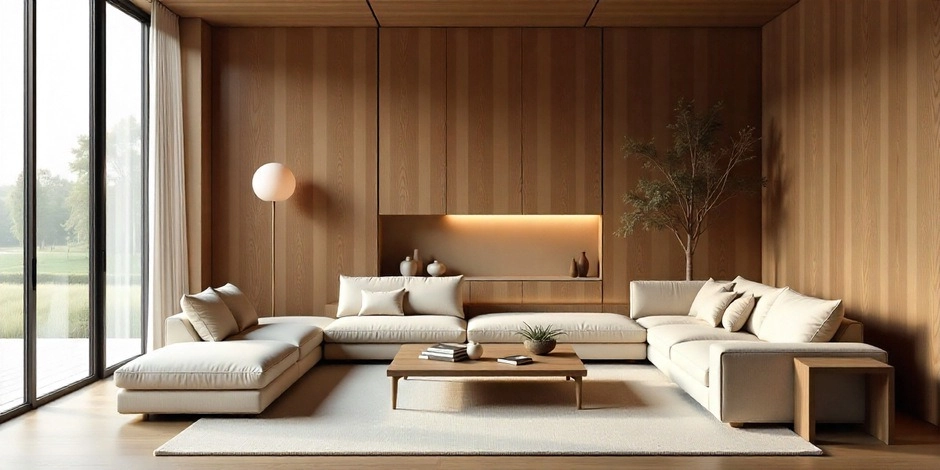
Solid wood furniture survives a Front Range home when the wood species, joinery, and finish are matched to a dry, high-altitude climate — not just to how the piece looks in a showroom. Colorado's winter indoor humidity commonly runs 10 to 25 percent, well below what wood prefers, and that single fact eliminates more furniture than style or price ever will.
Does Colorado's dry climate damage solid wood furniture?
Yes, if the piece is not built or maintained for it. Wood is hygroscopic — it absorbs and releases moisture with the air around it, expanding and contracting as humidity swings between a dry Front Range winter and a more humid summer. Furniture built with traditional joinery and a full finish on every surface, including the back and underside, handles that swing without failing. Furniture glued together with staples and finished only on the visible faces is the kind that develops gaps, cracked panels, or a warped tabletop within a few winters.
Which wood types hold up best at Front Range humidity levels?
Oak, maple, cherry, and walnut are the hardwoods furniture builders rely on, and all four handle Colorado's humidity swings better than pine or cedar softwoods, which dent and scratch more easily and move more with moisture change.
| Wood | Strength | What to know in Colorado's climate |
|---|---|---|
| Oak | Very durable, prominent grain | Handles seasonal humidity swings well; a long-time favorite for dining furniture |
| Maple | Harder than oak, tight grain | Good for contemporary pieces that need a smooth, even surface |
| Cherry | Durable, darkens with age | Color shift is normal and even; avoid placing it in direct west-facing sun |
| Walnut | Durable, premium price | Rich color holds up well; still needs a full finish to resist dry-air cracking |
| Pine or cedar | Softer, dents and scratches easily | Moves more with Colorado's humidity swings; better for low-traffic pieces |
How do I check furniture joinery before buying?
Pull out a drawer and look at the sides for dovetails — interlocking triangular cuts that physically cannot pull apart. Look under a chair or inside a cabinet for corner blocks and bracing rather than wood pieces butted together with staples. Table aprons, the frame under a tabletop, should connect to the legs with real joinery such as mortise-and-tenon, not screws and brackets alone. Furniture with proper joinery tightens with age; furniture held together with glue and staples loosens and eventually fails, and that failure happens faster in a climate that is already stressing the wood with humidity swings.
What finish protects wood furniture in a dry Colorado home?
Oil finishes soak into the wood and need reconditioning every year or two, and a dry Front Range home dries that oil out faster than a humid climate does. Polyurethane forms a harder protective layer that resists scratches and spills better and needs less frequent maintenance, which suits a lower-humidity home well. Whatever the finish, check that it covers every surface of the piece, including the back and underside — a finish applied only to the visible faces leaves the unfinished side absorbing and releasing moisture unevenly, which is exactly what causes warping at altitude.
Is solid wood or veneer better for a Denver-area home?
Solid wood runs through the entire thickness of the board, takes multiple refinishing passes over its life, and is the better long-term choice for a dry climate because sanding and resealing renew the finish as it wears. Veneer — a thin layer of real wood glued over plywood or another base — costs less, weighs less, and moves less with humidity, which is a legitimate advantage in Colorado, but it only takes one or two sandings before hitting the base material underneath. Check that veneer sits over plywood, not particleboard; particleboard swells and disintegrates if it takes on moisture.
Does altitude affect how wood furniture expands and contracts?
Altitude itself matters less than the humidity that comes with it — Front Range winters combine low outdoor humidity with dry, heated indoor air, which pulls moisture out of wood faster than a milder or more humid climate would. A piece bought in a coastal humid market and moved to Denver, Colorado Springs, or Fort Collins can develop new gaps at the joints during its first Colorado winter even if it never had a problem before the move.
How much humidity should a Colorado home run for wood furniture?
Wood furniture, string instruments, and fine art hold up best between 30 and 50 percent relative humidity. A furnace humidifier or a portable room humidifier during the heating season keeps a Front Range home closer to that range and protects both furniture and hardwood flooring from the worst of the dry-season shrinkage.
Where can Front Range buyers find furniture repair shops?
Solid wood furniture with real joinery can almost always be repaired — a loose joint reglued, a scratch sanded and refinished, a water ring lifted. Furniture built with particleboard and staples almost never can. Ask a local furniture store or a moving company for a repair referral before assuming a piece with a wobble or a surface issue needs to be replaced.
Does Colorado sun fade or dry out wood furniture finishes?
Close to 300 days of sun a year and strong UV at 5,280 feet fade and dry out an exposed wood finish faster than in most other climates, especially on pieces near south- or west-facing glass. A finish that looks even when the piece is delivered can develop a visibly lighter patch within a couple of years if it sits in direct afternoon sun.
Should furniture sit near a west-facing window in a Colorado home?
Keep fine wood furniture, especially cherry and walnut pieces with color that is still developing, a few feet back from unfiltered west-facing glass, or add a solar shade or UV window film. Rotating a piece a quarter turn every year or two evens out whatever fading does happen.
What should I test before buying a dresser or table?
Sit in the chair and rock it slightly — quality furniture does not creak or flex. Push on table corners to check for wobble, and open every drawer more than once to confirm it glides without catching. On a wide tabletop, the grain should run lengthwise, and boards should alternate grain direction; a top with every board running the same direction warps faster as it moves through a Colorado winter.
Front Range buyers furnishing a new home or replacing pieces that did not survive a first dry winter can browse solid hardwood furniture collections built with the wood types and joinery that hold up in this climate. Buyers drawn to a more contemporary look can also review this listing of epoxy table manufacturers that combine wood with resin for a different style of durability.
Is reclaimed or FSC-certified wood worth the extra cost?
Forest Stewardship Council certification confirms the wood came from a responsibly managed forest, and reclaimed wood — salvaged from old barns, factories, or demolished buildings — brings a texture and color new lumber cannot match. Neither changes how the piece performs in Colorado's climate; that still comes down to species, joinery, and finish. Choose reclaimed or certified wood for the sourcing story, and check joinery and finish separately for durability.
Where to go next
- Preparing and Adding Value Before Selling
- The Colorado Home Buyer's Guide
- Explore Denver
- Why Amish Furniture Is a Smart Choice for a Sustainable Home in Colorado
- Preparing Your Home for Showings: Furniture Storage Tips
- Search every home for sale in Colorado
Talk to the Kenna Real Estate Group
The Kenna Real Estate Group at Keller Williams DTC walks new Front Range homeowners through what a Colorado winter does to furniture, floors, and finishes, and points buyers toward homes with the space and layout their furniture actually needs. Call or text 303-955-4220. A live person answers. Not a robot, not a phone tree. Ready to see what is on the market right now? Search every home for sale in Colorado.
Homes for sale that match this post
Guides
Questions about any home in Colorado? Call or text 303-955-4220. A live person answers.