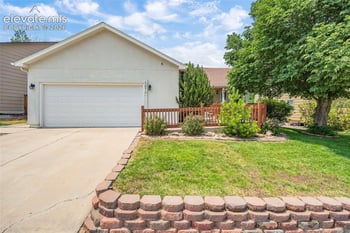
New - 10 Hours Ago

$504,999
Active
4
Beds
3
Baths
2068
Sqft
0.2762
Acres
7454 Waterside Dr, Colorado Springs, CO 80925
MLS#: 6565764
.jpg)



A Colorado flood zone is a mapped area where FEMA rates the annual chance of flooding, and it affects two practical things for a buyer: whether your lender requires flood insurance, and how much that policy costs. Zone AE means at least a 1% annual chance of flooding and mandatory insurance on a federally backed loan; Zone X means minimal mapped risk and no insurance requirement. Check the exact zone for an address before you fall in love with the house.
FEMA maps flood zones along rivers, creeks, and drainage channels based on modeled water flow, historical events, and elevation. On the Front Range, mapped high-risk zones cluster along the South Platte River through Denver, Cherry Creek, Boulder Creek, Fountain Creek through Colorado Springs, and the Poudre River through Fort Collins. A property does not need to be next to a named river to fall in a mapped zone; smaller drainage channels and low-lying areas carry their own flood designations.
Zone X is the lowest FEMA risk category and does not trigger a mandatory insurance requirement from most lenders, which is why buyers treat it as the lower-cost, lower-risk designation. Read the full breakdown of whether flood zone X is good or bad for the technical distinction between Zone X shaded (moderate risk, 0.2% annual chance) and Zone X unshaded (minimal risk). Neither eliminates flood risk entirely; they lower the mapped probability.
A property backing to any of these, or to a smaller tributary that feeds them, is worth a flood zone check even if the listing does not mention it.
Yes, when the home sits in a FEMA Special Flood Hazard Area (Zone A or AE) and the loan is federally backed, which covers most conventional, FHA, and VA loans. The lender orders a flood zone determination during underwriting and adds the insurance requirement to your closing conditions if the address maps into a high-risk zone. Talk to your lender early: Mike Oswald at Rate (NMLS 261003, Equal Housing Lender) walks Colorado buyers through exactly how a flood zone determination changes a loan file, and you are free to use any lender for that conversation. Start at Colorado home financing or Kenna Credit Care.
A National Flood Insurance Program policy for a moderate-risk Front Range home runs roughly $700 to $1,800 a year, while a high-risk Zone AE property can run several thousand dollars depending on the elevation certificate and the home's lowest floor height. Get a firm quote before you write an offer, not after: a flood policy is a real monthly cost that changes what payment you can qualify for.
Colorado's seller property disclosure form asks directly about past flooding, water intrusion, and sump pump use. A seller who knows the basement has flooded and checks "no" is exposed to a legal claim after closing. Read the disclosure line by line, and ask your agent to request any insurance claim history tied to the property during your inspection period.
Pull the FEMA Flood Map Service Center report for the exact parcel, not the neighborhood in general; flood zones can change from one side of a street to the other. Your lender pulls this automatically during underwriting, but checking it yourself before you write an offer avoids a late surprise during your inspection objection period.
No. A standard Colorado homeowners policy excludes flood damage; you need a separate NFIP or private flood policy for that coverage, whether or not your lender requires it. Wind-driven rain and hail damage to the roof are covered under a standard policy; rising water from a creek or storm runoff is not.
The 2013 Front Range floods hit Boulder, Larimer, and Weld counties hard, and FEMA updated flood maps in several Colorado counties afterward based on that data. A neighborhood's flood history is a real data point, even where current maps show lower risk, because storm patterns and updated modeling can shift a zone designation at the next map revision. Ask your agent whether a county has issued a Letter of Map Revision for the block you are considering; that single document can change your insurance requirement even when the listing photos show no visible risk at all.
Yes, as long as you carry the required flood insurance at closing and keep it current for the life of the loan. The insurance requirement adds a line item to your monthly payment, so factor it into your budget the same way you factor in property tax and homeowners insurance when you get pre-approved.
Front Range soil is full of bentonite clay, which swells when wet and shrinks when dry, a cycle that stresses foundations even without a mapped flood zone nearby. Poor grading, a clogged downspout, or a flat yard that holds water after a spring storm feeds that clay cycle and can crack a slab over several seasons. An inspector who checks grading and downspout extensions is protecting the foundation from ordinary drainage problems, not just from the FEMA-mapped flood risk.
| Zone | Meaning | Insurance required on a federal loan |
|---|---|---|
| AE | High risk, base flood elevation determined | Yes |
| A | High risk, no base flood elevation determined | Yes |
| X (shaded) | Moderate risk, 0.2% annual chance | No, but worth carrying anyway |
| X (unshaded) | Minimal mapped risk | No |
The Kenna Real Estate Group checks flood zone status on every Front Range listing a buyer asks about, before it becomes a closing-week surprise. Call or text 303-955-4220. A live person answers. Not a robot, not a phone tree. Ready to look at options? Search every home for sale in Colorado.
Questions about any home in Colorado? Call or text 303-955-4220. A live person answers.
Zone A and Zone AE, the Special Flood Hazard Areas, require flood insurance on any federally backed mortgage. Zone X does not carry that requirement.
A moderate-risk policy runs roughly $700 to $1,800 a year. A high-risk Zone AE property can run several thousand dollars depending on the elevation certificate.
The South Platte River, Cherry Creek, Boulder Creek, the Poudre River, and Fountain Creek all carry mapped flood zones along parts of their Front Range corridors.
Yes. The Colorado seller property disclosure form asks directly about past flooding and water intrusion, and a false answer exposes the seller to a claim after closing.
No. Flood damage from rising water is excluded from a standard homeowners policy and requires a separate NFIP or private flood policy.
Yes, as long as the required flood insurance is in place at closing and stays current for the life of the loan.
Pull the FEMA Flood Map Service Center report for that exact parcel. Zones can differ from one side of a street to the other, so check the address, not the neighborhood.