New - 2 Hours Ago
.jpg)


Colorado buyers notice a heating problem in the first five minutes of a showing: a basement 10 degrees colder than the main floor, a furnace that rattles on startup, dry air that stings in January, a data plate dated 2002, or a swamp cooler on the roof where they expected an air conditioner. Sellers stopped noticing those things years ago. Buyers price them into the offer or write them into the inspection objection.
This guide covers what a Front Range buyer sees and hears, why gas furnaces at 5,280 feet are different from the ones in the manual, the 80 percent versus 95 percent decision, boilers in older Denver homes, heat pumps in Colorado cold, radiant floors, evaporative coolers, what the inspector tests, what Xcel Energy offers, and what each system costs to replace in the Denver metro in 2026.
The Denver inspection red flags guide lists what happens next: the inspector confirms what the buyer suspected, and the objection lands in the seller's inbox.
Gas furnaces are rated at sea level. Thinner air at altitude carries less oxygen, so a furnace burns less fuel per hour and puts out less heat than its label says. The rule of thumb in the fuel gas code is a derate of about 4 percent for every 1,000 feet above 2,000 feet: roughly 13 percent in Denver, 16 percent in Castle Rock and Monument, and 20 percent or more in Evergreen, Conifer and Bailey.
Two things follow. A 100,000 BTU furnace in Denver delivers closer to 87,000 BTU, so an installer sizes the unit for the altitude, not the brochure. And most 90-percent-plus condensing furnaces need a high-altitude conversion kit, a pressure switch or orifice change made at installation. An inspector looks for the altitude sticker on the cabinet; a furnace installed without the kit short-cycles, sooties the burners and trips its own limit switch on cold nights. Ask the seller for the installation invoice, which names the kit.
An 80 percent AFUE furnace vents hot exhaust up a metal flue, through the roof or a masonry chimney. A 95 percent AFUE condensing furnace pulls more heat from the same gas, vents through PVC pipe out a side wall, and drips condensate into a floor drain or a pump. On a Front Range home that burns $1,200 of natural gas each winter, the 95 percent furnace burns about $190 less per year; over a 15-year life that pays back the price difference. The 95 percent unit also carries the Xcel Energy rebate, and the 80 percent unit does not.
Buyers see the difference in the flue: a white PVC pipe out the side of the house means a condensing furnace; a metal pipe up the chimney means 80 percent. Neither is a defect. A working 80 percent furnace under 15 years old is an inspection non-event.
Homes built before 1950 in Washington Park, Congress Park, Park Hill, Capitol Hill, Berkeley and the older blocks of Littleton, Englewood, Golden and Longmont heat with a boiler and hot-water radiators. Buyers from out of state have never lived with one and ask three questions: does it work, how old is it, and where is the air conditioning.
A cast-iron boiler runs 25 to 40 years, longer than any furnace, and a modern condensing boiler runs 15 to 20. The inspector checks the pressure relief valve, the expansion tank, the circulator pump, the gauge pressure and the radiator valves for leaks. The bigger buyer issue is cooling: no ducts means no central AC, so a boiler house is cooled with ductless mini-splits, a high-velocity small-duct system or window units. Converting a boiler home to forced air runs $15,000 to $30,000 in the Denver metro because the ductwork has to be built inside finished walls. Most buyers keep the boiler and add mini-splits.
A heat pump moves heat instead of making it, and it cools in summer with the same equipment. The question every Colorado buyer asks is whether it works at 10 below. Cold-climate heat pumps sold today are rated to deliver full or near-full heat at 5 degrees and keep running below minus 15, which covers a Front Range winter with a handful of exceptions; the standard Denver install is dual-fuel, a heat pump on the furnace's air handler that runs most of the season while the gas furnace takes over on the coldest nights.
Colorado's state heat pump tax credit is claimed by the registered installing contractor and shows up as a discount on the invoice, and Xcel Energy pays a separate rebate on qualifying units; both change yearly, so the buyer asks for the invoice to see what the seller received. Repairs are the other question. A heat pump is a refrigerant system with a compressor and a reversing valve, so the repair trade is the AC trade, not the furnace trade; modern heat pump repairs run on the same diagnostics whether the house sits in Ottawa or Arvada, and the inspector checks the outdoor unit's defrost cycle and the backup heat strip or furnace hand-off. Denver's building code now steers new construction and some replacements toward electric heat, so a heat pump in a 2024 build in Central Park or Green Valley Ranch is the norm, not a curiosity.
Radiant floor heat shows up in mountain homes, custom builds in Evergreen and Castle Pines, and remodeled basements. Buyers like it: warm tile, silent, no ducts, no dry air. The inspector checks the manifold for leaks and asks how the zones are controlled. Radiant is slow to respond, so a house set back to 55 while the seller is away takes half a day to come up; a cold showing is a thermostat setting, not a defect.
Evaporative coolers work in Colorado because the air is dry, and thousands of Denver, Aurora, Lakewood and Pueblo homes built before 2000 cool with one on the roof. Buyers moving from humid states have never seen one and read it as a missing air conditioner. A swamp cooler is winterized every October with a cover and a drained line, delivers 15 to 25 degrees of cooling on a 95-degree afternoon, and costs $2,500 to $5,000 to replace. Adding central AC to a forced-air home runs $6,000 to $10,000, and sellers of homes over $500,000 in the south metro replace the swamp cooler with AC before listing because buyers in that band expect it.
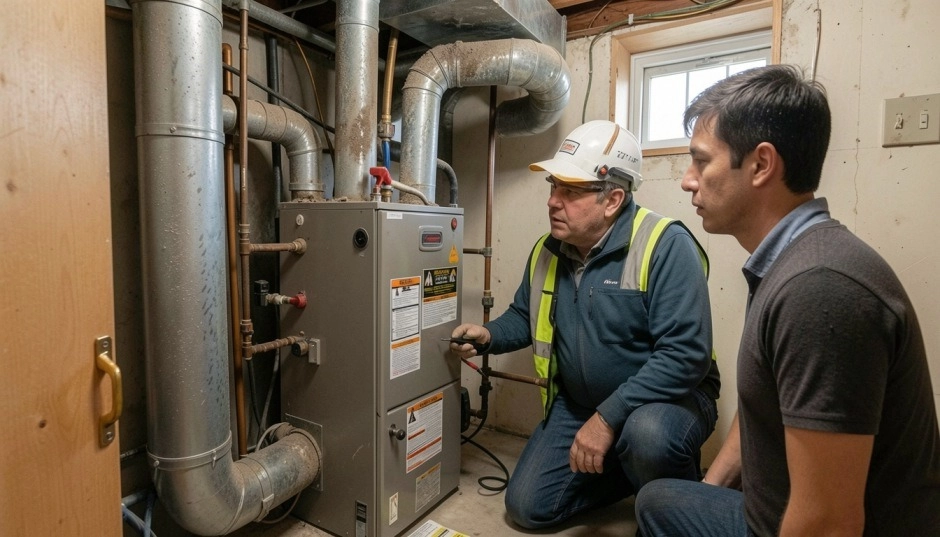
A Colorado home inspector runs the furnace or boiler through a full cycle, reads the data plate for age and BTU rating, tests for carbon monoxide at the registers, checks the flue and the combustion-air supply, looks at the heat exchanger with a camera or mirror where the design allows, pulls the filter, checks the condensate line and the humidifier, and reads the temperature rise across the unit against the plate. A cracked heat exchanger is a replacement, not a repair, and it is the one heating finding that stops a Colorado sale until it is fixed.
The Colorado Seller's Property Disclosure carries a heating section: the seller marks the fuel type and any known problems with the furnace, boiler, heat pump, fireplace and humidifier. A buyer who finds a problem writes it into the Inspection Objection by the Inspection Objection Deadline in the Contract to Buy and Sell, and the two sides settle it by the Inspection Resolution Deadline: a repair, a credit, a price cut, or the buyer walks by the Inspection Termination Deadline with earnest money back. The Colorado home buyer's guide walks through those three dates.
| Denver metro heating and cooling work, 2026 | Cost range | Service life |
|---|---|---|
| Furnace tune-up and CO test | $100 to $200 | Yearly, before November |
| Whole-house humidifier | $500 to $1,000 | 10 to 15 years |
| 80 percent AFUE gas furnace, installed | $4,000 to $7,000 | 15 to 20 years |
| 95 percent AFUE gas furnace, installed | $6,000 to $10,000 | 15 to 20 years |
| Boiler replacement | $8,000 to $15,000 | 15 to 40 years by type |
| Cold-climate heat pump, dual-fuel or full | $12,000 to $25,000 | 15 years |
| Central AC added to forced air | $6,000 to $10,000 | 12 to 15 years |
| Ductless mini-split, one zone | $4,000 to $7,000 | 15 years |
| Evaporative cooler replacement | $2,500 to $5,000 | 10 to 15 years |
| Duct sealing and cleaning | $400 to $1,000 | As needed |
Replace the furnace before listing when it is 20 years or older, when the last repair quote exceeds 40 percent of a new unit, or when the inspector on a prior deal flagged the heat exchanger. Everything else gets a $150 tune-up in the month before listing, a new filter, a humidifier set to 35 percent, the thermostat set to 68 during showings, and the service invoice in the kitchen folder. A buyer who reads a dated invoice does not write a heating objection.
The high-efficiency HVAC for Colorado sellers post makes the case for the 95 percent unit when a replacement is due, and the adding value before selling guide ranks a furnace against the other pre-listing projects. Buyers weighing a 1925 boiler home in Denver against a 2019 build in Castle Rock should read older homes versus new construction in Denver before choosing.
The Kenna Real Estate Group, Keller Williams DTC, tells sellers which heating items to fix before listing and writes the inspection objections that get buyers a credit or a new furnace on Front Range homes from Fort Collins to Colorado Springs. Call or text 303-955-4220. A live person answers. Not a robot, not a phone tree. Or search every home for sale in Colorado.
Questions about any home in Colorado? Call or text 303-955-4220. A live person answers.
Thin air at altitude carries less oxygen, so gas furnaces derate about 4 percent per 1,000 feet above 2,000 feet: about 13 percent in Denver and 20 percent or more in the foothills. Installers size for the altitude and add a high-altitude kit on condensing units.
Furnaces run 15 to 20 years on the Front Range. Past 15, inspectors write it up as near the end of its life, and buyers ask for a credit; past 20, sellers replace it before listing or price it in.
Cold-climate models deliver full or near-full heat at 5 degrees and run below minus 15. The standard Denver install is dual-fuel, with a gas furnace that takes over on the coldest nights.
No. Evaporative coolers work in Colorado's dry air and cool a house 15 to 25 degrees. Buyers over $500,000 in the south metro expect central AC, which costs $6,000 to $10,000 to add to a forced-air home.
Not through the radiators. Boiler homes are cooled with ductless mini-splits at $4,000 to $7,000 per zone or a high-velocity small-duct system. Building ductwork for forced air runs $15,000 to $30,000.
A cracked heat exchanger. It is a carbon monoxide risk, the gas utility can red-tag the unit, and it is a furnace replacement, not a repair. Every other finding settles as a credit or a service call.
Xcel Energy pays rebates on qualifying high-efficiency furnaces, heat pumps and smart thermostats, and Colorado's heat pump tax credit is applied by the registered contractor on the invoice. Amounts change each year; the invoice shows what a seller received.
68 degrees, with the humidifier at 35 percent and a new filter in the furnace. A cold, dry house reads as a heating problem even when the system is fine.