New - 16 Hours Ago
.jpg)


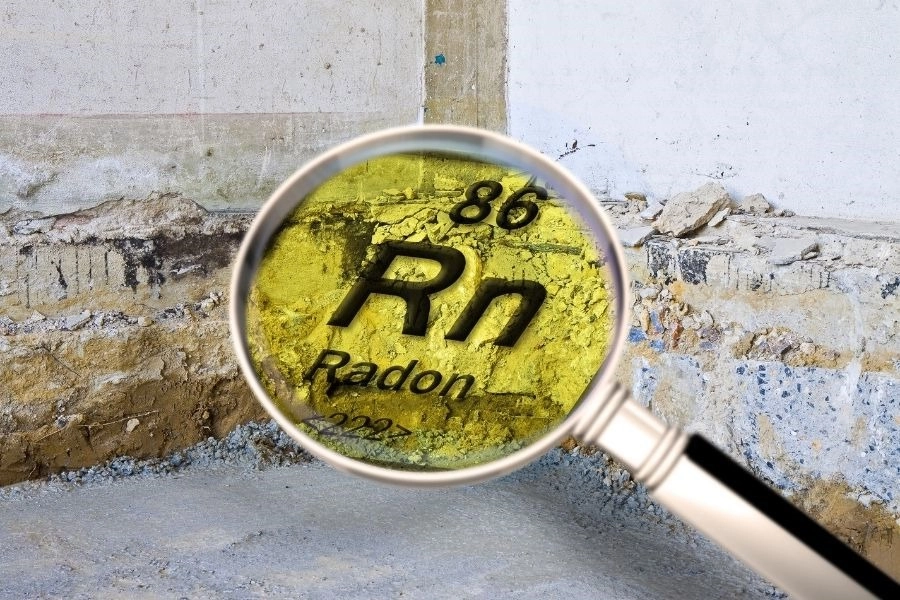
Colorado sits inside the area the EPA maps as Radon Zone 1, the highest-risk category, which means most Front Range counties carry a predicted average indoor radon level above the 4 picocurie per liter (pCi/L) action level the EPA uses as the threshold for mitigation. Testing a Front Range home for radon costs $15 to $200 depending on the method, takes a few days to a few months depending on test type, and answers a question worth knowing before or during a Colorado home purchase.
Radon is a colorless, odorless gas produced by the natural breakdown of uranium in soil and rock, and Colorado's geology, including the uranium-bearing rock formations common across the Front Range and mountain corridor, puts much of the state in the EPA's highest radon potential zone. The gas moves up through soil and enters a home through foundation cracks, sump pits, crawlspace dirt floors and gaps around pipes, and it concentrates indoors, especially in a basement, because Front Range homes are sealed tightly against winter cold.
The EPA sets 4 pCi/L as the level at which mitigation is recommended, and recommends considering mitigation between 2 and 4 pCi/L as well. Colorado's Department of Public Health and Environment (CDPHE) publishes county-level radon potential data and applies the same EPA 4 pCi/L action threshold for Front Range homeowners deciding whether to install a mitigation system.
Radon testing on the Front Range happens during the inspection period defined in Colorado's standard Contract to Buy and Sell Real Estate, alongside the general home inspection and before the inspection objection deadline. A buyer who receives a result at or above 4 pCi/L can use that deadline to negotiate mitigation, a price credit, or a system installed before closing, the same way a buyer negotiates any other inspection finding. Because a short-term test only needs a few days, most Front Range transactions get a result back well within a typical inspection window.
A standard sub-slab depressurization system, the most common fix for elevated radon in a Front Range basement, costs $800 to $2,500 installed and takes a single day to install in most homes. The system pulls soil gas from beneath the foundation slab through a PVC pipe and vents it above the roofline using a small continuously running fan, so it does need a dedicated electrical circuit. A functioning system brings indoor levels below 2 pCi/L, well under the EPA's action threshold. Most licensed installers post the fan in a garage, attic or exterior wall run so the low hum it produces is not noticeable in the living space, the label sticker on the fan states the model and install date for a future buyer's reference, and the system needs almost no maintenance beyond an occasional check of the small manometer gauge that confirms the fan is still pulling suction.
Many Front Range jurisdictions, including several Denver metro counties, require radon-resistant new construction features, a passive vent pipe run through the slab during the build, in new homes. A passive system reduces radon levels on its own in many cases, but a buyer of new construction should still test after move-in and confirm whether the passive vent pipe is capped for a future fan addition if a test comes back elevated.
A full basement, common across Denver, Aurora and Littleton, concentrates radon at the lowest level, so the test goes in the lowest lived-in room rather than the basement floor itself if the basement is unfinished and unused. A home with a crawlspace instead of a basement, more common in older Front Range ranch homes, can see radon enter through the dirt floor of the crawlspace and move up through the living space above it, and a vapor barrier over exposed crawlspace soil is a standard part of the mitigation plan alongside the vent system. Slab-on-grade homes test the main living level directly, since there is no basement or crawlspace layer to concentrate the gas first.
Radon levels shift with the seasons, running higher in winter when a home is sealed tightly against the cold, and a homeowner who tested years ago or never tested at all benefits from a fresh check every two years, or after a foundation repair, a new addition, or any work that changes how the home seals against the ground. The EPA and CDPHE both recommend retesting after a mitigation system has been running for a while to confirm it is still holding levels below the 4 pCi/L threshold.
A homeowner can place a short-term charcoal kit correctly in the lowest lived-in level of the home, following the sealed-house protocol printed on the kit, and mail it to the lab listed on the package. A real estate transaction on a tight inspection timeline, or a homeowner who wants a result that holds up in negotiation, hires a certified radon measurement professional instead, since the protocol has to be followed exactly for the number to be defensible.
A radon result above 4 pCi/L rarely kills a Front Range deal on its own, but it becomes a line item in negotiation during the inspection objection period, similar to a roof or furnace finding. Sellers who test and mitigate ahead of listing remove that negotiating point entirely; see what to address before listing a Colorado home and how known issues factor into a Smart Pricing Report for a Colorado home.
Whether a buyer needs the radon negotiation handled correctly during the inspection objection period or a seller wants to know if mitigation is worth doing before listing, the Kenna Real Estate Group walks Colorado clients through the numbers and the timeline. Call or text 303-955-4220. A live person answers. Not a robot, not a phone tree. Ready to look at homes instead? Search every home for sale in Colorado.
Questions about any home in Colorado? Call or text 303-955-4220. A live person answers.
Colorado's geology, including uranium-bearing rock formations common across the Front Range, places most of the state inside the EPA's highest radon potential zone.
The EPA sets 4 picocurie per liter (pCi/L) as the action level, and CDPHE applies the same threshold for Front Range homeowners.
A basic short-term charcoal kit costs $15 to $30, while a continuous digital monitor runs $100 to $200.
A standard sub-slab depressurization system costs $800 to $2,500 installed and takes about a day to complete.
It happens during the inspection period defined in the Colorado Contract to Buy and Sell Real Estate, before the inspection objection deadline.
Many Front Range jurisdictions require a passive radon vent pipe in new construction, though a buyer should still test after move-in to confirm it is enough.
Yes. The system runs a small continuously operating fan on a dedicated circuit to vent soil gas above the roofline.
It rarely stops a deal but becomes a negotiating point during the inspection objection period, similar to a roof or furnace finding.