New - 30 Mins Ago

.jpg)


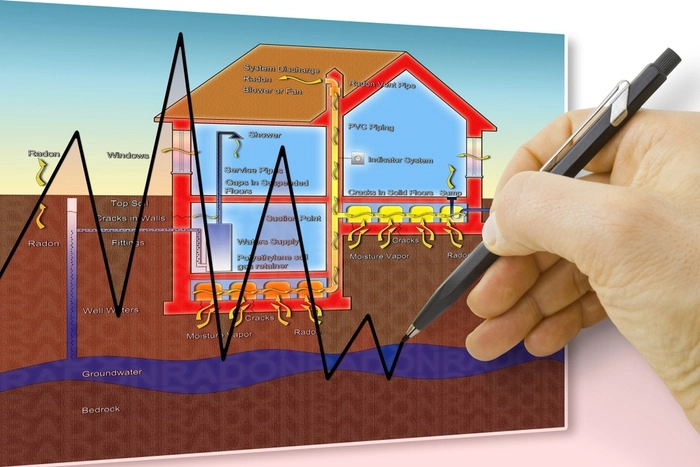
Colorado sits inside the Environmental Protection Agency's Zone 1, the highest radon-potential zone in the country. The granite and uranium-bearing soils under the Front Range release radon gas into basements and crawlspaces, and a test result above 4.0 picocuries per liter (pCi/L) means the home needs a mitigation system. The fix is a defined, priced job with a known timeline, not a mystery.
Radon forms when uranium in rock and soil breaks down. The Front Range sits on granite bedrock and the Denver Basin's uranium-bearing shale, so radon gas moves through soil gas and into a home through the sump pit, foundation cracks, and gaps around utility penetrations. The foothills communities from Golden to Evergreen post some of the highest average readings in the state, but every Front Range county has homes above the 4.0 pCi/L action level, including homes in Denver, Aurora, and Highlands Ranch.
The EPA sets 4.0 pCi/L as the action level: a result at or above that number calls for mitigation. A result between 2.0 and 4.0 pCi/L still carries risk, and the EPA's own guidance supports installing a mitigation system at that range too. Radon is the second-leading cause of lung cancer nationally after smoking, and Colorado's average indoor reading runs above the national average because of the geology, not the construction.
A short-term charcoal test kit costs $15 to $30 at a hardware store and delivers a result in 2 to 7 days. A continuous radon monitor, the kind most Colorado home inspectors use during a purchase, costs $125 to $200 for a 48-hour placement and produces a certified report a lender and title company accept. Close the lowest level of the home, keep the monitor away from vents and exterior doors, and run the full 48 hours before the inspector picks it up.
Colorado's standard purchase contract sets an inspection objection deadline, negotiated between the parties and commonly 8 to 12 days after acceptance. Radon results have to come back and reach the buyer before that date to negotiate mitigation as part of the objection. Order the radon test the day the contract goes under agreement, not after the general home inspection: a 48-hour placement plus lab turnaround can use 3 to 4 days of a 10-day window.
A sub-slab depressurization system is the standard fix. A licensed contractor drills one hole through the basement slab, runs a PVC pipe from that point through the house and out above the roofline, and installs an in-line fan that pulls soil gas out from under the slab and releases it above the eave, where it disperses. The system runs continuously and drops indoor radon 80% to 99% within 24 hours of activation.
A standard single-point system for a Denver-metro home runs $850 to $1,800 installed. A home with a crawlspace, multiple foundation sections, or a finished basement that limits pipe routing runs $1,800 to $2,800. Budget $150 to $300 a year for the electricity to run the fan continuously, plus $125 to $200 for a retest once the system is active to confirm the number dropped below 4.0 pCi/L.
Installation itself takes 4 to 8 hours for a single-point system. Most Front Range mitigation contractors book 1 to 3 weeks out in fall and winter, when testing volume peaks because homes are sealed up against the cold and indoor readings run highest. Order mitigation as soon as a test comes back high so the install lands before a closing date.
Jefferson County, Douglas County, and the foothills towns along the hogback formation post the highest average readings in state radon data. Arvada, Lakewood, and Wheat Ridge also run above the action level consistently enough that a Colorado home inspector treats a radon test as routine on any Front Range purchase, not an optional add-on.
Colorado's bentonite clay soils swell and shrink with moisture, and that movement opens hairline cracks in basement slabs and foundation walls that give radon gas a second entry point even after a mitigation system goes in. Sealing visible cracks with polyurethane or epoxy sealant before mitigation lowers the system's workload. A seller preparing a home for market can fold this into the same pre-listing punch list covered in the Kenna Real Estate Group's home-value prep guide.
The energy code most Front Range building departments enforce requires radon-resistant new construction: a vent pipe and sealed sump lid installed during the build, ready for a fan to be added later if a post-occupancy test comes back high. A passive system that has not been tested still needs a radon test after move-in, since passive venting alone does not always bring a reading under 4.0 pCi/L. Buyers touring new construction homes across Colorado should ask the builder for the test result, not just proof the pipe exists.
A home on a private well outside Denver's municipal water system can carry a second radon source: radon dissolved in groundwater releases into the air during a shower or when the dishwasher runs. A water test for radon runs $50 to $100 through a certified lab. When the number comes back elevated, an aeration or granular activated carbon system treats it at the point the water enters the home.
Colorado law (C.R.S. 38-45-101) requires a working carbon monoxide alarm within 15 feet of every sleeping room in a home with a fuel-fired appliance, fireplace, or attached garage before that home changes ownership. A radon mitigation fan and a gas furnace both belong on the same pre-listing inspection pass: confirm the CO alarms are installed and functioning at the same time the radon test gets ordered, since both items surface on a Colorado seller's disclosure. Review the full pre-listing punch list in the Colorado Home Seller's Guide.
A home with an active mitigation system and a post-mitigation test under 4.0 pCi/L sells as a documented, resolved issue. A home with no radon test on file leaves a buyer's inspector to order one, and a high result found during the buyer's own inspection window puts the repair cost and the timeline in the buyer's hands instead of the seller's. The Kenna Real Estate Group's Smart Pricing Report factors a documented mitigation system into a home's list price the same way a new roof or a new furnace gets factored in.
Most Front Range HOAs and metro districts treat an exterior mitigation pipe as a routine utility installation, but some architectural review committees ask for the pipe to run up the back of the home instead of the street-facing side, or ask for paint that matches the siding. Check the HOA's architectural guidelines before the contractor routes the pipe; a change after installation adds $200 to $400 in rework.
Ask for the printable Colorado radon testing and mitigation checklist in the form below and we email it the same day.
The Kenna Real Estate Group builds radon testing and mitigation costs into every Front Range pricing conversation, for a seller timing a listing around a mitigation install and for a buyer weighing a high radon result during the objection period. Call or text 303-955-4220. A live person answers. Not a robot, not a phone tree. Search every home for sale in Colorado.
Questions about any home in Colorado? Call or text 303-955-4220. A live person answers.
Colorado sits in the EPA's highest radon-potential zone because of the Front Range's granite and uranium-bearing soils. A result at or above 4.0 pCi/L calls for a mitigation system.
A 48-hour continuous monitor test used during a home purchase runs $125 to $200. A DIY charcoal kit costs $15 to $30 and takes 2 to 7 days.
A standard single-point sub-slab system runs $850 to $1,800 installed. A home with a crawlspace or multiple foundation sections runs $1,800 to $2,800.
Radon results need to reach the buyer before the contract's inspection objection deadline, commonly 8 to 12 days after acceptance. Order the test the day the contract is signed.
New construction under the current energy code includes a passive vent pipe and sealed sump lid. The home still needs a post-occupancy test, since a fan is not always required until a test confirms it.
Yes. C.R.S. 38-45-101 requires a working carbon monoxide alarm within 15 feet of every sleeping room in a home with a fuel-fired appliance, fireplace, or attached garage before the sale closes.
Yes. Radon dissolved in well water releases into the air during showers and dishwashing. A water radon test costs $50 to $100, and an aeration or carbon system treats an elevated result.
A documented, working system with a post-mitigation test under 4.0 pCi/L presents as a resolved issue instead of an open question for a buyer's inspector to raise.


