New - Just Now

.jpg)


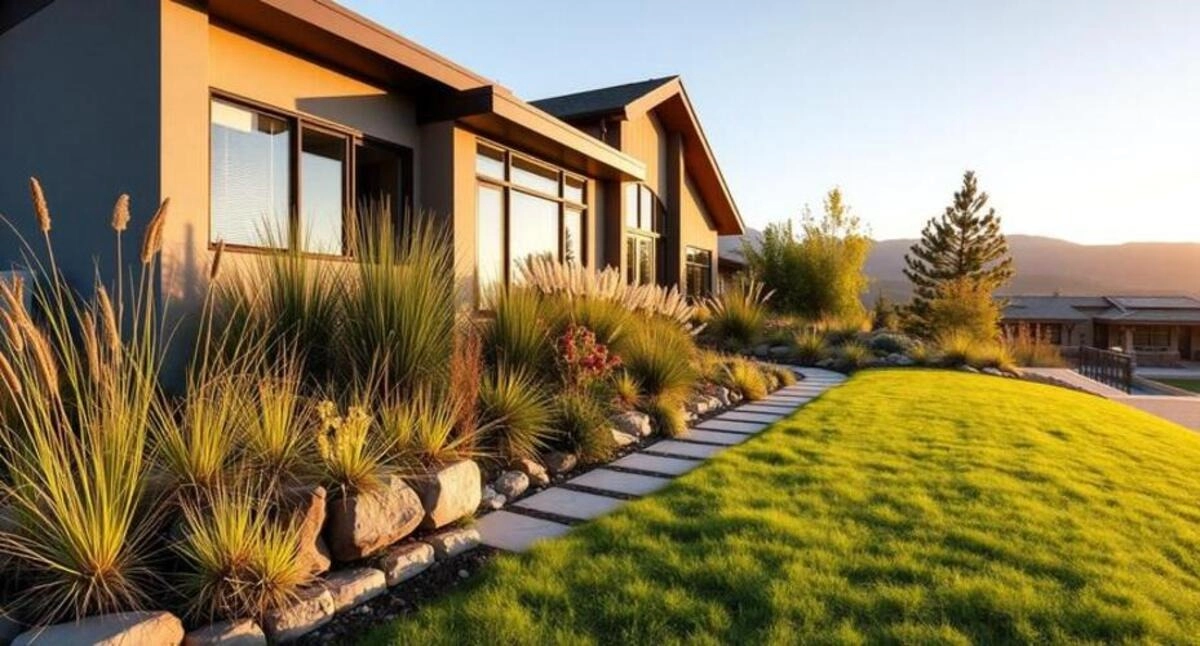
The landscaping investment with the fastest payback on a Colorado home is not a feature, it is a swap: replacing thirsty bluegrass turf with regionally adapted, low-water planting. It cuts the water bill, cuts the mowing and trimming bill, and reads to a buyer as a yard that was designed for this climate instead of fought against it.
Xeriscaping is landscaping designed around Colorado's actual rainfall instead of a bluegrass lawn that needs supplemental water most of the growing season. Done well it looks like a planted garden: native grasses, drought-tolerant perennials, mulched beds and a small turf area for pets or kids, not a gravel lot. The plant palette is what changes, not the idea of a green yard.
Converting an average 2,500 to 4,000 square foot front and back yard runs $8,000 to $18,000 for full turf removal, soil prep, drip irrigation and planting. A smaller front-yard-only conversion runs $3,000 to $7,000. Doing it in phases, front yard first, spreads the cost and lets you test the plant palette before committing the whole lot.
| Landscape type | Install cost (avg lot) | Annual water use | Annual maintenance |
|---|---|---|---|
| Bluegrass turf | $2,000 to $5,000 | High: 25+ inches of supplemental water | Weekly mowing, spring/fall fertilizing |
| Xeriscape (native/pollinator plants) | $8,000 to $18,000 | Low: drip irrigation, established after year two | Seasonal pruning, minimal mowing |
| Artificial turf | $12,000 to $22,000 | None | Occasional rinsing and infill top-off |
Yes, and it is the biggest line-item saving in the whole project. A mature bluegrass lawn in the Denver metro needs roughly 25 to 30 inches of supplemental water a season; an established xeriscape bed needs a fraction of that once the plants are rooted, by the second growing season. Ask your water provider about a current turf-replacement rebate before you dig; several Front Range utilities offer one and it can offset a meaningful share of the install cost.
Colorado state law limits how far an HOA covenant can go in prohibiting water-wise landscaping, so a blanket ban on xeriscaping will not hold up. Most HOAs still require an architectural review submittal before you remove turf, covering the plant list, mulch color and edging. Submit a plan and plant list up front rather than asking forgiveness after the sod is gone.
Native and regionally adapted plants built for this elevation and rainfall are the backbone of a low-maintenance yard: ornamental grasses, penstemon, yarrow, Rocky Mountain juniper and other species bred for Front Range winters and a short growing season between late frosts and the first fall freeze. Working pollinator plants into the bed adds bloom color through the season and draws the bees and butterflies a bluegrass lawn never does. Keep at least one shade tree in the plan too; the Arbor Day Foundation's 2024 Canopy Report tracked measurable cooling and property benefits from tree canopy, and a mature tree does more for summer comfort than any amount of ground cover.
A well-designed, mature xeriscape reads as an upgrade to most Front Range buyers now that water costs and turf restrictions are common knowledge; a patchy, half-finished conversion reads as a project the buyer has to finish. Photograph the yard in bloom for the listing and keep receipts for the irrigation and plant work; both help at appraisal and at the negotiating table.
Between the water savings and the lower mowing and fertilizing cost, most homeowners see the conversion pay for itself in five to nine years, faster with a utility rebate. Homeowners who plan to sell within two to three years should weigh the upfront cost against the resale bump rather than the water-bill payback alone.
Yes. A metro district can set its own irrigation schedule, tap fees and, in some communities, its own turf standards on top of whatever the city or county requires. Check your district's design guidelines before you finalize a plant list, not after the beds are dug.
At 5,280 feet and above, UV exposure is roughly 25% higher than at sea level, and that intensity, combined with rapid overnight temperature swings, stresses plants bred for milder climates. Species selected for Front Range conditions handle that swing; imported ornamentals from wetter, lower-elevation climates do not make it past their first winter.
Artificial turf costs more upfront and eliminates watering entirely, which makes it attractive for high-traffic play areas or steep slopes where planting is hard to maintain. It does not build the ecological or curb-appeal case that a planted xeriscape bed does, and some HOAs restrict it more tightly than they restrict native planting. Many homeowners use both: turf for a small play zone, xeriscape beds for the rest of the lot.
If the lawn is already struggling and the conversion gets finished and established before photos, yes. A half-finished bed with exposed irrigation lines photographs worse than a mowed, even if thirsty, lawn. Time the project so the beds have at least one full growing season to fill in before the home goes live, or plan the sale price and marketing around a "landscape allowance" instead.
Low maintenance is not no maintenance. Budget for a spring cleanup, one to two rounds of weeding through the growing season, a fall cutback of ornamental grasses, and a drip-line check before the first hard freeze. That still adds up to a fraction of the mowing, fertilizing and irrigation-system hours a bluegrass lawn demands over the same season, which is the whole point of the swap.
Several Denver metro cities and water providers have moved to restrict new non-functional turf, the ornamental grass strips along driveways and medians that nobody walks on, on new construction and commercial sites. Check your specific city's current landscape code and your water provider's rules before you finalize a plan for new construction or a major renovation; the rules differ by jurisdiction and change from year to year.
Rock mulch around the first few feet of the house cuts weeding and pairs with defensible-space guidance if your property backs up to open space or foothill terrain; organic mulch in the planting beds farther out holds moisture and feeds the soil as it breaks down. Most Front Range xeriscape designs use both: rock near the foundation and walkways, organic mulch in the beds.
Whether you are pricing a xeriscape conversion before you list or want a home that already has one, the Kenna Real Estate Group can pull comparable sales and point you to neighborhoods where water-wise yards are common. Call or text 303-955-4220. A live person answers. Not a robot, not a phone tree. Or search every home for sale in Colorado right now.
Questions about any home in Colorado? Call or text 303-955-4220. A live person answers.
Converting bluegrass turf to a xeriscape bed of native and drought-tolerant plants. It cuts water use, mowing time and, once established, reads as a value-add to Front Range buyers.
A full front and back yard conversion runs $8,000 to $18,000; a front-yard-only project runs $3,000 to $7,000.
State law limits how far an HOA can go in banning water-wise landscaping, but most still require an architectural review of the plant list and mulch before you dig.
A mature bluegrass lawn needs roughly 25 to 30 inches of supplemental water a season; an established xeriscape bed needs a fraction of that once plants are rooted, by year two.
Most homeowners see payback in five to nine years from water and maintenance savings alone, faster with a water provider's rebate.
Yes, a metro district can set its own irrigation schedule, tap fees and design guidelines on top of city or county rules, so check the district before finalizing a plant list.
A mature, well-designed xeriscape reads as an upgrade to most Front Range buyers; a half-finished conversion reads as unfinished work, so time the project to establish before you list.
Artificial turf eliminates watering and works well for small play areas or slopes, but it costs more upfront and does not build the curb-appeal case a planted xeriscape bed does.