.jpg)


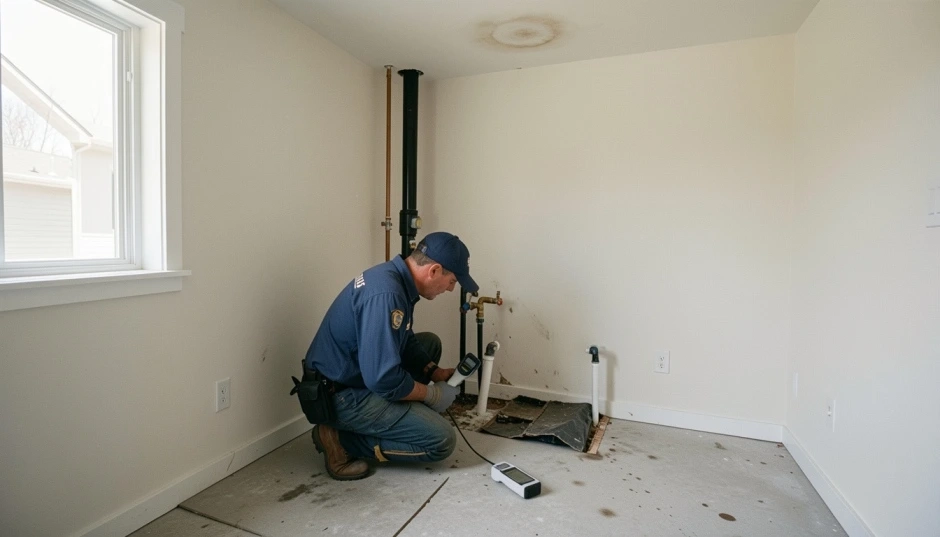
A home inspection is scoped to what is visible and accessible in a few hours: it will not run a camera down the sewer line, pressure-test a slab, or open a wall to check for a slow leak behind the drywall. Those checks are add-ons a Colorado buyer has to request separately, and they matter most in homes built before 1970, homes with a basement, and homes with any water bill or insurance history the seller has not fully explained.
A general inspector checks visible plumbing fixtures, supply lines and drain function by running water and watching for leaks, but the underground sewer line from the house to the street connection is buried and inaccessible without a camera. Running that camera is a separate service, a sewer scope, priced at $200 to $450 on the Front Range and worth scheduling on any home built before 1970 or any home where the seller cannot confirm when the line was last inspected.
Homes in Denver's older neighborhoods, including sections of Park Hill, Washington Park, Berkeley and Sunnyside, still run original clay or Orangeburg sewer pipe from construction decades before 1970. Both materials crack at the joints over time, and mature trees along these streets send roots directly into those cracks looking for water, which slowly restricts or blocks the line. A blocked line shows up as slow drains or backups, sometimes not until well after closing. A sewer scope catches root intrusion and pipe deterioration before you own the repair; full trenchless replacement runs $3,000 to $10,000, a spot repair less.
A slab leak is a break in a water line running under the concrete foundation, not a structural crack in the foundation itself, though the two get confused. Colorado's expansive, bentonite-heavy clay soils shift with seasonal moisture and stress the pipe joints under a slab, which is why slab leaks show up more here than in states with more stable soil. Warning signs include an unexplained water bill spike, a warm spot on the floor, or the sound of running water when every fixture is off. A standard inspection will not detect this; a plumber running a pressure test or leak detection scan will. Repair runs from $500 for a simple reroute to $4,000 to $15,000 if the slab has to be cut.
An inspector checks the attic for visible staining and daylight through the decking on the day of the visit, but a slow leak around a chimney flashing or a valley that only shows up during heavy spring snowmelt is completely dry on a clear inspection day. Ask the seller directly about roof age, any known past leaks, and whether flashing has been serviced, and time a second attic check after the next significant snow or rain event if the timeline allows.
Colorado's standard purchase contract sets an inspection objection deadline, negotiated in every offer and commonly 7 to 10 days after acceptance. Any additional service, a sewer scope, a slab leak scan, a follow-up attic check, has to be completed and any findings submitted before that date to give the buyer grounds to negotiate a repair, credit or price adjustment. Once the deadline passes, those findings no longer carry contractual standing in the transaction.
Colorado's seller disclosure form asks directly about known water intrusion, past leaks, sewer line issues and insurance claims tied to water damage. A seller aware of a past sewer backup or slab leak has to disclose it along with any repair documentation. Buyers should read this form closely and follow up on any vague or incomplete answers before the objection deadline.
Once a Colorado sale has closed, a buyer's recourse for undisclosed water damage runs through a claim against the seller's disclosure statement rather than the purchase contract itself, which is a harder and slower path than catching it during the inspection window. That gap is exactly why a sewer scope and a slab leak scan are worth the few hundred dollars before the objection deadline rather than after closing. A water damage restoration company can assess and dry out active damage, though remediation cost and timeline both run higher after the fact than a pre-closing repair negotiated with the seller.
Once hidden water damage turns up, a licensed restoration company maps the wet area with a moisture meter, sets industrial drying equipment, and documents readings daily until the material reads dry, a 3 to 5 day process for a contained area. That documentation matters twice: once for negotiating the repair with the seller before closing, and again if an insurance claim is filed, since carriers want dated moisture readings, not just a description of the damage. Ask for a written scope of work and a certificate of completion once drying finishes, and keep both with the closing file.
| Damage type | How a Colorado policy commonly treats it |
|---|---|
| Sudden, accidental (burst pipe, appliance failure) | Commonly covered, minus the deductible |
| Gradual, long-term (slow leak, seepage over months) | Commonly excluded as a maintenance issue |
| Resulting mold from a covered sudden loss | Coverage varies by policy; some cap mold-specific payouts |
This distinction is exactly why catching a slow leak before closing matters more than catching a dramatic pipe burst: a burst pipe is a covered claim after the fact, but months of unnoticed seepage behind a wall falls outside standard coverage in most cases, leaving the repair cost fully on the homeowner.
Shut off water to the affected fixture or the home's main line if the source is not obvious, then photograph the area before touching anything, both for insurance and for the seller conversation that follows. Move furniture and stored items away from the wet area to limit spread, and run a fan or dehumidifier if one is on hand while a professional is scheduled. Waiting even a few days to call a restoration company gives standing moisture time to seep further into framing and baseboards, turning a job that starts as contained drying into a larger material-removal project.
The Kenna Real Estate Group helps Colorado buyers build a sewer scope and slab leak check into the inspection objection window before it closes, and helps sellers get ahead of a hidden water issue before it turns into a post-closing dispute. Ask for the printable pre-closing inspection checklist in the form below and we email it the same day. Call or text 303-955-4220. A live person answers. Not a robot, not a phone tree. Or search every home for sale in Colorado right now.
Questions about any home in Colorado? Call or text 303-955-4220. A live person answers.
The sewer line is buried and inaccessible without a camera, so it falls outside a standard inspection's scope. It is a separate service, $200 to $450, scheduled during the inspection window.
A slab leak is a break in a water pipe under the concrete foundation, not a structural crack in the foundation itself. Colorado's shifting clay soils stress the pipe joints, causing this specific failure.
It has to be completed and any findings submitted before the inspection objection deadline, commonly 7 to 10 days after acceptance in a Colorado contract.
Homes built before 1970 in neighborhoods like Park Hill and Washington Park still run original clay or Orangeburg pipe, which cracks at the joints over decades and lets tree roots in.
Yes. A slow leak around flashing or in a valley is dry on inspection day and only appear after the next heavy snowmelt or rain event.
Yes. The standard disclosure form asks directly about known water intrusion, sewer issues and related insurance claims, and sellers aware of a past issue have to disclose it.
Recourse runs through the seller's disclosure statement rather than the purchase contract, a slower path than catching the issue during the inspection objection window before closing.
Full trenchless replacement runs $3,000 to $10,000, with a smaller spot repair costing less depending on how much of the line needs work.