New - Just Now
$370,000
Active
2
Beds
2
Baths
1238
Sqft
0.02
Acres
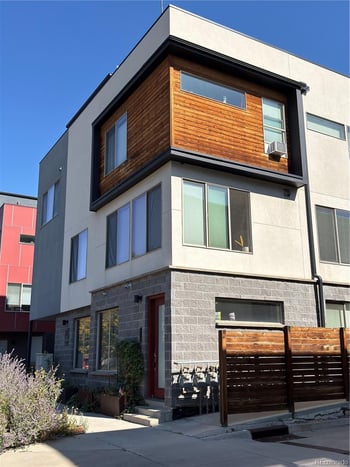
2685 S Dayton Way #253, Denver, CO 80231
MLS#: REC8752670
.jpg)



Colorado listings sort homes into two buckets first, detached and attached, and then into types: single-family, condo, townhome, paired home, patio home, 55+ community home, home with an ADU, multigenerational home, horse property, and land. Ownership is a separate question from the building: a townhome-shaped home is owned as a condominium in one subdivision and as a fee-simple lot in the next, and the ownership type decides what you insure, what the HOA controls, and what you pay each month.
This guide defines each home type as the Colorado MLS uses it, then each ownership type as Colorado law uses it, with the Denver metro costs that go with each.
REcolorado, the Denver-area MLS, files every residential listing as Residential-Detached (no shared walls) or Residential-Attached (at least one shared wall). A condo, townhome, paired home, and most patio homes are attached; a single-family home on its own lot is detached. Search filters on our Colorado home search use the same split, so start there when you know which one you want.
The building shape does not decide it; the deed does.
Our page on patio homes, townhomes, and condos in Colorado compares them with current listings, and the Denver condos, townhomes, and lofts guide covers the downtown and central-Denver buildings.
Two homes sharing one wall, each on its own fee-simple lot. Builders in Parker, Castle Rock, Erie, Broomfield, and Aurora's east side have built thousands since 2015 as the entry price for new construction: $425,000 to $600,000 against $550,000 to $800,000 for the detached homes on the next street. A paired home carries a party-wall agreement recorded with the deed and, in almost every case, a metro district. See new construction homes in Colorado by area for the communities building them now.
A 55+ community is a subdivision or building that qualifies under the federal Housing for Older Persons Act: at least 80% of the occupied units must have at least one resident aged 55 or older, and the community must publish and enforce that policy. The other 20% gives boards room for a surviving spouse under 55 or an adult child, at the board's discretion and under the community's own rules. Colorado has dozens of such communities on the Front Range, from Heritage Todd Creek in Thornton to Wolf Ranch in Colorado Springs; our Colorado 55+ communities by area page lists them by city, and the downsizing in the Denver metro guide covers the ranch and patio homes most buyers choose.
An accessory dwelling unit is a second, smaller home on a single-family lot: a basement apartment with its own entrance, a converted garage, or a detached backyard cottage. Denver allows ADUs citywide as of 2025 in single-unit zone districts, and a 2024 Colorado law requires larger Front Range cities to allow them on most single-family lots. A detached ADU in Denver costs $180,000 to $300,000 to build; a basement conversion costs $60,000 to $150,000. The Denver ADU, zoning, and historic district guide shows which lots qualify, and the post on Denver's ADU policy for buyers, sellers, and house-hackers covers the rules on renting one out.
A home built or converted with a second living space under one roof: a private suite with its own bedroom, bath, kitchenette, and outside door. Lennar's Next Gen plans in Aurora, Parker, and Castle Rock are the builder version; a finished walkout basement with a kitchen is the resale version. Three adults sharing a mortgage on one $750,000 home in Centennial pay less per household than three separate rents, which is why builders keep adding the plan. Our Colorado next-gen homes page lists what is for sale, and the post on downsizing into next-gen and multigenerational homes in Colorado covers the combined-household math.
Zoning that allows large animals and enough land to keep them: agricultural or rural-residential zoning (A-1, A-2, RR in Arapahoe, Douglas, Elbert, Adams, and Weld counties) and, as a rule, at least 2 acres, with counties setting a minimum acreage per horse. The list of what a buyer verifies is long and specific: the well permit (domestic wells that allow livestock watering come with parcels of 35 acres or more; smaller parcels carry household-use-only permits unless an exception is on file with the Colorado Division of Water Resources), the septic permit from the county health department, fencing, the barn's condition, and the hay storage. Start with the Colorado horse property buying guide and search Colorado horse properties for sale.
| Ownership type | What you own | Who controls what | Where it shows up |
|---|---|---|---|
| Fee simple | The land and everything on it | You, subject to zoning and any recorded covenants | Detached homes, most townhomes and paired homes, land |
| Condominium (CCIOA) | The airspace of the unit plus an undivided share of common elements | The association, under the Colorado Common Interest Ownership Act and the declaration | Condos, some townhome-style projects, some patio home projects |
| Fee simple with HOA covenants | The lot and home | The HOA enforces recorded covenants on exterior, landscaping, rentals, and use | Most subdivisions built after 1980, Highlands Ranch, every metro district community |
| Fee simple in a metro district | The lot and home | The district levies a property tax to repay the developer's infrastructure bonds | New construction in Parker, Castle Rock, Erie, Commerce City, Aurora east |
| Leasehold, co-op | A lease on the land, or shares in a corporation | The landowner or the co-op board | Rare in Colorado; a few mountain resort parcels and older Denver co-op buildings |
Two Colorado rules to know before you sign. Under CCIOA, an HOA's lien for up to six months of unpaid assessments outranks the first mortgage, so lenders and title companies require an HOA payoff letter at every closing. And the Colorado contract gives a buyer an HOA document deadline to read the declaration, budget, reserves, and minutes and terminate if they do not like them. The Denver HOA rules and fees guide explains what to read first, and the post on how HOAs, metro districts, and taxes affect Denver suburb buyers compares the suburbs.
The title company fills in whatever the buyer instructs; a 15-minute conversation with an attorney or an estate planner before closing is the right time to decide.
The original version of this post ranked investment types nationally; the Colorado version of each, in short:
Every path starts on the Colorado real estate investing guide.
The Kenna Real Estate Group at Keller Williams DTC sells every type on this page, from a Capitol Hill condo to 40 acres in Elbert County, and we read the declaration, the metro district service plan, and the well permit with you before the deadline passes. Call or text 303-955-4220. A live person answers. Not a robot, not a phone tree. When you are ready to look, search every home for sale in Colorado.
Questions about any home in Colorado? Call or text 303-955-4220. A live person answers.
The deed. A condo owner holds the airspace of the unit plus a share of the common elements; a fee-simple townhome owner holds the lot and the structure. The same-looking building is one or the other, and the title commitment says which.
A single-level or main-floor-living home, detached or paired, on a small lot where the HOA handles the yard and snow for $150 to $350 a month. It is the standard downsizing product on the Front Range.
Yes, within limits. Federal law requires 80% of occupied units to have a resident 55 or older; the community's own rules decide who fills the other 20%, and a younger spouse or an adult child are the usual cases.
In single-unit zone districts citywide since 2025, subject to lot size, setback, and height rules. Historic districts add a design review step.
At least 2 acres in most counties, with a per-horse minimum set by the county zoning code, plus a well permit that allows livestock watering or a water tap. Domestic wells with livestock use come with parcels of 35 acres or more.
A special district that taxes homes in a new subdivision to repay the developer's infrastructure bonds. It adds $1,500 to $4,000 a year on a $600,000 home for 20 to 40 years, in the property tax bill.
Tenants in common. To get right of survivorship, the deed must state 'as joint tenants.' Decide before closing; the title company writes the deed the way you instruct.
Under CCIOA, an HOA's lien for up to six months of unpaid assessments outranks the first mortgage, so the lender and title company require proof the account is paid before the policy issues.