New - 3 Hours Ago
$370,000
Active
2
Beds
2
Baths
1238
Sqft
0.02
Acres
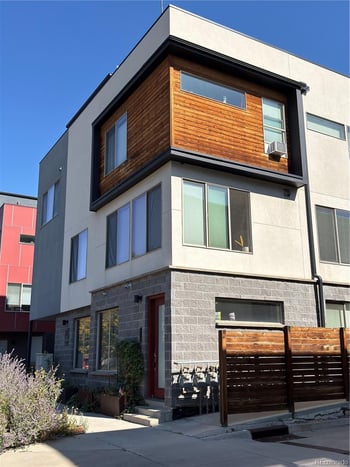
2685 S Dayton Way #253, Denver, CO 80231
MLS#: REC8752670
.jpg)



Denver metro buyers in 2026 have more homes to choose from than they had in 2021, and they respond to four things: a first photo that makes them open the listing, a price that sits inside the band they search, the facts they will ask about anyway stated up front, and an incentive that lowers the monthly payment. A listing that does those four sells in the first two weeks; one that does none of them waits for a price cut. This post is what buyers respond to now on the Front Range, with the cost of each move.
The market itself has shifted: more active listings, longer median days in MLS and more concessions than three years ago, month by month in the DMAR report and explained in why Denver is now a buyer's market. Read that first if the last time you sold was 2021.
Buyers scroll portals on phones. The first photo is a thumbnail two inches wide, and the decision to tap happens in about a second. What works on Front Range listings:
Portal filters run in bands: $25,000 steps under $500,000, $50,000 steps to $1 million, $100,000 steps above. A buyer with a top of $650,000 never sees a $659,900 listing. Buyers respond to a home that sits on the line ($650,000 or $649,900) because it appears in the search below the line and the search above it.
| Listed at | Seen by buyers searching | Missed by |
|---|---|---|
| $599,000 or $600,000 | $550,000 to $600,000 and $600,000 to $650,000 | Nobody in either band |
| $609,900 | $600,000 to $650,000 only | Every buyer capped at $600,000 |
| $1,049,000 | $1,000,000 to $1,100,000 only | Every buyer capped at $1,000,000 |
The band is set from closed comps in the Smart Pricing Report. A home comped at $615,000 lists at $600,000 and receives the buyers from two bands; a home listed at $625,000 to "leave room" receives half the traffic and the price cut anyway.
Colorado buyers' agents skip listings that make them call for basics. In the remarks or a one-page sheet attached to the listing:
A $15,000 price cut on a $600,000 home lowers a buyer's payment by roughly $100 a month. The same $15,000 spent on the buyer's rate or closing costs changes the payment or the cash to close far more, and buyers feel it. Options, with the cost to the seller:
| Incentive | Seller cost | What the buyer gets |
|---|---|---|
| Seller-paid 2-1 rate buydown | About 2% to 2.5% of the loan amount | Rate 2 points lower in year 1, 1 point lower in year 2 |
| Permanent rate buydown (discount points) | 1% of loan per point | A lower rate for the life of the loan |
| Closing cost credit | $5,000 to $15,000 | Less cash to close; the main lever for FHA and first-time buyers |
| Buyer broker fee concession | What the buyer's agreement asks, at the seller's discretion | Buyer keeps savings for the down payment |
| One-year home warranty | $500 to $700 | Covers the 1998 furnace the inspector flagged |
| Prepaid HOA dues, 6 to 12 months | $1,800 to $6,000 | Answers the dues objection on condos and townhomes |
Concessions have lender caps: 6% of the price on FHA loans; 3%, 6% or 9% on conventional loans depending on the buyer's down payment (under 10%, 10% to 25%, over 25%); on VA loans, 4% for concessions on top of the buyer's normal closing costs. The listing agent writes the incentive into the remarks ("seller offers $12,000 toward buyer's rate buydown or closing costs") so it shows in the saved-search alert.
The Kenna Real Estate Group works with Mike Oswald, VP of Mortgage Lending at Rate, NMLS 261003, Equal Housing Lender, who prices a buydown for a specific buyer's loan before the seller signs the concession so the dollars go where they move the payment. You are free to use any lender. The program is on the 3-2-1 buydown page and the Colorado financing page.
REcolorado feeds every portal within hours of go-live, and saved-search alerts do the first week's work. Beyond that, what moves a Denver metro listing:
Buyers respond to responsiveness. A showing request confirmed inside the hour, a question about the HOA answered inside 15 minutes, and a counter delivered the same evening keep a buyer on the home instead of the next one on the tour. The Kenna Real Estate Group answers 303-955-4220 with a person, seven days a week, for the buyer's agent as well as the seller.
With choices, buyers stop negotiating and leave. The four items that end Front Range contracts at the inspection deadline:
The pre-listing week that clears all four is in the pre-listing week for Colorado sellers.
Buyers with choices still buy the home that photographs and shows best, and it does not take a full interior redesign. Half the furniture into storage ($100 to $250 a month), paint in the rooms that photograph ($400 to $800 a room), 3000K bulbs everywhere, and a $250 to $600 deep clean cover 90% of it. Outside, the eight fixes that matter on the Front Range are in 8 curb appeal fixes for Front Range sellers. The rest of the prep math is in preparing and adding value before selling.
The Kenna Real Estate Group at Keller Williams DTC lists Colorado homes the way buyers search for them: the right first photo, the price on the band line, every fact in the listing, and an incentive priced against a real buyer's loan. Call or text 303-955-4220. A live person answers. Not a robot, not a phone tree. You can also search every home for sale in Colorado to see what buyers compare your home against this week.
Questions about any home in Colorado? Call or text 303-955-4220. A live person answers.
A seller-paid 2-1 buydown lowers the buyer's payment in years one and two far more than a price cut of the same cost, and buyers feel the payment, not the price. Mike Oswald at Rate prices it for the buyer's loan; you are free to use any lender.
FHA allows 6% of the price. Conventional allows 3%, 6% or 9% depending on the buyer's down payment. VA allows 4% in concessions on top of normal closing costs. The buyer's lender confirms the cap before the contract is signed.
It is the seller's choice, offered as a concession in the contract rather than through the MLS since 2024. On a home competing with five others in its band, offering it widens the buyer pool; on a home with an offer review time set, it is negotiated inside the offer.
A twilight exterior or the strongest interior room, shot midday with blinds open and verticals corrected. The front of the house at noon with the garage door centered is the photo buyers scroll past.
In the first week, saved-search alerts from REcolorado do the work. Paid search and social ads earn their cost on homes over about $800,000 and on any listing in its second month, when the alert has already fired.
HOA dues and any pending special assessment, the metro district mill levy, roof and furnace age, the radon result and the average Xcel Energy bill. State all five in the listing.
Yes. Denver summers now run weeks above 90 degrees and buyers filter for AC at the photo stage. A new system runs $6,000 to $12,000 installed and is priced back into the sale.