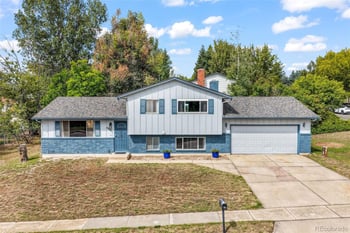
New - 23 Hours Ago
$660,000
Active
5
Beds
3
Baths
3124
Sqft
0.3003
Acres
505 Big Sky Ct, Colorado Springs, CO 80919
MLS#: 6461995
.jpg)



Before you write an offer on a Colorado home inside a homeowners association, read four things: the current budget, the reserve balance, the last six months of board minutes and the status letter. Those four documents tell you whether the dues are real, whether a special assessment is coming, and whether the people running the association know what they are doing. This guide covers the management and the money. The rules side (paint colors, fences, parking, pets, rentals) is covered in how HOA regulations affect your home purchase.
The Kenna Real Estate Group reviews association documents on every attached and HOA purchase from Fort Collins to Colorado Springs. The Colorado Contract to Buy and Sell gives the buyer a deadline to read them and walk away with the earnest money intact. Use it.
Colorado has three kinds of HOA management, and the kind shapes what you get for the dues.
Colorado does not license community association managers. The state's manager licensing program ended on July 1, 2019, and nothing has replaced it. That puts the burden on the buyer to judge the manager from the documents, not from a credential. The guide on how to choose an HOA management company lists the traits of a well-run firm; use it as a checklist while you read the minutes. Response time to owner emails, a published fee schedule and audited or reviewed financials are the three traits that matter most.
Section 7 of the Colorado Real Estate Commission's Contract to Buy and Sell Real Estate (Residential) requires the seller to deliver the association documents by the Association Documents Deadline. The buyer then has until the Association Documents Termination Deadline to terminate for any reason tied to those documents, in the buyer's sole subjective discretion, and the earnest money comes back.
The seller must deliver:
The Kenna Real Estate Group writes 10 to 14 days for this deadline on Denver metro purchases so the buyer has time to read everything and call the manager with questions. Ask for the insurance declarations page at the same time; it is not always in the packet, and it is the first item lenders and insurance agents ask about.
The status letter (also called a statement of account) is the association's written statement of what the seller owes: regular assessments, any special assessment, fines, late fees and the paid-through date. Under the Colorado Common Interest Ownership Act (CCIOA), the association must furnish this statement within 14 calendar days of a written request. The title company orders it before closing, and the closing statement settles the balance.
Two boxes to check in the Colorado contract: who pays the status letter fee and who pays the transfer or record-change fee. Both are negotiable. Denver metro management companies charge one fee for the status letter and another for the ownership transfer; the pair runs from under $200 to several hundred dollars depending on the company. Ask for the fee schedule with the documents so neither side is surprised at the closing table.
Open the current operating budget and find these:
Under CCIOA the board adopts the budget and the owners ratify it by not rejecting it: the budget stands unless a majority of all owners vote it down at the owners' meeting. In practice that means the board sets the dues. Read the minutes to see how the board talks about money before you trust the number.
Reserves are the association's savings for big-ticket components. A reserve study lists each component, its remaining life, its replacement cost and the percent funded. Colorado law requires the board to adopt a written policy on reserve studies and reserve funding; it does not require a minimum balance. That is why reserve levels across the Denver metro run from fully funded to close to empty.
| Percent funded | What it means for the buyer |
|---|---|
| 70% or higher | Strong. Roofs, paving and boilers get paid from savings. |
| 30% to 70% | Fair. Expect dues increases and a special assessment in a roof or paving year. |
| Under 30% | Weak. Plan on a special assessment or an association loan within the next big project. |
| No reserve study | Unknown. Ask the manager for the last three years of capital spending and the age of the roofs. |
Condo and townhome buildings from the 1970s and 1980s in southeast Denver, Aurora and Lakewood show the largest gaps between reserve balances and coming projects: original flat roofs, cast-iron drain lines, original boilers and asphalt parking lots that have reached the end of their service life.
Ask the manager three questions in writing: Has the association levied a special assessment in the past five years? Is one in effect now? Has the board discussed one in the minutes? The status letter shows assessments already levied; only the minutes show the ones being discussed. Hail is the number one trigger on the Front Range. A percentage-based hail deductible on a 100-unit complex runs into six figures, and the association bills it to owners by allocated interest. Our post on catching the HOA's surprise bill before you close walks through the paperwork.
In the Colorado contract, a special assessment assessed before the closing date is the seller's obligation unless the parties agree otherwise in writing. If the minutes show one being voted on, write that agreement into the offer now instead of arguing about it at closing.
Skip the roll call and read for these words: roof, plumbing, elevator, insurance, non-renewal, attorney, lawsuit, delinquent, resign and executive session. Then note:
Ask the manager in writing whether the association is a party to any lawsuit. Construction defect claims are common in Colorado attached communities built since 2000, and a 2017 Colorado law requires a majority vote of owners before an association files a construction defect action. A pending suit stops most conventional and FHA financing on the building until it resolves. The seller's disclosure and the lender questionnaire both ask about it, so the answer will surface; better to have it before the offer than after the appraisal.
Most suburbs built since 2000 in Douglas, Adams, Arapahoe and Weld counties have both: an HOA that bills dues, and a metro district that shows up as a mill levy on the property tax bill and repays the bonds that built the streets and water lines. Metro district debt is public record and does not appear in the HOA packet. Read the Denver special district and metro district tax guide and our post on how HOAs, metro districts and taxes affect Denver metro suburb buyers before you compare two neighborhoods on dues alone.
On a condo or attached home, the lender sends the management company a questionnaire that asks about reserves, delinquencies, litigation, deferred maintenance, insurance coverage and the owner-occupancy ratio. A weak answer on any of those turns a pre-approval into a denial after the appraisal. Mike Oswald, VP of Mortgage Lending at Rate, NMLS 261003, Equal Housing Lender, reviews HOA packets with Kenna buyers before the documents deadline runs. You are free to use any lender. Start with the Colorado home financing guide and the mortgage pre-approval guide.
The Kenna Real Estate Group at Keller Williams DTC reads the HOA packet with you line by line, writes the documents deadline so you have time to use it, and tells you in plain numbers whether the dues cover the building. Call or text 303-955-4220. A live person answers. Not a robot, not a phone tree. Or search every home for sale in Colorado and send us the addresses you want vetted.
Questions about any home in Colorado? Call or text 303-955-4220. A live person answers.
No. Colorado's community association manager licensing program ended July 1, 2019. Judge a manager by the minutes, the financials and how fast the office answers, not by a credential.
As long as the contract says. The Colorado Contract to Buy and Sell sets an Association Documents Deadline for the seller and an Association Documents Termination Deadline for the buyer; the Kenna Real Estate Group writes 10 to 14 days on most Denver metro purchases.
Yes, if you terminate in writing before the Association Documents Termination Deadline. The contract lets the buyer terminate over the association documents in the buyer's sole subjective discretion.
Whoever the contract says. Both fees are checkboxes in the Colorado contract and both are negotiable; ask the management company for its fee schedule with the document packet.
70% or higher is strong. Under 30% means a special assessment or an association loan is coming with the next roof, paving or boiler project. Colorado law requires a reserve policy, not a minimum balance.
The seller, under the Colorado contract, unless the parties agree otherwise in writing. If the minutes show one under discussion, put the agreement in the offer.
Search the HOA Information and Resource Center at the Colorado Division of Real Estate. Every association must register each year, and the center keeps a public record of owner complaints.
No. A metro district is a separate taxing entity that appears as a mill levy on the property tax bill. Check the county assessor and treasurer records for the district's levy and outstanding bonds.