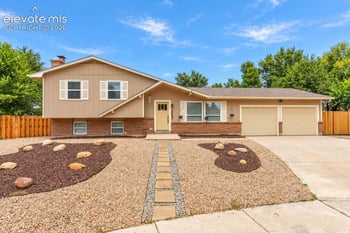
New - 1 Hour Ago

$29,999
Active
2
Beds
1
Baths
660
Sqft
0.02
Acres
220 Mount View Ln Lot 8, Colorado Springs, CO 80907
MLS#: REC4901397
.jpg)



Picking where to build in Colorado matters more than picking the floor plan, because a Front Range lot's soil, water access, and permitting rules decide what you are allowed to build before an architect ever draws a line. Get the site wrong and the foundation, well, or septic system can cost more than the house.
Four things decide whether a Colorado lot works for your plans: the soil report, water and sewer access, the county or city's permitting rules, and whether an HOA or metro district controls what you can build. Everything else, views, acreage, distance to town, is a preference. These four are pass-fail. The Kenna Real Estate Group's guide to what to know before building your forever home covers the full checklist.
A city lot in Denver, Aurora, Lakewood, or Colorado Springs connects to municipal water, sewer, and utilities already at the property line, which keeps site work costs down and shortens the permit timeline. County acreage in unincorporated Douglas, Elbert, Weld, or Larimer County gives more land and fewer neighbors, but you take on well and septic permitting, longer emergency response times, and a county planning process instead of a city one. Both are workable; the trade-off is site-development cost against space and privacy.
Colorado's Front Range gets close to 300 days of sun a year, and that sun is stronger at 5,280 feet than at sea level, which pushes builders toward UV-rated roofing and siding and larger roof overhangs on south-facing walls. Winters bring freeze-thaw cycles that stress concrete and foundations, and spring through September is hail season, which is why Class 4 impact-resistant roofing is worth pricing into a new build from the start rather than adding it after the first storm.
Large parts of the Front Range sit on expansive bentonite clay that swells when it absorbs water and shrinks as it dries, and that movement cracks foundations that are not engineered for it. Most Front Range counties and cities require a geotechnical soils report before they will issue a building permit, and the report's recommendations, in many cases a post-tension slab or a structural crawlspace instead of a standard slab, add real cost. Get the soils report before you close on the lot, not after, so the foundation type is priced into your budget.
Foothill and mountain-adjacent parcels in Jefferson, Boulder, and Douglas County frequently fall inside a mapped wildfire hazard area, and building there brings defensible-space clearing requirements and, on many lots, Class A fire-rated roofing and ember-resistant vents. Ask the county planning department for the parcel's wildfire hazard rating before you buy, and ask your insurance agent for a premium estimate at the same time, since wildfire-zone coverage costs more and some carriers limit how much new business they write in the highest-risk areas.
Inside most city limits, you tap into existing water and sewer mains for a connection fee. On rural county acreage, you need a permitted well through the Colorado Division of Water Resources in nearly every case, plus an onsite wastewater treatment system, commonly called a septic system, permitted through the county health department. Well permitting in parts of the Front Range draws from the Denver Basin aquifer, a non-renewable groundwater source with its own permitting rules, so ask about well yield and permit type before you commit to a rural parcel.
Confirm electric, natural gas, and, if you want it, broadband before you buy. Xcel Energy serves most of the Front Range for electric and gas, and if the nearest line is far from your lot, the line-extension cost can run into the tens of thousands of dollars and needs to be built into your site budget. The Department of Transportation's utilities partnership resource is a useful starting point for buyers planning EV charging into a new build's electrical service.
Many newer Front Range developments sit inside a metro district, a taxing authority that issues bonds to pay for streets, water, and parks, then repays that debt through your property tax bill for decades. An HOA on top of that commonly runs a design review board that approves your architecture, exterior materials, and even paint colors before the county will issue a permit. Ask for the metro district's current mill levy and total outstanding debt, and the HOA's design guidelines, before you buy the lot; the Kenna Real Estate Group breaks down what a metro district actually costs a homeowner in that Denver new-build has a tax district.
Expect a building permit, a grading and drainage permit, a septic or sewer-tap permit, and in many counties a separate soils and foundation review, each reviewed by a different department on its own timeline. Denver, Douglas County, El Paso County, and Larimer County each run their own process and fee schedule, so a builder who has pulled permits in your specific county or city saves you weeks compared with one who has not.
Custom construction on the Front Range runs roughly $250 to $400 per square foot once you include site work, permits, and finishes, before the cost of the land itself. On a 3,000-square-foot home, that is $750,000 to $1,200,000 in hard construction cost alone. Compare that total, plus your land price, against the price of an existing home with the features you want; the Kenna Real Estate Group's build-vs-buy cost and value guide walks through the full math.
A lot that lets you orient the roof for south-facing solar exposure takes real advantage of Colorado's sun total, and several Front Range utilities, including Xcel Energy, offer rebates for solar and high-efficiency HVAC installed at the time of construction. Ask your builder to check solar access and shading from neighboring lots or trees before you finalize the house placement on the site.
Parts of Douglas, Elbert, and Larimer County zone for horse properties and larger residential acreage, outside city growth boundaries in most cases, where lot minimums run from two to thirty-five acres depending on the zoning district. Search current Colorado horse properties for sale to see what is already on the market in these areas before deciding to build from raw land.
Front Range commute times run from under 20 minutes inside the metro suburbs to well over an hour from the outer exurbs during peak traffic on I-25 or C-470. Map your actual commute at rush hour, not off-peak, before you buy land 40 miles out; the acreage is real, and so is the extra hour each way.
Colorado uses a prior appropriation water rights system, where the right to use water is a separate legal asset from the land itself and can be owned, sold, or restricted independent of the parcel. Before buying acreage for a well, confirm what water rights, if any, transfer with the property, and have a water attorney or the Colorado Division of Water Resources confirm the well permit type before you close.
Pull the county or city's zoning map and current comprehensive plan for the parcel and the land around it, and check the planning department's list of pending applications nearby. A quiet field today can be a platted subdivision or a commercial corridor in five years, and the zoning and comprehensive plan documents are the most reliable public record of what is coming. Some buyers also review independent public research, such as this national city-trend report, as one input alongside the county's own planning data, though local zoning documents remain the more direct source for a specific parcel.
Golf-course and country club communities such as homes for sale at established Colorado clubs bundle amenities, landscaping standards, and, in many cases, an HOA design review into the price of the lot. They tend to hold resale value well because the surrounding community is professionally maintained, but confirm the club membership structure and dues separately from the HOA fee before you commit.
Xcel Energy requires a new-service application, a site plan showing the planned meter and service location, and, on rural lots, a line-extension agreement if the connection point is far from existing infrastructure. Apply as early as possible in your permitting process; utility scheduling, not construction itself, is a common cause of delayed move-in dates on Front Range custom builds.
Plan on 10 to 16 months from permit approval to move-in for a typical single-family custom build, longer if the lot needs a well, septic, or a line extension before vertical construction even starts. Add several months on the front end for design, engineering, and the permitting cycle itself.
Buying an existing home is close to always cheaper and faster than building from raw land once you count site work, permitting time, and construction financing costs. Building wins when you need something the resale market does not offer, a specific lot, acreage, or a floor plan you cannot find. Run both numbers side by side before you buy land.
Whether you are comparing a buildable Front Range lot against an existing home, or you need the soils, water, and permitting questions answered before you make an offer on land, the Kenna Real Estate Group works with buyers through exactly this decision every week. Call or text 303-955-4220. A live person answers. Not a robot, not a phone tree. Or search every home for sale in Colorado right now.
Questions about any home in Colorado? Call or text 303-955-4220. A live person answers.
Utility line extensions and well or septic permitting. A lot that looks move-in ready can add tens of thousands of dollars once you price the distance to the nearest power line or the cost of a permitted well.
Most do, because of the region's expansive clay soils. The report determines whether a standard slab works or whether you need a post-tension slab or structural crawlspace, which changes your foundation budget.
A metro district is a local taxing authority that issues bonds for streets, water, and parks, then repays that debt through your property tax bill for decades in many cases. Ask for the current mill levy and outstanding debt before buying in one.
Add several months for design, engineering, and permitting before construction even starts, and expect the county or city's own review timeline to add more depending on how complete your soils and utility documentation is.
Not automatically. Well permits go through the Colorado Division of Water Resources, and in parts of the Front Range that draw from the Denver Basin aquifer, the permit type and allowed use are specific and limited.
In almost every case, yes, once you count site work, permitting time, and construction financing. Building makes sense when you need a specific lot, acreage, or a floor plan the resale market does not offer.
Many do, through a design review board that approves architecture, exterior materials, and sometimes paint colors before the county issues a building permit. Get the HOA's design guidelines before you buy the lot.
Spring through September is hail season on the Front Range, which is why pricing Class 4 impact-resistant roofing into the original construction budget costs less than replacing standard shingles after the first storm.