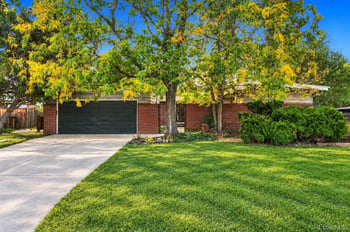
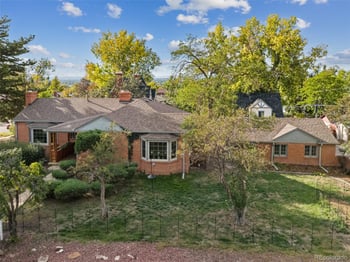
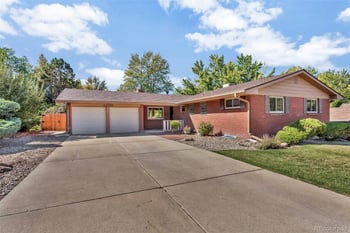
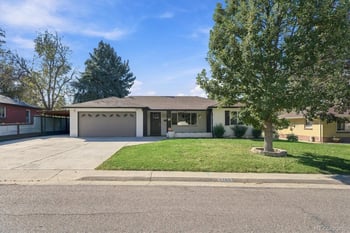
New - 5 Hours Ago
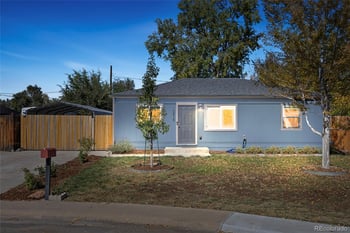
$475,000
Coming Soon
3
Beds
1
Baths
864
Sqft
0.14
Acres
10925 W 39th Ave, Wheat Ridge, CO 80033
MLS#: REC4440424
.jpg)



A Colorado seller with a house in poor condition discloses every adverse material fact they know about, on the Seller's Property Disclosure from the Colorado Real Estate Commission, plus four items with their own forms or contract paragraphs: lead-based paint on homes built before 1978, radon under the Colorado law in effect since August 2023, methamphetamine contamination, and the source of water. As-is does not shorten the list. This post walks the form section by section for a home with problems, then covers HOA and metro district documents, oil and gas, the items Colorado says you do not have to disclose, and what happens when a seller leaves something out.
Colorado is a disclosure state. A seller must tell the buyer about facts the seller actually knows that affect the property's value or a buyer's decision to buy it: a roof that leaks, a basement that took water in the May 2023 storms, a sewer line that backed up twice, a furnace the technician red-tagged. The Seller's Property Disclosure asks about each system in turn and the seller answers "yes," "no" or "do not know" from actual knowledge. It is not a warranty and it does not replace the buyer's inspection; it is the seller's statement of what they know on the date they sign it.
Licensed brokers carry the same duty. A Kenna Real Estate Group agent who knows of a defect discloses it to the buyer whether or not the seller wrote it down. That is Colorado license law, and it is why the group asks sellers direct questions before the listing goes live.
Use the "additional comments" space. "Basement took 2 inches of water in May 2023; drain and grading corrected June 2023; dry since" tells a buyer more than a checked box and heads off the claim that you hid it.
Federal law requires the seller of any home built before 1978 to sign the Lead-Based Paint Disclosure, provide the EPA's lead pamphlet, disclose any known lead paint reports, and give the buyer a 10-day window to test. That covers most of Baker, Berkeley, Platt Park, Sunnyside, Englewood, Wheat Ridge and Golden and every pre-war neighborhood in Denver. You are not required to remove the paint. Peeling paint on those homes gets scraped and repainted before an FHA or VA appraisal because the appraiser requires it. The era-by-era list of what old Denver houses carry is in selling an old Denver house that needs repairs.
Colorado sellers give buyers a radon warning statement, disclose any known radon test results, records and mitigation systems, and provide the Colorado Department of Public Health and Environment's radon brochure. The Front Range sits in the EPA's highest radon zone, so a home without a test on file gets one during the buyer's inspection: 48 hours, $150 to $250. A mitigation system runs $1,200 to $2,500. If you tested at 6 pCi/L in 2019 and never mitigated, that result is disclosed. Testing and mitigation are covered in the Denver radon testing and mitigation guide.
Colorado requires sellers to disclose known methamphetamine contamination unless the property was remediated to the state's standards and certified. The disclosure form asks the question directly. If a prior owner, a tenant or a police report put you on notice, the answer is yes, with the remediation certificate attached if one exists. A buyer of a foreclosure or estate home with no history orders a $150 to $300 screening test during inspection; a seller with a certificate saves that step.
The Colorado Contract to Buy and Sell contains a source-of-water statement: public system, well, or other. Well owners in Douglas, Elbert, Weld and Larimer counties find the well permit on file with the Colorado Division of Water Resources and disclose the permit number, the well's use class and any water quality tests. Septic owners disclose the system, its last pumping and any failures; several Front Range counties, Jefferson County among them, require a county inspection and a use permit before the property transfers. Confirm your county health department's rule before you set a closing date. Denver homes built before 1951 add one more item: whether Denver Water's Lead Reduction Program has replaced the lead service line.
If the home is in a common interest community, the contract's association documents deadline requires the seller to deliver the declarations, bylaws, rules, current budget, reserve study, and a status letter from the management company, and to disclose any pending special assessments and any violation notices. The Colorado contract also carries a special taxing districts disclosure: a home in a metro district carries a mill levy that funded the neighborhood's roads and pipes, and the buyer sees that levy on the tax bill. Most Parker, Castle Rock, Aurora, Commerce City and Thornton subdivisions built after 2000 sit in one. The mechanics are in the Denver special district and metro district tax guide and the Denver HOA rules and fees guide.
The Colorado contract includes an oil and gas activity disclosure, and the Seller's Property Disclosure asks whether the mineral estate was severed and whether there is any surface use agreement, lease or well on or near the property. Sellers in Weld, Adams and Arapahoe counties, and in Erie, Frederick, Firestone, Broomfield and eastern Aurora, answer this with the deed and any lease in hand. "Minerals were reserved by a prior owner in 1998; no surface activity" is the form of a good answer.
Colorado law states that facts with no physical effect on the property are not material: that a death occurred in the home, or that a prior occupant had a particular illness. A seller is not required to volunteer those, though a seller who is asked directly does not lie. A neighbor dispute, a barking dog or a planned road project are not on the form either. The line is physical condition and title. Selling a home with a difficult history is covered in turning stigmatized properties into sale-ready homes in Colorado.
A buyer who finds an undisclosed defect after closing brings a claim for nondisclosure or misrepresentation, and the measure is the cost to fix plus the buyer's legal fees when the contract awards them. A $9,000 sewer line becomes a $25,000 dispute. The seller's defense is the form itself: a complete, dated disclosure with attachments, and a listing that named the defects up front. Sellers with a specific exposure, an inherited home whose history they do not know, or a lender-approved short sale, confirm their position with a Colorado attorney before signing the disclosure. Short sale sellers start with the Colorado short sales guide.
A buyer who reads "roof is 2009, hail claim paid 2021 and replaced, sewer scoped 2025 with video attached, radon mitigated 2020, furnace 2016" writes an offer with fewer contingencies and a shorter objection list. The disclosure is the first document the Kenna Real Estate Group posts in the listing on a home with known problems, next to the pre-listing inspection and the contractor bids. Buyers pay for certainty. Price the home with those facts through the pricing your Colorado home to sell page, sort the repairs with the preparing and adding value before selling page, and compare the as-is path in selling your Colorado home as-is: pros, cons and net price.
The Kenna Real Estate Group, Keller Williams DTC, sits with Front Range sellers and completes the Seller's Property Disclosure line by line, pulls the permit history, the well permit and the HOA documents, and posts them in the listing so the buyer's questions are answered before the showing. Call or text 303-955-4220. A live person answers. Not a robot, not a phone tree. Buying next? Search every home for sale in Colorado.
Questions about any home in Colorado? Call or text 303-955-4220. A live person answers.
The Colorado Real Estate Commission form is the standard way sellers meet Colorado's duty to disclose known adverse material facts, and every Colorado listing brokerage requires it. You complete it from actual knowledge.
No. As-is sets the seller's repair position. Known defects are still disclosed on the form and in the listing.
Since August 2023, sellers give buyers a radon warning statement, disclose known test results and mitigation systems, and provide the state health department's radon brochure.
No. Colorado law treats facts with no physical effect on the property as not material. Answer truthfully if a buyer asks directly.
Yes, to your knowledge. Denver has no point-of-sale code inspection, so disclosure is the cure; some buyers negotiate a retroactive permit.
Yes. The contract carries a source-of-water statement, well permits come from the Colorado Division of Water Resources, and several counties, Jefferson County among them, require a septic inspection and use permit before transfer.
A post-closing claim for nondisclosure measured by the repair cost plus legal fees when the contract awards them. A complete, dated form with attachments is the seller's defense.
Yes. Once you have the report, its findings are facts you know. Update the disclosure before the home returns to the market.