New - 4 Hours Ago
.jpg)


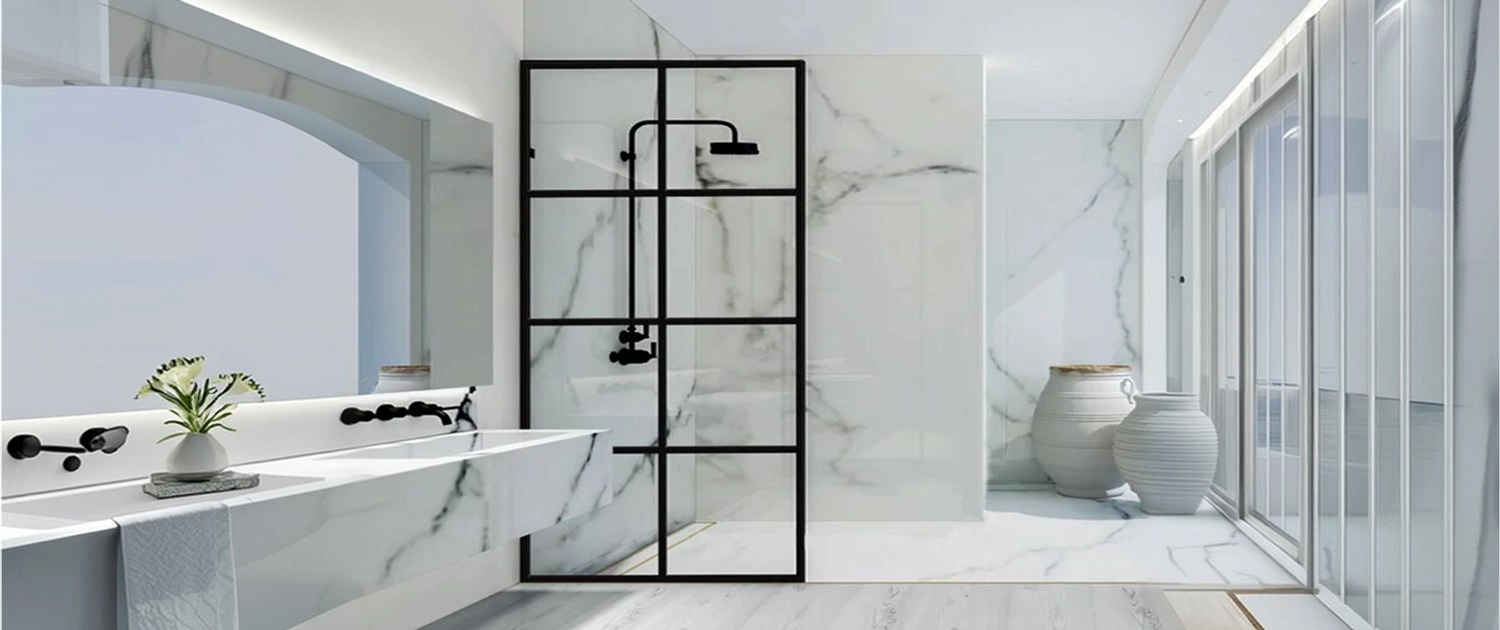
A frameless fixed glass shower panel is the right call when a Front Range bathroom has a tiled, walled shower or tub-shower combo and the goal is an open, glass-forward look without tearing out the existing pan. It is the wrong call when the shower has no curb, no wall to anchor the glass to, or when the household needs a swinging door for a full walk-in conversion. The panel itself is one sheet of tempered glass, 3/8 inch to 1/2 inch thick, held by two or three clips and a wall channel, with no metal frame around the glass edges.
A framed panel uses an aluminum or chrome frame around the full sheet of glass, which costs less and hides small cuts in the surrounding tile, but the metal collects hard water residue in the corners and reads as dated in a 2020s renovation. A frameless fixed panel skips the frame and relies on precise measurements and heavier glass, giving a cleaner line and easier glass-only cleaning. A full frameless enclosure adds a hinged glass door on top of the fixed panel; homeowners choose the fixed panel alone when the shower already has a functioning door, curtain track, or when the opening is narrow enough that a single glass wall does the job.
Homeowners pricing the project before calling a local installer can look at a factory-cut frameless fixed glass shower panel online to see typical sizing and a baseline cost before a Front Range contractor quotes the exact opening. A single frameless fixed glass panel, tempered and 3/8 inch thick, runs $600 to $1,400 installed in the Denver metro for a standard 24- to 36-inch opening, including the wall channel, clips and silicone. A full frameless enclosure with a matching hinged door runs $1,800 to $3,500. Custom shapes, a return panel on an angled shower, or 1/2-inch glass for openings over 40 inches push the top end higher. Fort Collins and Colorado Springs pricing tracks close to Denver; rural mountain-corridor installers charge more for the drive and the extra care shipping glass over Interstate 70 mountain passes requires.
Swapping a shower door or curtain for a fixed glass panel is cosmetic work and does not need a permit in Denver, Aurora, Lakewood, Littleton, Colorado Springs or Fort Collins. The line moves the moment the job touches plumbing rough-in, moves a drain, or reframes a wall to convert a tub to a curbless shower: Denver's Community Planning and Development office and the equivalent building departments in Arapahoe, Jefferson and El Paso counties require a permit and inspection for any plumbing relocation. Pull the permit before the contractor opens the wall, not after, since an unpermitted plumbing change is a disclosure item a Colorado seller has to report on the Seller's Property Disclosure at resale.
A glass panel swap inside an existing shower does not change the exterior of the home, so most Front Range HOAs and metro districts have no review requirement for it. The one exception is a condo or townhome association whose declaration treats plumbing lines inside the walls as a limited common element; check the governing documents or call the management company before a contractor cuts into a shared wall in a Denver or Aurora condo building.
Front Range tap water runs 7 to 15 grains per gallon of hardness depending on the utility, hard enough to leave a visible white mineral film on untreated glass within two to three weeks. A factory-applied hydrophobic coating (sold under names like ClearShield or EnduroShield) cuts the mineral buildup roughly in half between cleanings and is worth the $75 to $150 upcharge on a Denver metro installation. Without a coating, plan on a squeegee after every shower and a monthly wipe-down with a 1:1 white vinegar and water solution to keep the hard water film from etching into the glass surface over a few years. A whole-house water softener, run at the main line, solves the spotting problem at the source rather than the glass.
Front Range humidity sits in the 20% to 35% range for most of the year, well below the 40% to 60% most silicone sealant manufacturers formulate for, which speeds up the surface skin of the caulk but does not weaken the final cure; a good installer still gives the sealant 24 hours before the first shower. At 5,280 feet and above in the foothills, that same dry air pulls moisture out of the silicone bead faster, so a rushed installer who runs water within a few hours risks a bead that never bonds properly to the glass and the tile. Ask any bidder how long they hold the panel dry before handoff; 24 hours is the standard answer on the Front Range.
Much of the Front Range, from Douglas County through Colorado Springs, sits on bentonite clay that expands and contracts with moisture, which over years can move a slab foundation enough to throw a shower wall out of plumb by a fraction of an inch. A frameless panel, unlike a framed one, has no metal to hide a slightly uneven gap, so an installer measures the exact opening on install day rather than from a spec sheet, and a homeowner with known foundation movement should get that shower wall checked for plumb before ordering custom glass.
A frameless glass panel does not add square footage or a line item to an appraisal the way a full bathroom addition does, but it is one of the cheapest visual upgrades that reads as "updated" to a buyer walking through an open house. Pair it with a shower niche and new grout and a Denver metro seller checks the box buyers look for in listing photos without the cost of a full remodel. For sellers weighing a bigger bathroom project against a quick refresh before listing, the Kenna Real Estate Group's guide on which updates actually add value before you sell breaks down where the return is strongest.
Planning a bathroom refresh before listing a Front Range home, or looking for a move-in-ready home that already has one? The Kenna Real Estate Group walks sellers through which updates are worth doing before photos and helps buyers find homes with the finishes they want. Call or text 303-955-4220. A live person answers. Not a robot, not a phone tree. Or search every home for sale in Colorado.
Questions about any home in Colorado? Call or text 303-955-4220. A live person answers.
Expect $600 to $1,400 installed for a single tempered-glass panel in a standard 24- to 36-inch opening, including the wall channel and sealant.
No permit is needed for a straight door or panel swap. A permit from the local building department is required the moment a plumbing line or drain moves.
Untreated glass shows visible mineral spotting within two to three weeks at 7 to 15 grains per gallon hardness. A hydrophobic coating or a whole-house softener slows the buildup.
Yes. A fixed panel with an open, curbless entry avoids the door track and swing clearance a hinged enclosure needs, which is why downsizing buyers in ranch-style Front Range homes ask for it.
The surface skins over faster in 20% to 35% humidity, but a full 24-hour dry time before the first shower still gives the bead a proper cure.
Yes, as long as the existing tile and shower pan are sound. The panel mounts to the existing wall and curb with a wall channel and new sealant.
Most associations have no review requirement for interior shower work. Check the declaration first if the building treats interior plumbing as a limited common element.
It reads as an updated bathroom in listing photos at a fraction of a full remodel's cost, which is one of the better returns for a Front Range seller preparing to list.