New - 30 Mins Ago

$565,000
Coming Soon
4
Beds
3
Baths
2007
Sqft
0.26
Acres
7352 S Vance St, Littleton, CO 80128
MLS#: 5157468


Wire fraud in a Colorado home closing works like this: a criminal sends you fake wiring instructions that look like they came from your title company, lender or agent, and your down payment lands in their account. Stop it with one rule: before you wire a dollar, call your title company at a phone number you already had, never one from the email, and confirm the account number out loud. The FBI counted $275 million in real estate fraud losses in 2025, up from $174 million in 2024 (FBI IC3 2025 Annual Report). Here is how the scam works on Denver, Aurora, Lakewood, Littleton and Colorado Springs closings, the red flags, and what to do in the first hour if money is gone.
Call or text 303-955-4220. A live person answers. Not a robot, not a phone tree.
$275M Real estate fraud losses reported to the FBI in 2025 12,368 complaints, up from 9,359 in 2024 (FBI IC3) | $3.05B Business email compromise losses in 2025 The email-takeover scam behind fake wiring instructions (FBI IC3) |
$124M Real estate fraud losses for people 60 and older 2,473 complaints in 2025 (FBI IC3) | 58% Share of reported thefts the FBI helped freeze When banks and the IC3 moved fast in 2025 (FBI IC3) |
The Colorado Division of Real Estate describes it step by step: you are buying a home and get an email, text or phone call from someone claiming to be your title company, mortgage company or real estate brokerage, with instructions for where to wire your escrow funds. The criminal builds a fake website that looks nearly identical to the real one and uses "spoofing," an email address, phone number or web address with one letter or number off. You send the wire, the money lands in the criminal's account, and it is withdrawn before anyone notices.
The FBI files this under business email compromise (BEC): criminals break into email accounts, and now phone numbers and video meetings, to redirect payments. In 2025 the FBI's IC3 complaint center logged 24,768 BEC complaints with $3.05 billion in losses (FBI IC3 2025 Annual Report).
Real estate fraud losses reported to the FBI, by year
Source: FBI IC3, 2025 IC3 Annual Report. The FBI's real estate category also covers rental and timeshare fraud.
The October 2026 Denver metro median closing price was $595,000 (DMAR). A buyer putting 20% down wires $119,000; with 10% down it is $59,500, before closing costs. That one wire is the single largest payment most buyers ever send, which is why criminals watch for it. Plan the full amount with our Colorado closing costs guide and the Colorado mortgage calculator.
One phone call to a number you already trust stops this scam. Call your title company before every wire, and again after it goes out.
| Red flag | What it looks like |
|---|---|
| Email only | The sender refuses phone calls and insists on email |
| A rush request | Pressure to wire today, within the hour, or the closing is off |
| Changed instructions | A new bank, new account number or "our account is under audit" message |
| Look-alike address | One letter or number off in the email address or web link |
| Odd wording | Strange phrases, misspellings or a tone that does not match your agent |
| Redirecting links | A link that opens a different website than the title company you know |
Source: Colorado Division of Real Estate, Real Estate Wire Fraud (read November 19, 2026).
1 | Get the title company phone number on day one Write it down from your contract or title commitment the day you go under contract. See what you need to close on a house in Colorado. |
2 | Call that number to confirm the wiring instructions Talk to a live person at the number you already had. Read the bank name and account number back out loud. |
3 | Re-check your original documents The Colorado Division of Real Estate says to go back to the documents from your lender or title company and call the numbers listed there. |
4 | Treat any change as fraud until proven otherwise Your lender, title company and agent at The Kenna Group never send new wiring instructions by email. Plan earnest money the same way. |
5 | Call the title company right after the wire goes out The Division of Real Estate says to confirm the money arrived. A same-day check turns a lost week into a lost hour. |
Move in this order, within minutes, not days. The FBI says time is of the essence: call your bank, ask for a wire recall and any indemnification forms, then file a complaint at ic3.gov with the full transaction details, no matter the amount. The Colorado Division of Real Estate adds: save the email with the wiring instructions and its email headers, call local police, and report it to the FTC. In 2025 the FBI's Recovery Asset Team worked 3,900 cases with $1.16 billion in attempted theft and froze $679 million, a 58% success rate (FBI IC3). In one August 2025 case, buyers closing on a home wired over $449,000 after an email that impersonated their attorneys; after their IC3 complaint the full amount was found still in the account and frozen.
Yes. Sellers get fake emails asking them to "update" where their sale proceeds go, so confirm your payout instructions in person at closing. Owners who are not selling face title fraud: the Colorado Division of Real Estate warns that criminals forge a deed, record it with the county and borrow against the home. Its red flags are unsolicited offers to buy that ask whether you live at the property, and requests to sign any document. Vacant land and rentals are common targets. Title insurance protects buyers against fraud and forgery (Colorado Division of Real Estate). Sellers can read what it costs to sell a house in Colorado.
Buyers. At the $595,000 Denver metro median (DMAR, October 2026), a 20% down payment is a $119,000 wire. Get your title company's number on contract day and call it before every wire. Start at buying a home with The Kenna Group and the home loan readiness program.
Sellers. Your proceeds are the target on the other side of the closing table. Never accept payout changes by email. Read selling a house in winter in Colorado for this season's numbers.
Homeowners 60 and older. The FBI counted 2,473 real estate fraud complaints and $123.7 million in losses from people 60 and older in 2025, up from $76.3 million in 2024. Hang up on anyone who calls about your deed and call your county clerk instead. See the Colorado senior property tax exemption for real help that comes by mail from your county.
The Colorado market. Colorado filed 18,847 internet fraud and cyber complaints with the FBI with $355 million in losses in 2025, 17th in the nation for losses (FBI IC3). For prices by area see Denver real estate statistics and is Denver a buyer's or seller's market.
What to watch out for (what not to do)
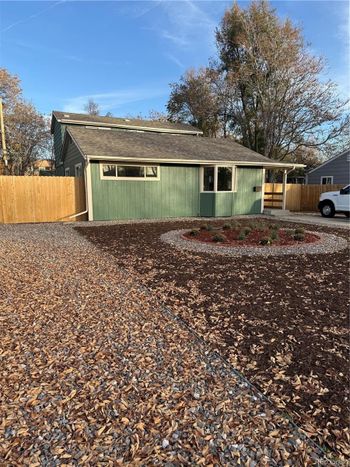
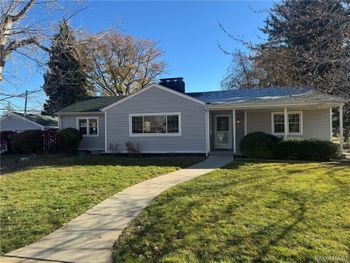
These Denver metro homes from $550,000 to $650,000 are pulled live from the MLS every time you open this page.


A criminal sends an email, text or call that looks like it came from your title company, lender or agent with wiring instructions for your down payment. The account belongs to the criminal. The Colorado Division of Real Estate says to verify every instruction by phone at a number you already had.
The FBI's IC3 complaint center counted 12,368 real estate fraud complaints and $275.1 million in losses in 2025, up from $173.6 million in 2024. Business email compromise, the scam behind fake wiring instructions, added $3.05 billion in losses.
Call your bank right away and ask for a wire recall, then file at ic3.gov with the full transaction details, call local police and report it to the FTC. In 2025 the FBI helped freeze 58% of the money in the cases its Recovery Asset Team worked.
Treat any change as fraud. The Colorado Division of Real Estate lists last-minute revised instructions as a top warning sign. Call the title company at the number on your contract before you send anything.
Yes. Criminals send sellers fake requests to change where sale proceeds go, and target owners of vacant land and rentals with forged deeds. Confirm payout instructions in person and hang up on unsolicited calls about your property.
Call The Kenna Group at Keller Williams DTC at 303-955-4220. A live person answers. We work with established title companies across Denver, Aurora and Lakewood and give you their verified phone number on the day you go under contract.
The Kenna Group at Keller Williams DTC helps buyers and sellers in Colorado Springs, Castle Rock and the rest of the Front Range. Call 303-955-4220 and we walk you through every wire, step by step, before closing day.
Call or text 303-955-4220. A live person answers. Not a robot, not a phone tree.
Colorado wire fraud disclosure: this guide to real estate wire fraud, closing scams, fake wiring instructions, business email compromise and title fraud in Colorado home closings summarizes the FBI IC3 2025 Annual Report and Colorado Division of Real Estate pages read on November 19, 2026. IC3 figures are complaints reported to the FBI, not every case. Dollar examples are our own math for illustration. Denver metro market figures are Denver Metro Association of REALTORS (DMAR) data for October 2026. The Kenna Group at Keller Williams DTC (Keller Williams Realty DTC, LLC) never sends wiring instructions by email or text and never changes them. This is general real estate information for Denver, Aurora, Lakewood, Littleton, Centennial, Highlands Ranch, Parker, Castle Rock, Arvada, Westminster, Thornton, Broomfield, Boulder, Fort Collins and Colorado Springs home buyers and sellers. It is not legal, banking or law enforcement advice. If money is already gone, call your bank first, then file at ic3.gov and call local police.
Brian Lee Burke, the hardest working man in real estate
The Kenna Group at Keller Williams DTC. Helping You With Your Pad™. Licensed since 2003.
The Kenna Group is a real estate group with Keller Williams Realty DTC, LLC (Keller Williams DTC), serving Denver metro and Colorado home buyers and sellers.