New - Just Now

$589,000
Coming Soon
4
Beds
4
Baths
3059
Sqft
0.13
Acres
19501 E Wyoming Ave, Aurora, CO 80017
MLS#: 3952501



Earnest money in Colorado is the good-faith deposit a buyer hands over with an offer. It sits in the trust account of the Earnest Money Holder named in the contract, counts toward your purchase at closing, and comes back to you if you terminate on time under a right the contract gives you. Miss a deadline or walk away without one, and the seller keeps it. Here is how earnest money works for Denver, Aurora, Lakewood, Colorado Springs and Fort Collins home buyers under the Colorado Real Estate Commission contract, form CBS1-8-24, and what sellers can and cannot do with it.
Call or text 303-955-4220. A live person answers. Not a robot, not a phone tree.
With the offer When the deposit is due Unless you agree to an Alternative Earnest Money Deadline (CBS1 4.3) | 11:59 p.m. When a contract day ends Mountain Time, unless a Time of Day Deadline is set (CBS1 3.3.1) |
3 days To sign the release After the other side receives the Earnest Money Release form (CBS1 4.3.2) | 120 days To file suit in a dispute After the holder's notice, or the money goes back to the buyer (CBS1 23) |
Earnest money is the buyer's deposit that shows the seller you are serious. Under the Colorado Real Estate Commission's Contract to Buy and Sell Real Estate (Residential), form CBS1-8-24, the deposit is written into the contract as a dollar amount, paid to the Earnest Money Holder named in the contract, and held in that company's trust account on behalf of both the buyer and the seller (CBS1 4.3). At closing it moves to the closing company and counts toward your down payment and closing costs. It is not an extra fee.
The holder gives a written receipt on the Commission's Earnest Money Receipt form, EM9-6-23. That receipt states that the contract's Earnest Money Dispute and Termination sections govern how the holder handles your money until closing instructions are signed.
Colorado law and the Commission contract do not set an amount. The buyer and seller agree on a dollar figure, and it becomes part of the offer. What to weigh: a bigger deposit makes an offer stronger to a seller, and it is also the amount at risk if you default. Here is the math on one example: the Denver metro median close price was $595,000 in October 2026 (Denver Metro Association of REALTORS). A 1% deposit on that price is $5,950. Use our Colorado closing cost calculator and Colorado mortgage calculator to see where that deposit lands in your cash to close.
In a market where sellers are giving ground, the deposit is one lever among several. In October 2026, 65% of Denver metro sales came with a seller concession (DMAR); see is Denver a buyer's or seller's market and seller concessions in Colorado.
With the contract. CBS1 4.3 says the buyer tenders the deposit with the offer unless both sides agree to an Alternative Earnest Money Deadline, which then goes in the deadline table. Time is of the essence in the Colorado contract: if any payment, including earnest money, is not paid when due, the other side has default remedies (CBS1 20).
The Earnest Money Holder named in CBS1 4.3, in its trust account. The contract leaves that name blank for the parties to fill in: a title company, or the brokerage firm, which the broker's acknowledgment on the contract covers. The parties authorize the holder to deliver the money to the closing company at or before closing. If the holder has agreed to send trust-account interest to a fund that provides affordable housing to Colorado residents, the contract says the interest goes there.
Yes, when you have a right to terminate and you use it on time. CBS1 24.2 says that when the contract terminates, all earnest money must be returned to the buyer. The rights to terminate that protect your deposit include:
| Right to terminate | Contract section | What it covers |
|---|---|---|
| Inspection | CBS1 10.3 | Any condition of the house you find unsatisfactory, in your sole subjective discretion, by the Inspection Termination Deadline |
| New loan terms | CBS1 5.2.1 | The rate, payment and costs of your loan, by the New Loan Terms Deadline |
| New loan availability | CBS1 5.2.2 | Your lender's underwriting, by the New Loan Availability Deadline |
| Appraisal | CBS1 6.2 | An appraised value below the price, by the Appraisal Objection Deadline |
| Title, survey and documents | CBS1 8, 9, 10.6 | Title problems, a new survey, HOA and due diligence documents, by each objection deadline |
Two lines in the contract buyers miss. First, after the New Loan Availability Deadline passes, CBS1 5.2.2 says the earnest money becomes nonrefundable except as the contract provides (for example appraisal, title and survey). Second, a Notice to Terminate counts only if it is received on or before the deadline; after that, you have accepted the item and waived that right (CBS1 24.1). FHA and VA buyers carry an extra appraisal protection: under CBS1 6.2.2 and 6.2.3, the buyer does not forfeit earnest money if the FHA appraised value comes in below the amount written in the contract, or the price exceeds the VA's reasonable value.
The inspection right is the broadest one, because it runs on your sole subjective discretion. Before your deadline, read pre-offer home checks Denver buyers make, the Denver sewer scope guide and radon testing in Denver homes. Buying a condo or a home in an HOA? Your document deadlines matter too: Colorado HOA laws in 2026 and the Denver condo market.
Two clocks run. The other side has three days after receiving the Earnest Money Release form to sign and return it (CBS1 4.3.2). When the brokerage firm is the holder, the broker's acknowledgment on the contract says it releases the money within five days of receiving the signed instructions, once the check has cleared. A seller who refuses to sign when the buyer terminated on time is in default under CBS1 4.3.2.1 and owes the buyer under the default and legal fee sections.
When the buyer defaults: misses a payment, misses closing, or backs out after the termination deadlines have passed. Under the standard CBS1 20.1.2, the earnest money is liquidated damages and the seller's only remedy, so the seller keeps the deposit and gives up suing for more. If the parties checked the box for CBS1 20.1.1 instead, the seller keeps the earnest money and can also seek additional damages or force the sale. Read that box before you sign. If the seller defaults, CBS1 20.2.1 returns all earnest money to the buyer, who can also pursue damages.
The holder does not pick a winner. CBS1 23 says the holder releases the money only on written instructions signed by both buyer and seller. In a dispute, the holder can wait for the parties to resolve it, deposit the money with a court (and recover its legal costs), or send notice that unless it receives a copy of a lawsuit with a case number within 120 days, it returns the money to the buyer. The contract also requires good-faith mediation first, which ends if the dispute is not resolved within thirty days of the written request (CBS1 22), and the prevailing party in court or arbitration recovers reasonable attorney fees (CBS1 21). For more on backing out, read cancellations and penalties in the Colorado real estate contract.
Buyers. Your deposit is protected by your deadlines, not by goodwill. Put every termination deadline on your calendar the day you go under contract, and know whether the weekend box in CBS1 3.3.3 is checked. First-time buyer? Start with our first-time buyer guide, CHFA down payment assistance and can I afford a home now.
Sellers. A larger deposit is a sign of a committed buyer, and the default box you choose in CBS1 20.1 decides whether the deposit is your only remedy. Sign the release within three days when a buyer terminates on time; holding it back puts you in default. Plan your net with the cost to sell a house in Colorado.
Homeowners buying and selling at once. If your purchase depends on your sale, the Conditional Upon Sale of Property clause and your deadlines decide what happens to your deposit. Read buy before you sell in Colorado and get a free home value report first.
The Colorado market. With rates where they are this week (Colorado mortgage rates), loan terms and appraisal deadlines matter more than they did two years ago. Check the Denver real estate statistics and the Denver housing market outlook.
What to watch out for (what not to do)
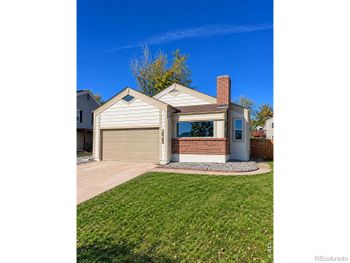
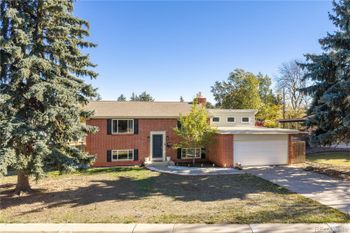
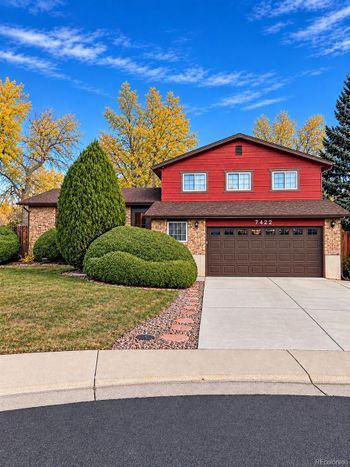
These homes in the Denver metro median price band are pulled live from the MLS every time you open this page.




No amount is required by Colorado law or the Colorado Real Estate Commission contract. The buyer and seller agree on a dollar figure in the contract. As an example only, 1% of the October 2026 Denver metro median close price of $595,000 is $5,950.
Not if you terminate in writing, on time, under a right the contract gives you, such as inspection, loan terms, loan availability, appraisal, title or HOA documents. Back out after those deadlines pass, or default, and the seller keeps the deposit under CBS1 20.1.
The Earnest Money Holder named in the contract, a title company or a brokerage firm, holds it in a trust account on behalf of both buyer and seller. At closing it moves to the closing company and counts toward your purchase.
The other side has three days to sign the Earnest Money Release after receiving it (CBS1 4.3.2). A brokerage holder releases within five days of receiving signed instructions, once the check has cleared.
A seller who refuses to sign the release when the buyer terminated on time is in default under CBS1 4.3.2.1. In a dispute, the holder keeps the money until both sides sign, a court rules, or 120 days pass after its notice with no lawsuit filed, and then returns it to the buyer.
Call The Kenna Group at Keller Williams DTC at 303-955-4220. A live person answers. We put every Colorado contract deadline, with the time of day, on your calendar the day you go under contract.
Open the live grid on this page, or call 303-955-4220 and we will set up a saved search that emails you new Aurora, Lakewood or Colorado Springs listings the day they hit the MLS.
Call or text 303-955-4220. A live person answers. Not a robot, not a phone tree.
Colorado earnest money disclosure: this guide explains how earnest money works under the Colorado Real Estate Commission's residential Contract to Buy and Sell Real Estate (form CBS1-8-24). It is general real estate information from The Kenna Group at Keller Williams DTC (Keller Williams Realty DTC, LLC), a real estate group serving Denver, Aurora, Lakewood, Littleton, Centennial, Highlands Ranch, Parker, Castle Rock, Broomfield, Boulder, Fort Collins and Colorado Springs home buyers and sellers. It is not legal advice. Your own contract, its deadlines and any additional provisions control; the Commission's forms carry the line that the parties should consult legal and tax or other counsel before signing. For an earnest money dispute, talk to a Colorado real estate attorney. The 1% figure on this page is an example for the math, not a Colorado rule or a standard amount.
Brian Lee Burke, the hardest working man in real estate
The Kenna Group at Keller Williams DTC. Helping You With Your Pad™. Licensed since 2003.
The Kenna Group is a real estate group with Keller Williams Realty DTC, LLC (Keller Williams DTC), serving Denver metro and Colorado home buyers and sellers.