New - 1 Day Ago



The Colorado FAIR Plan is the home insurance of last resort in Colorado: you qualify after three insurers turn your home down. It covers fire and lightning up to $750,000 at actual cash value, with no liability, theft or water coverage (Colorado FAIR Plan, November 2026). Owners in wildfire and hail country, from Evergreen and Conifer to Woodland Park and Monument, are the ones who need it. Here is who qualifies, what it covers, what it costs you in coverage, and how buyers and sellers plan for it.
Call or text 303-955-4220. A live person answers. Not a robot, not a phone tree.
3 Insurer declinations needed Proof that three standard insurers said no (Colorado FAIR Plan) | $750,000 Residential limit Dwelling and contents combined (Colorado FAIR Plan) |
ACV Actual cash value only Replacement cost minus depreciation, not the cost to rebuild | 2023 Year the law passed HB23-1288, signed May 12, 2023 |
FAIR stands for Fair Access to Insurance Requirements. Colorado created its FAIR Plan with HB23-1288, signed May 12, 2023, and the Colorado Division of Insurance lists residential homeowners policies as available starting April 10, 2025 and commercial property policies starting June 17, 2025. The Colorado FAIR Plan describes itself as a stand-alone, not-for-profit organization funded by assessments on insurance companies, not public dollars. Its own comparison guide puts the purpose in one line: it addresses the availability of insurance, not the affordability.
It is the backstop for homes standard insurers will not write, and the FAIR Plan names the reasons: wildfire risk, hail risk, claims history, age of the home and location. Read why premiums keep climbing in our guide to Denver home insurance costs.
Per the Colorado FAIR Plan, you qualify when all three are true:
Income and home size do not matter. The only test is that standard insurance is not available to you. The FAIR Plan also tells owners to check the surplus lines market first; surplus lines insurers specialize in higher-risk homes and in some cases cost less than FAIR coverage.
| Standard homeowners policy | Colorado FAIR Plan | |
|---|---|---|
| Coverage basis | Replacement cost available | Actual cash value only |
| Main perils | Fire, wind, hail, theft, water damage, liability and more | Fire and lightning (and smoke); wind, hail, explosion and a few others as optional add-ons |
| Liability | Included | Not included |
| Water damage | Included except flood | Not covered |
| Theft | Included | Not covered (vandalism is an add-on) |
| Living expenses after a loss | Included | Not included |
| Residential limit | Set by your home value | $750,000 for dwelling and contents |
| Premium | Based on risk | Higher, because the homes carry higher risk |
Source: the Colorado FAIR Plan's own comparison guide and coverage page. General exclusions include ordinance or law, earth movement, water damage, power failure, neglect and intentional loss.
Actual cash value is the big one. The FAIR Plan pays replacement cost minus depreciation. On a home with a 15-year-old roof, a claim pays for a 15-year-old roof, not a new one. That gap comes out of your pocket.
A Difference in Conditions (DIC) policy sits on top of a FAIR Plan policy to add what it leaves out, such as liability, water and theft. The Colorado FAIR Plan lists the DIC carriers it knows of on its site, does not endorse any of them, and notes that each DIC product sets its own coverages and limits. Ask your agent to price the FAIR Plan and a DIC policy together; that combined number is your real insurance cost.
Buying a home? Start this process the week you go under contract, not the week before closing. Your lender will not fund the loan without proof of insurance. Our home insurance checks for Denver buyers cover what to ask first.
The Colorado FAIR Plan rates wildfire risk with a property-level model (Z-FIRE from ZestyAI) that gives a community score and a property score, each from 1 (lowest risk) to 10 (highest), plus the top three factors behind each. You can appeal your score by email with photos, mitigation certificates or other proof. The FAIR Plan does not give a discount for each mitigation step, but it considers verified changes that lower wildfire risk in its rating. Colorado's wildfire score disclosure law, HB25-1182, also covers the FAIR Plan; read our guide to the Colorado wildfire insurance risk score law.
The FAIR Plan's own advice: a well-mitigated home is the best path off the FAIR Plan and back to standard coverage, which costs less and covers more.
Every admitted insurer that writes property insurance in Colorado is a member of the FAIR Plan and pays fees to fund it. Under Colorado law (C.R.S. 10-4-1809), an insurer has the option to recover those fees directly from its own policyholders as a surcharge, and the law bars insurers from raising premiums because of the startup fees. So a FAIR Plan line on a standard homeowners bill is that recovery charge; it does not mean your home is on the FAIR Plan. Ask your insurer for the amount and how long it runs.
Buyers. Get insurance quotes before your inspection deadline on any mountain or foothills home. If three insurers decline, price the FAIR Plan plus a DIC policy and run that full number through our Colorado mortgage calculator. A higher premium raises your monthly payment the same way a higher price does.
Sellers. If your home is on the FAIR Plan, tell buyers early and hand them your agent's contact, your wildfire mitigation work and your score. A buyer who learns about insurance in week three walks; a buyer who knows on day one negotiates. Price against the live competition with a free home value report.
Homeowners. On the FAIR Plan now? Keep shopping every year; the FAIR Plan itself says market conditions change. Mitigate, document it, appeal your wildfire score, and ask your agent to re-quote the standard and surplus lines markets at each renewal.
The Colorado market. Insurance now sits next to rates and taxes as a deal factor in Golden, Morrison, Castle Rock, Boulder and Colorado Springs foothills neighborhoods. Add it to your property tax math from our Colorado property taxes 2026 guide.
What to watch out for
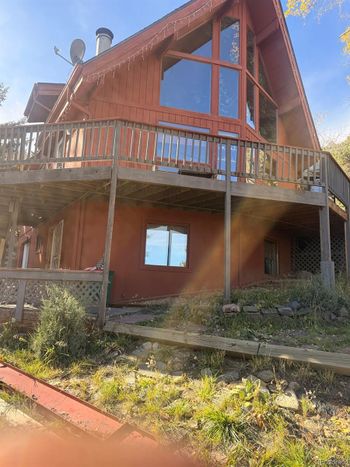
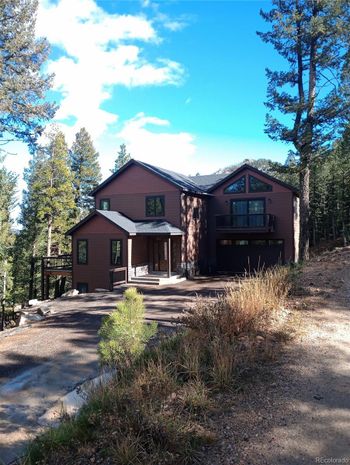
These homes are pulled live from the MLS every time you open this page. Browse more in Evergreen, Conifer and Parker, and add closing numbers from our Colorado closing costs guide.




It is Colorado's home insurance of last resort, created by HB23-1288 (signed May 12, 2023). It writes basic property coverage for homes and businesses that standard insurers will not cover, such as homes with high wildfire or hail risk. Residential policies became available April 10, 2025.
You need proof that three standard insurers declined your property, the property has to be considered uninsurable by the standard market, and you apply through a licensed insurance agent registered with the FAIR Plan. Income and home size do not matter.
Fire and lightning (and smoke) at actual cash value, up to $750,000 for dwelling and contents combined. Wind, hail, explosion, vandalism and a few others are optional add-ons. It does not include liability, water damage, theft or living expenses after a loss.
No. FAIR Plan policies pay actual cash value only, which is replacement cost minus depreciation. A Difference in Conditions (DIC) policy from another carrier adds coverage the FAIR Plan leaves out.
No. You apply through a licensed Colorado insurance agent who is registered with the FAIR Plan. The agent submits photos of the home and requests the bind; FAIR Plan underwriting binds the policy.
Every admitted property insurer in Colorado pays fees to fund the FAIR Plan. Colorado law (C.R.S. 10-4-1809) gives insurers the option to recover those fees from their policyholders as a surcharge. The line on your bill does not mean your home is on the FAIR Plan.
Mitigate your home against wildfire and hail, document the work, appeal your wildfire score if it is out of date, and have your agent re-shop the standard and surplus lines markets at every renewal.
Call or text 303-955-4220. A live person answers. Not a robot, not a phone tree.
This guide is general information about the Colorado FAIR Plan, not insurance advice. The Kenna Group does not sell insurance. Coverage, eligibility and prices come from the FAIR Plan and your licensed insurance agent; confirm every detail with them before you buy or renew.
Brian Lee Burke, the hardest working man in real estate
The Kenna Group at Keller Williams DTC. Helping You With Your Pad™. Licensed since 2003.
The Kenna Group is a real estate group with Keller Williams Realty DTC, LLC (Keller Williams DTC), serving Denver metro and Colorado home buyers and sellers.