New - 8 Hours Ago


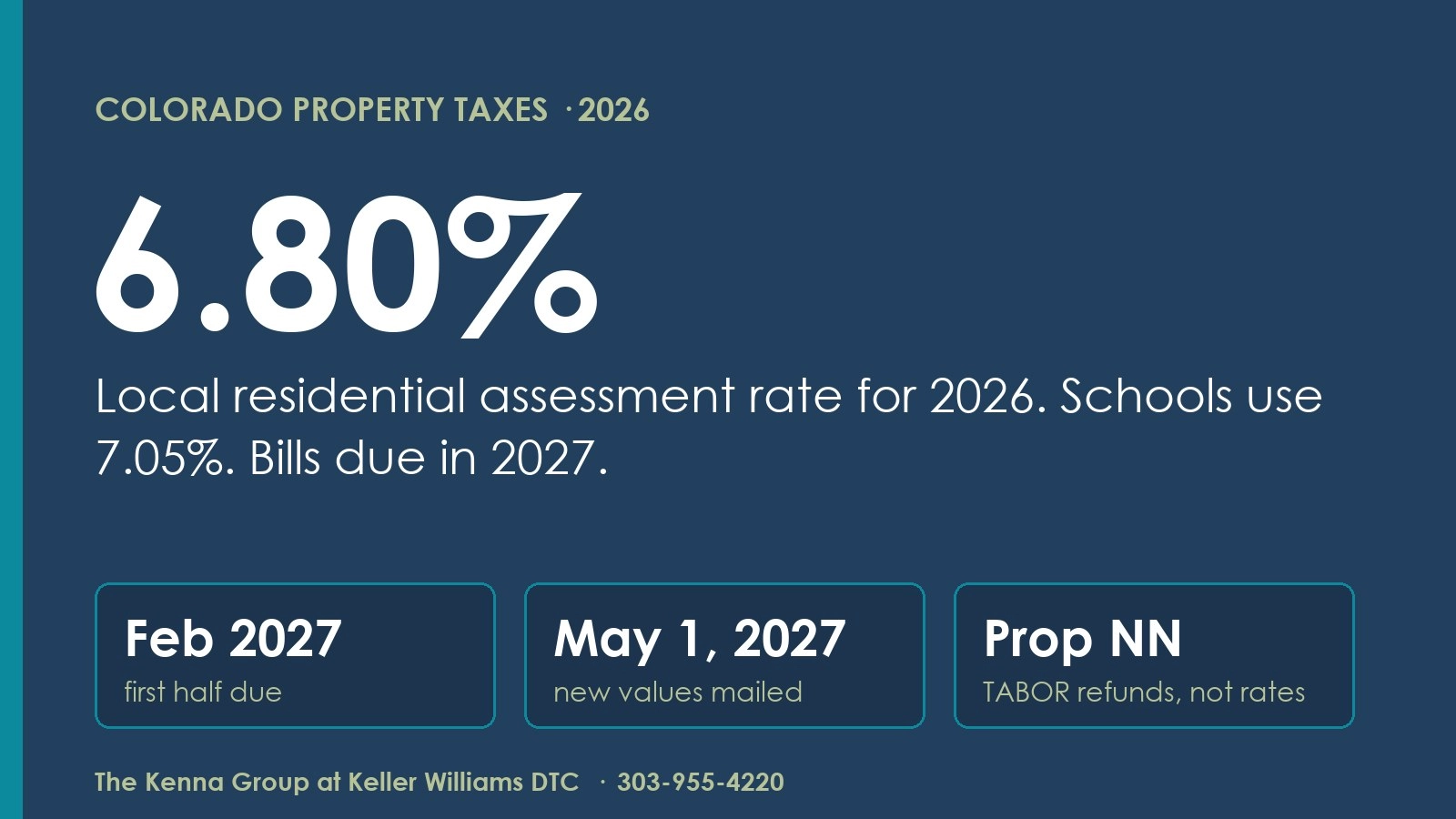
Colorado property taxes for 2026 use two residential assessment rates: 6.80% for local governments, after a 10% cut to the first $700,000 of value, and 7.05% for school district levies. Your 2026 taxes are billed in January 2027, and the first half is due at the end of February 2027. Here is how the 2026 Colorado property tax rates work, a sample bill, the 2027 due dates, when to appeal (the next reappraisal is 2027), and what Proposition NN on the November 3 ballot does. Short version on Prop NN: it changes TABOR refunds, not your assessment rate. Homeowners in Denver, Aurora, Arvada and across the Front Range, this is your plain-English guide.
Call or text 303-955-4220. A live person answers. Not a robot, not a phone tree.
6.80% Residential rate, local governments After a 10% cut to the first $700,000 of value (Colorado Division of Property Taxation, 2026) | 7.05% Residential rate, school districts Same rate for 2025 and 2026 (Division of Property Taxation) |
Feb 2027 First half of 2026 taxes due Last day of February; full payment by April 30, 2027 | May 1, 2027 New values mailed The 2027 reappraisal resets every home value |
The Colorado Division of Property Taxation lays the math out in four steps: actual value (what the county assessor says your home is worth), times the assessment rate, equals your assessed value, times the mill levy, equals your tax. One mill is $1 of tax for every $1,000 of assessed value.
Since 2025, Colorado homes carry two assessed values, not one:
Your 2026 value is the same as your 2025 value. Colorado revalues homes every odd-numbered year. For tax years 2025 and 2026, the Division says assessors used sales from January 1, 2023 to June 30, 2024. So your 2026 bill moves only if the assessment rate or your local mill levies change, or if your home was added to, split or reclassified.
Denver's Treasury Division says mill levies are set each December (it lists December 15) by the taxing authorities: the school district, city council and special districts. That is why your exact 2026 bill is not known until the levies are certified in December. If you live in a newer neighborhood with a metro district, the metro district levy sits on top. Read Denver special districts and property taxes and metro district debt and your mill levy.
Using the Division of Property Taxation's own example levies (23.425 local mills and 52.116 school mills), a $550,000 home owes $2,809 for 2026, or $234 a month in escrow. Here is the full math for four home values:
| Actual value | Local assessed value (6.80% after the 10% cut) | School assessed value (7.05%) | Local tax | School tax | 2026 total | Per month |
|---|---|---|---|---|---|---|
| $400,000 | $24,480 | $28,200 | $573 | $1,470 | $2,043 | $170 |
| $550,000 | $33,660 | $38,775 | $788 | $2,021 | $2,809 | $234 |
| $750,000 | $46,240 | $52,875 | $1,083 | $2,756 | $3,839 | $320 |
| $1,000,000 | $63,240 | $70,500 | $1,481 | $3,674 | $5,156 | $430 |
How the $550,000 line works: $550,000 minus 10% ($55,000) is $495,000. Times 6.80% is $33,660 local assessed value, times 23.425 mills is $788. Then $550,000 times 7.05% is $38,775 school assessed value, times 52.116 mills is $2,021. Above $700,000 the cut stops growing at $70,000.
Your levies are different. Find your tax area's mills on your last tax bill or on your county assessor's site, then swap them in. City by city, we break the levies down in our property tax guides for Denver, Aurora, Arvada, Highlands Ranch, Parker, Thornton and Brighton. South of Denver, see what Arapahoe County buyers pay by city.
Colorado taxes are paid one year behind. The Division of Property Taxation says bills for the prior year are mailed as soon after January 1 as possible. So your 2026 taxes are billed in January 2027.
| Payment | Due date | Note |
|---|---|---|
| First half | Last day of February 2027 | February 28, 2027 is a Sunday; Denver moves weekend due dates to the next business day |
| Full payment | April 30, 2027 | Pay in full by this date and no interest is charged on the first half (Denver Treasury) |
| Second half | June 15, 2027 | Second installment |
| Bills of $25 or less | April 30, 2027 | Paid in one payment (Division of Property Taxation) |
Denver's Treasury Division charges interest of 1% per month on late payments. If your lender escrows your taxes, it pays these for you; check your escrow statement when your 2027 payment resets.
Colorado revalues every home in odd-numbered years, so 2027 is the next reappraisal. Notices of valuation are mailed by May 1, and the protest deadline is June 8 (later if it lands on a weekend), per the Division of Property Taxation. The steps:
The assessor values your home on the sales in the study period, not on today's market. A recent appraisal, a list of repairs the home needs, or sales of smaller homes on your street all count as evidence. Want comps for your protest? Our free home value report pulls the recent sales near you.
Proposition NN is on the November 3, 2026 ballot. It is about TABOR refunds, not property tax rates. Per the 2026 Blue Book from the Colorado Legislative Council:
Prop NN does not set the 6.80% or 7.05% assessment rates, and it does not set your local mill levies. Those come from state law and your local taxing districts. The money it touches is your state TABOR refund, which shows up on your state income tax return, not on your property tax bill.
Buyers. Your lender counts property tax in your monthly payment. On a $550,000 home at the example levies above, that is $234 a month on top of principal and interest. Ask for the seller's last tax bill before you offer, and run the full payment on our Colorado mortgage calculator with this week's Colorado mortgage rates. Closing also prorates the year's taxes; see closing costs in Colorado.
Sellers. Colorado taxes are paid in arrears, so at closing you credit the buyer for 2026 taxes you have not yet paid. Buyers compare tax bills across neighborhoods, so a high metro district levy belongs in your pricing. Start with a free home value report.
Homeowners. No new value notice comes for 2026. Your next chance to protest is May 1 to June 8, 2027. Gather comps now, while sales are fresh. Turning 65, or hitting 10 years in the home? Mark January 1 to July 15 on your calendar for the senior exemption.
The Colorado market. The 2027 reappraisal will use a new sales window, after a stretch where Denver detached prices held flat (see is the Denver housing market crashing) and condo prices fell. Watch your May 2027 notice closely; live MLS numbers are on our Denver real estate statistics page.
What to watch out for
Below are Denver homes from $400,000 to $600,000, pulled live from the MLS every time you open this page. Compare tax bills across the metro on Aurora, Lakewood, Littleton, Castle Rock and Colorado Springs homes for sale.
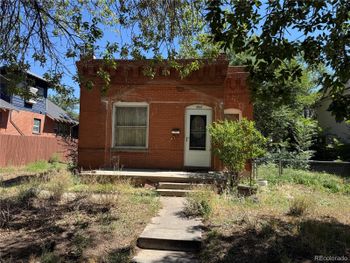

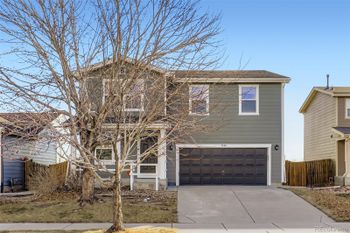


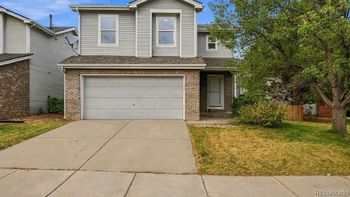

Two rates. Local governments use 6.80% after a 10% reduction of the first $700,000 of actual value, with a $1,000 minimum assessed value. School districts use 7.05%. Source: Colorado Division of Property Taxation, 2026.
In 2027. Bills go out in January 2027. The first half is due the last day of February (February 28, 2027 is a Sunday, so Denver moves it to the next business day), the second half by June 15, 2027, or the full amount by April 30, 2027.
No. Proposition NN lets the state keep TABOR refunds, up to the amount it spends on public education, and spend them on K-12 education and programs for children. It does not change assessment rates or local mill levies. The Blue Book says it cuts TABOR refunds by $329.9 million in 2026-27 and $521.0 million in 2027-28.
Notices of valuation are mailed by May 1, and the protest deadline is June 8 (moved if it lands on a weekend). 2027 is the next reappraisal year, so the next full reset of home values comes with the May 1, 2027 notices.
Three things move the bill: your home's actual value (reset every odd-numbered year), the assessment rate set by state law, and the mill levies your county, city, school district and special districts set each December. A new metro district or a voter-approved levy raises the bill even when your value holds.
Yes. Homeowners 65 or older on January 1 who have owned and lived in the home for 10 straight years can exempt 50% of the first $200,000 of actual value. Apply to the county assessor by July 15.
Call or text 303-955-4220. A live person answers. Not a robot, not a phone tree.
Brian Lee Burke, the hardest working man in real estate
The Kenna Group at Keller Williams DTC. Helping You With Your Pad™. Licensed since 2003.
The Kenna Group is a real estate group with Keller Williams Realty DTC, LLC (Keller Williams DTC), serving Denver metro and Colorado home buyers and sellers.
Disclosure: We are real estate agents, not tax professionals, accountants, attorneys or economists. This guide explains Colorado property taxes in real estate terms so you know what to ask. We can answer questions about how property taxes affect buying or selling a home. For advice about your own tax situation, talk to a licensed tax professional or your county assessor or treasurer. Rates, due dates and rules can change.