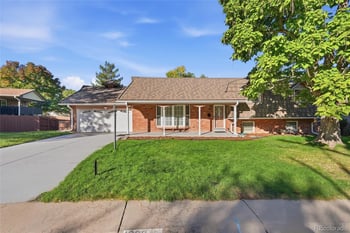
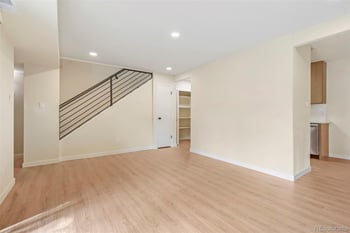
.jpg)



New - 10 Hours Ago
Serious buyers for a Colorado home come from eleven places: the group's own database of past clients, reverse MLS matching in REcolorado, AI lead scoring, lender referrals, relocation pipelines, geofenced ads, search content, segmented email, automation, professional networks and agent-to-agent marketing. This post explains how the Kenna Real Estate Group works each one so a Denver metro seller knows where the offers on their home will come from.
The Denver metro closes roughly 3,500 to 5,000 homes a month across REcolorado, the MLS that covers the Front Range. Most of those buyers started as a name in an agent's database months earlier. A seller who lists with a group that already holds those names gets showings in the first weekend, not the fourth.
Why does a Colorado seller care how buyers are found?
Because the median detached home in the Denver metro closes in the $600,000 range and the difference between one offer and three offers is $10,000 to $30,000 in price and terms. Inventory on the Front Range in 2026 sits well above the 2021 and 2022 lows, so the seller's question has changed from "will it sell" to "who is the qualified buyer and how fast do we reach them". The how we help sellers page lays out the full listing plan; this post covers the buyer side of it.
1. Reconnect with past clients and the group's database
The Kenna Real Estate Group has sold Colorado homes since 2002 and keeps every past client, showing request and website inquiry in Follow Up Boss, its CRM. A buyer who bought a Littleton townhome five years ago is now a candidate for a Highlands Ranch detached home. Before a new listing goes live on the MLS, the group sends it to the database contacts whose saved searches match the price, city and bed count.
For a seller, this means a "coming soon" period with real showings scheduled on day one. The marketing your Colorado home page describes the pre-launch sequence.
2. Reverse prospecting inside REcolorado
REcolorado lets a listing agent run a reverse prospect search: it lists every buyer agent whose client has an active saved search matching the new listing's criteria. On a $550,000 ranch in Centennial, that search returns 40 to 150 agents on the day the listing goes live. The group emails each one the listing, the showing instructions and the offer deadline.
Reverse prospecting rewards accurate MLS data entry. A listing coded with the wrong style, a missing basement square footage or no "main floor primary" flag drops out of the searches that matter most in the Denver metro, where downsizers filter on main-floor living first.
3. AI lead scoring separates lookers from buyers
Every visitor to kennarealestate.com who registers, saves a search or favorites a home generates behavior data. AI scoring tools such as GTM AI rank contacts by how many times they viewed a listing, whether they opened the last three emails and whether they returned to the site in the past 7 days. The group calls the top of that list first each morning.
For the seller, the result is showings from people who have looked at 20 homes in the same price band, not one. The group reports the showing count, the feedback and the lead source to the seller every week during the listing.
4. Lender partnerships bring pre-approved buyers
Buyers reach a lender before they reach an agent, because the first question is "how much can I borrow". The group's lending partner is Mike Oswald, VP of Mortgage Lending at Rate, NMLS 261003, Equal Housing Lender. Pre-approved buyers from that pipeline are matched to new listings in their approved range. Buyers are free to use any lender, and the group verifies every offer's pre-approval letter with the named lender before advising the seller on it. The Colorado home financing guide explains what a fully underwritten pre-approval includes.
5. Relocation buyers from out of state
Colorado draws relocation buyers from California, Texas, Illinois, Arizona and Washington, plus military transfers to Buckley Space Force Base in Aurora and Fort Carson and Peterson in Colorado Springs. Relocation buyers move on a deadline, buy in a compressed window and pay for certainty, which makes them a Denver metro seller's best audience.
The group runs Colorado relocation services: neighborhood tours built around commute time, the moving to Denver guide, and video walkthroughs for buyers who cannot fly in for every showing. Many relocation buyers start networking for a Front Range job months before the move, and they are searching listings during that whole stretch.
6. Geofenced ads around showings and open houses
Geofencing draws a digital boundary around a location, then serves ads to the phones that entered it. The group fences its own open houses and the nearby competing listings, so a buyer who toured a home two streets over in Parker on Saturday sees the group's Parker listing on Sunday. Ads keep running for 7 to 30 days after the visit.
7. Search content that answers Colorado buyer questions
Buyers research for 3 to 6 months before they call anyone. The group publishes the answers they search for: radon and sewer scope costs, metro district taxes in Douglas County, hail roofs, the neighborhood guides for every Denver metro city. A buyer who reads the Colorado home buyer's guide and then registers to search is a known contact in the database before the seller's home is even listed.
This is also why the group's listings get found: each one sits on a site that ranks for the questions buyers type in, not just on the MLS feed every brokerage shares.
8. Segmented email: the right listing to the right group
A first-time buyer in Aurora, an investor looking at duplexes in Denver and a downsizer looking for a patio home in Lone Tree receive different emails. The group segments its database by price band, city, home type and timeline, so a new listing reaches the 300 contacts who match it instead of 30,000 who do not. Open rates on segmented sends run several times higher than blast sends, and replies turn into showings.
9. Automation keeps every contact warm
Automated sequences handle the follow-up a person cannot: the new-listing alert at 6 a.m., the price-change notice, the "your search has 4 new matches" email, and the anniversary check-in with past clients. Automation does the consistency; the agents do the conversations. Every reply routes to a person the same day.
10. Professional referral networks
Divorce attorneys, estate and probate attorneys, financial planners, senior move managers and corporate HR departments refer buyers and sellers who have a deadline. The group runs dedicated programs for divorce sales, probate and trust sales, downsizing and 55+ moves, and each of those programs produces buyers who need a replacement home in the same metro.
11. Agent-to-agent marketing and the Keller Williams network
The group is part of Keller Williams DTC in Centennial, and the listing goes to the office's buyer agents and the broader Keller Williams network before and during launch. Agent-to-agent emails, broker opens and the weekly office listing meeting put the home in front of the agents who hold the active buyers in the south metro.
How the eleven sources compare for a Denver metro seller
| Buyer source | When it produces showings | Buyer readiness |
|---|---|---|
| Group database and past clients | Coming-soon period, before the MLS | High: known finances and timeline |
| REcolorado reverse prospecting | Day 1 to day 3 on the MLS | High: agent-represented with an active search |
| Lender referrals | Ongoing | High: pre-approved |
| Relocation pipeline | Ongoing, deadline-driven | High: must buy within 30 to 90 days |
| AI-scored website leads | Day 1 to day 14 | Medium to high |
| Geofenced and segmented email | Week 1 to week 4 | Medium |
| Search content | Continuous | Early stage, becomes database |
What a seller does to help the buyer search work
- Price on the Smart Pricing Report. The group's pricing report uses closed REcolorado comps from the past 90 days; the method is on pricing your Colorado home to sell. A home priced within 2% of the comps draws the reverse-prospect and database buyers in the first week.
- Fix the inspection items that end deals. Roof age over 15 years, a failed sewer scope and radon above 4 pCi/L are the three findings that cost Denver sellers the most in re-negotiation. The Denver inspection red flags post lists the fixes; the adding value before selling page covers costs.
- Allow showings from day one. Relocation and database buyers tour on the first weekend. Restricting showings to weekday afternoons removes them.
- Launch at the right time. Front Range listing activity peaks March through June; the best times to buy or sell a house in Colorado post gives the month-by-month picture.
- Give the buyers a floor plan. Relocation buyers decide from a screen; why floor plans sell Colorado homes explains the showing lift.
Where to go next
- How to sell a house in Colorado
- The Colorado home seller's guide
- Showing your Colorado home to buyers
- Top questions to ask about selling your Colorado home
- Denver metro market reports
- Meet the Kenna Real Estate Group agents
Talk to the Kenna Real Estate Group
The Kenna Real Estate Group, Keller Williams DTC, lists homes across the Denver metro and the Front Range and brings its database, its lender pipeline, its relocation buyers and REcolorado reverse prospecting to every listing from day one. Ask for the Smart Pricing Report on your home and the buyer plan that goes with it. Call or text 303-955-4220. A live person answers. Not a robot, not a phone tree. Buying too? Start now and search every home for sale in Colorado.
Homes for sale that match this post
Guides
Questions about any home in Colorado? Call or text 303-955-4220. A live person answers.