.jpg)


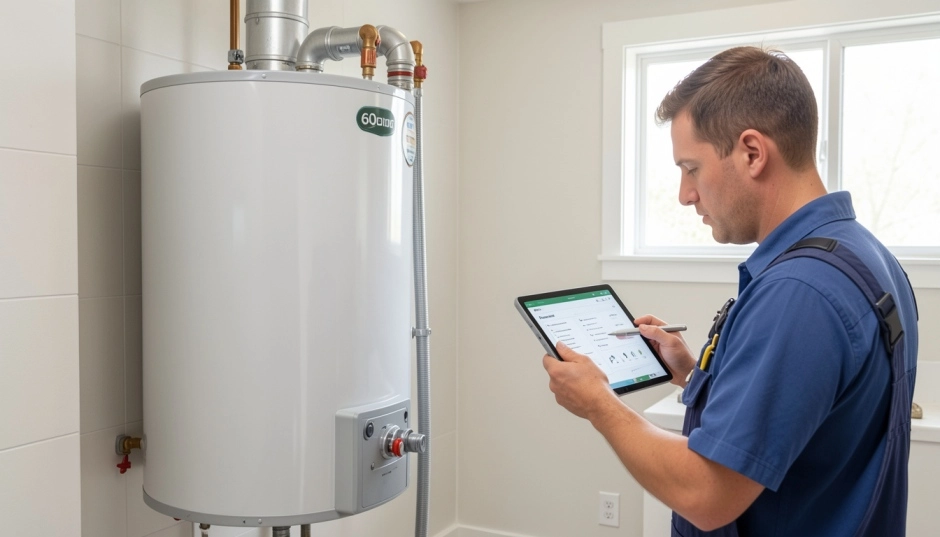
A 60-gallon water heater fits a household of four to six people running two showers, a dishwasher, and laundry within the same hour; smaller households do fine with a 40 or 50-gallon tank, and homes with a soaking tub or a walk-in shower with multiple heads need 60 gallons even with fewer people. On the Front Range, the bigger factors in choosing and sizing a water heater are altitude, which derates a gas unit's burner, and hard water, which scales the tank faster than in most other parts of the country.
What Size Water Heater Does a Colorado Household Need
| Household size | Typical tank size | First-hour rating needed |
|---|---|---|
| 1 to 2 people | 30 to 40 gallons | Under 50 gallons per hour |
| 3 to 4 people | 40 to 50 gallons | 50 to 70 gallons per hour |
| 4 to 6 people | 50 to 60 gallons | 70 to 90 gallons per hour |
| 6+ people or multiple bathrooms used together | 60 to 80 gallons | 90+ gallons per hour |
What a 60-Gallon Electric Water Heater Costs Installed in Denver
Expect $1,400 to $2,600 for a 60-gallon electric tank installed, including the new 240-volt circuit if the home does not already have one for the water heater. A gas 60-gallon unit runs $1,600 to $3,200 installed, and a heat pump water heater of the same size runs $2,800 to $4,500 before any rebate. Replacing an existing water heater of the same fuel type and size, with an existing circuit or gas line already in place, sits at the lower end of each range.
Does Altitude Change a Gas Water Heater in Colorado
Yes. The same thinner air that derates a Front Range furnace does the same to a gas water heater's burner, cutting input by roughly 4% for every 1,000 feet of elevation. At Denver's 5,280 feet, a gas water heater needs a model rated for high altitude or a technician-installed high-altitude orifice kit so recovery time matches the manufacturer's stated rating. An electric water heater is not affected by altitude at all, which is one reason electric tanks are common at higher elevations along the Front Range and into the mountain corridor.
Hard Water and Water Heater Life on the Front Range
Denver Water, Aurora Water, and Colorado Springs Utilities all deliver water on the harder end of the scale, and dissolved minerals settle out of the water as sediment inside a tank every time it heats. That sediment layer insulates the bottom of the tank from the burner or the lower heating element, which makes the unit work harder and shortens its life. A water heater on Front Range water needs a full flush once a year, more frequently than the every-other-year schedule that works in areas with softer water. A whole-house water softener ahead of the water heater slows this scale buildup and is worth the added cost on a 60-gallon tank that already runs near its limit for the household.
Should the Water Heater Be Gas or Electric
- Gas: faster recovery time, lower cost per gallon to run, needs a vent and combustion air, and needs the high-altitude adjustment described above.
- Electric: no venting needed, unaffected by altitude, higher operating cost per gallon than gas at current Xcel Energy rates, and needs a dedicated 240-volt circuit.
- Heat pump electric: the lowest operating cost of the three, works best in a warmer mechanical room like a basement rather than an unheated garage, and commonly qualifies for a utility rebate.
Xcel Energy Rebates for Water Heaters
Xcel Energy offers rebates on qualifying heat pump water heaters as part of its home efficiency programs; the rebate amount and qualifying models change, so check the current table on xcelenergy.com before you buy. Combined with lower operating costs, the rebate narrows the price gap between a standard electric tank and a heat pump model over the first several years of ownership.
Permits and Colorado's Carbon Monoxide Alarm Law
Denver, Aurora, and Colorado Springs all require a plumbing permit for a water heater replacement, and a gas unit also needs a mechanical inspection of the venting. Because a gas water heater is a fuel-fired appliance, Colorado law requires a working carbon monoxide alarm within 15 feet of every sleeping area in the home before it sells (C.R.S. 38-45-101); an electric water heater does not trigger this requirement on its own, but most Front Range homes have a gas furnace too. If you would rather bring in a licensed plumber than handle the swap yourself, a company like Rescue Plumbers pulls the permit and confirms the venting and relief valve are correct before signing off; you are free to use any licensed plumber for the job.
Signs a Water Heater Is Too Small for the Household
- Hot water runs out during a single shower with no other fixtures running.
- The dishwasher or washing machine starves the shower of hot water when run together.
- Recovery between uses takes noticeably longer than it did when the household was smaller.
If the tank is undersized rather than failing, upsizing to 60 gallons at the next replacement solves the problem without adding a second unit. A licensed plumber can measure actual household usage against the tank's first-hour rating before you buy, rather than guessing at the size.
Relief Valves and Annual Maintenance
Every tank water heater has a temperature and pressure relief valve, a protection device that opens automatically if pressure or heat inside the tank climbs past a set limit. Testing it once a year by lifting the lever briefly and confirming water flows freely, then flushing the tank to clear mineral sediment, are the two maintenance steps that do the most to extend a water heater's life on Front Range water. A relief valve that is corroded shut, weeping water, or has never been tested is something an inspector notes and a buyer's lender can ask to see fixed before closing. Set aside 20 minutes once a year, ideally in spring when other seasonal maintenance is already on the list, and the flush and valve check become routine rather than an afterthought squeezed in ahead of a sale.
Does a New Water Heater Affect a Denver Home Sale
An inspector notes the water heater's age, the condition of the temperature and pressure relief valve, and any signs of rust or leaking at the base. A unit near the end of its typical 10 to 15-year life on Front Range water becomes a line item in the buyer's Inspection Objection Deadline request. Replacing it before listing, and keeping the permit and receipt, removes that item from the negotiation. Our guide to adding value before selling covers which mechanical replacements pay for themselves at closing.
Where to Go Next
- Denver utility providers and costs guide
- PVC pipe leak repair guide for Colorado homes
- Drain cleaning costs for Colorado homes
- Get a Smart Pricing Report for your Colorado home
- Rental property checklist for Colorado landlords
- Search every home for sale in Colorado
Talk to the Kenna Real Estate Group
The Kenna Real Estate Group helps Colorado sellers decide whether an aging water heater is worth replacing before listing and helps buyers read what a water heater's age means on an inspection report. Call or text 303-955-4220. A live person answers. Not a robot, not a phone tree. Ready to look at what's on the market? Search every home for sale in Colorado.
Homes for sale that match this post
Guides
Questions about any home in Colorado? Call or text 303-955-4220. A live person answers.