.jpg)


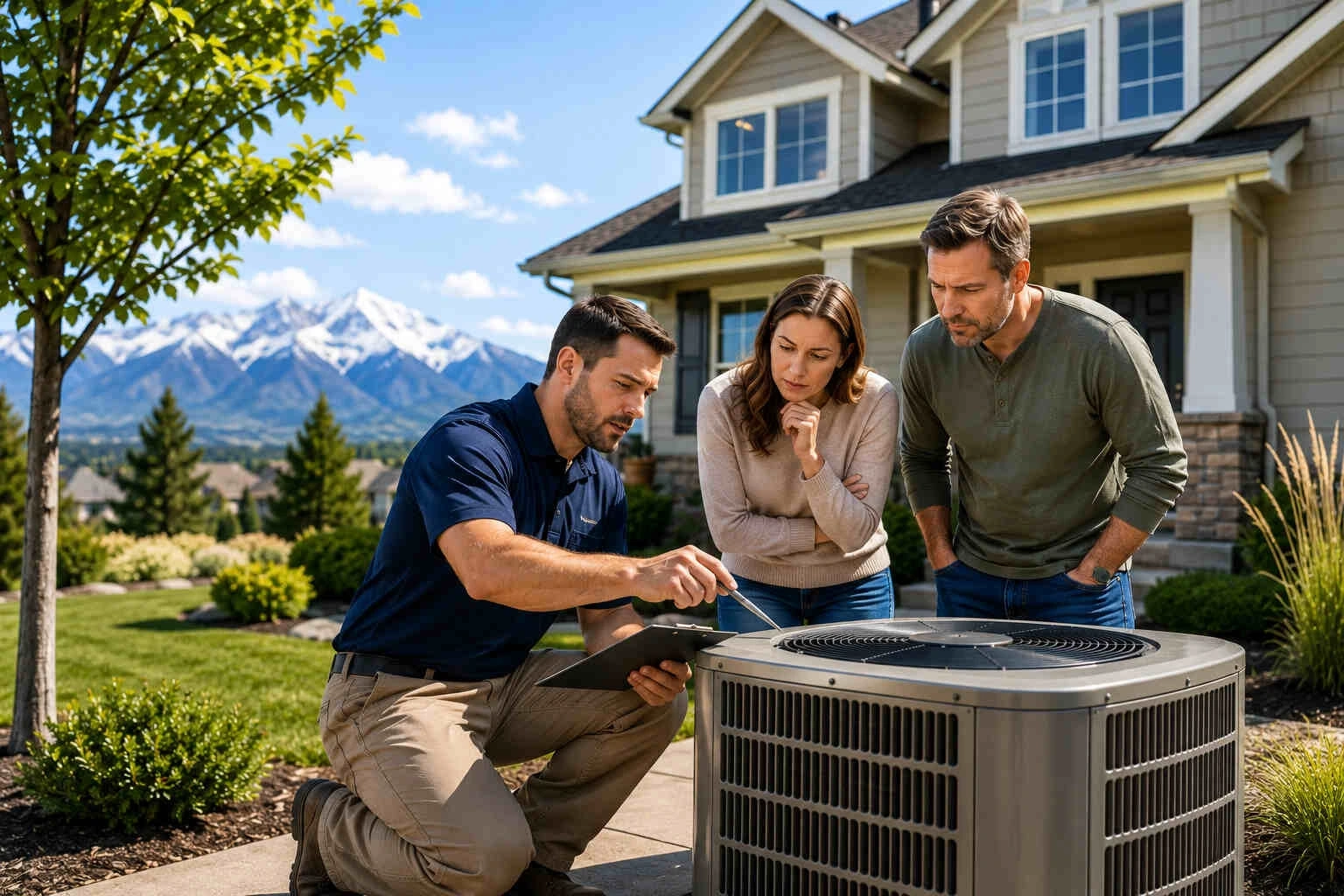
Seven HVAC findings stall Colorado closings: a cracked heat exchanger, missing carbon monoxide alarms, a furnace or air conditioner past 20 years, an untested or dead AC, a winterized evaporative cooler nobody can run, a radon result over 4.0 pCi/L with no mitigation system, and installation defects that fail Denver or county mechanical code. Each one lands in the buyer's Inspection Objection, and the seller has 3 to 5 days under the Colorado contract to resolve it or watch the contract terminate.
The fix for all seven is the same: find them before the buyer's inspector does. Costs below are Denver metro prices in 2026.
Why HVAC carries more weight in a Colorado inspection than anything but the roof
A furnace runs 7 months a year on the Front Range and a full furnace-and-AC replacement costs $11,000 to $18,000 in the Denver metro. When a buyer reads "at end of expected service life" in the report, they price that bill into the objection. The lender adds pressure: FHA and VA appraisers require a working, permanent heat source before they clear the loan, and a red-tagged furnace stops an FHA or VA closing until it is repaired or replaced.
The Colorado contract gives the buyer three deadlines: the Inspection Objection Deadline (the buyer lists the findings), the Inspection Termination Deadline (the buyer walks and keeps the earnest money), and the Inspection Resolution Deadline (the two sides sign an agreement or the contract terminates). In most Denver metro contracts the objection lands 7 to 10 days after the contract is signed and the resolution deadline is 3 to 5 days after that. Sellers who want the whole sequence in order can read how to sell a house in Colorado; buyers see the same deadlines from the other side in making an offer on a Colorado home.
1. A cracked heat exchanger red-tags the furnace
This is the most serious HVAC finding an inspector makes and the only one with no negotiating room. The heat exchanger separates combustion gas from the air in the ducts. A crack lets carbon monoxide into the house. Inspectors flag rust, flame roll-out or a flame that flutters when the blower starts, then an HVAC technician confirms it with a combustion analyzer or a camera. Xcel Energy and licensed contractors red-tag a furnace with a confirmed crack and shut off the gas to it.
The furnace gets replaced before closing in almost every case, because a heat exchanger replacement costs $2,000 to $3,500 on a furnace already past 15 years, and a new 80 percent AFUE furnace costs $4,500 to $7,500 installed on the Front Range. Furnaces 12 years and older are the ones that crack; a seller with a furnace that age orders a combustion test before listing.
2. Missing carbon monoxide alarms violate Colorado law at the sale
Colorado law (C.R.S. 38-45-101 and following) requires the seller of an existing home with a fuel-fired furnace, water heater, fireplace or an attached garage to install an operational carbon monoxide alarm within 15 feet of the entrance to every bedroom before the sale closes. Inspectors check for the alarms on every Colorado inspection and list any missing alarm as a code item. A plug-in or battery CO alarm costs $25 to $60; a three-bedroom home needs one alarm in the hall serving all three rooms when every bedroom door is within 15 feet of it. Install them before photos, not after the objection.
3. A furnace or AC past 20 years is written up even when it runs
Inspectors record the manufacture date from the data plate. Furnaces last 18 to 25 years on the Front Range; air conditioners last 15 to 20 years, less on the west-facing side of a house that bakes in afternoon sun at 5,280 feet. Equipment past those numbers goes in the report as "beyond typical service life," and buyers ask for a credit of $3,000 to $8,000 or a home warranty.
- Under 12 years: service it, keep the receipt, disclose the age.
- 12 to 20 years: service it, get a written condition report from the contractor, and price the home knowing the buyer will ask for $2,000 to $5,000. The replace or repair the HVAC before selling post runs the math.
- Over 20 years or any red tag: replace. A new system with a transferable warranty removes the objection and photographs well. Xcel Energy rebates and Colorado's state heat pump tax credit lower the price of a heat pump swap.
4. An untested or dead air conditioner
Front Range inspectors will not run an air conditioner when the outdoor temperature has been below 60 degrees in the previous 24 hours, because a compressor started cold takes damage. From October through April the report reads "AC not tested due to outdoor temperature," and buyers ask the seller for a contractor's test or a credit. A seller listing between October and April hands the buyer a service receipt dated within 90 days; that closes the question for $100 to $200.
When the AC runs and blows warm, the causes are a $200 to $400 capacitor, a refrigerant leak ($600 to $1,500 to find and recharge with R-410A), or a failed compressor ($2,000 to $3,500, at which point replacement of a unit over 10 years old is the cheaper answer). Systems built before 2010 that use R-22 refrigerant are written up on their own line: R-22 production ended in 2020, a recharge costs $150 to $250 per pound, and buyers read "R-22" as "replace within 3 years." Replacing the AC alone costs $5,500 to $9,500 in the Denver metro.
5. An evaporative cooler the inspector cannot run
Tens of thousands of Denver, Lakewood, Arvada and Wheat Ridge homes built before 1990 cool with a rooftop or window evaporative (swamp) cooler instead of central AC. They work because Front Range summer humidity sits under 30 percent. Inspectors treat them as an installed system: if the cooler is winterized (drained, water line shut, cover on) the report says "not tested." If it is open and the pads are dry, the pump is dead, or the water line has a freeze split, that is a defect.
Before listing in the cooling season, open the cooler, replace the pads ($30 to $80), run it, and fix leaks. Before listing in winter, winterize it correctly and disclose that it is winterized. A replacement rooftop cooler costs $1,500 to $4,000; adding central AC to an existing forced-air furnace costs $5,500 to $9,500 and is the upgrade that widens the buyer pool in the metro.
6. Radon over 4.0 pCi/L with no mitigation system
Most of Colorado sits in EPA Radon Zone 1, and roughly half of Front Range homes test above the EPA action level of 4.0 pCi/L. Nearly every Colorado buyer orders a radon test with the inspection ($150 to $250). A result over 4.0 becomes an objection for a mitigation system, which costs $1,200 to $2,500 installed in the Denver metro and runs through the mechanical and HVAC space: a fan, a pipe from the slab, and a discharge above the roofline. Colorado law since 2023 also requires sellers to give buyers a written radon warning statement and any radon test results and mitigation records they have.
Sellers without a system test before listing; a $30 charcoal kit tells you whether to install on your schedule or the buyer's. The radon in Denver homes testing and mitigation guide covers the test types and the numbers.
7. Installation defects that fail Denver and county mechanical code
The furnace runs fine and the report still fills a page. Front Range inspectors write up:
- Flue and vent problems: a disconnected or back-sloped flue, single-wall vent pipe touching wood, a water heater and furnace sharing a vent that is undersized after a furnace replacement.
- Combustion air: a furnace in a closet or finished basement room with no combustion-air openings, common in 1950s to 1970s Denver ranches after a basement finish.
- Altitude derating not done: gas furnaces lose about 4 percent of input per 1,000 feet of elevation, so a Denver furnace runs 20 percent below its sea-level rating and manufacturers require a high-altitude orifice kit or pressure adjustment. Inspectors look for the conversion label.
- Condensate and drain: a high-efficiency furnace or AC coil draining onto the floor, a condensate pump with no outlet, or a line that runs to the sewer with no trap.
- Electrical: a double-tapped breaker for the AC, a disconnect missing at the condenser, an unlevel or sunken condenser pad on clay soil.
- No permit: Denver, Aurora, Jefferson County, Douglas County and most Front Range jurisdictions require a mechanical permit for a furnace or AC replacement. Buyers check the permit history online, and unpermitted replacement equipment shows up as a question on the Seller's Property Disclosure.
Each of these is a $150 to $800 repair before listing and a $1,000 to $3,000 credit request after the objection.
Who pays for HVAC repairs in a Colorado sale?
Nothing in the Colorado contract makes the seller repair anything. The Inspection Resolution is a negotiation, and the buyer's power is the right to terminate and keep the earnest money. The split follows the finding:
| Finding | Who resolves it in most Front Range contracts | Typical Denver metro cost |
|---|---|---|
| Cracked heat exchanger or red tag | Seller replaces before closing (lender condition for FHA and VA) | $4,500 to $7,500 furnace, $11,000 to $18,000 furnace and AC |
| Missing CO alarms | Seller installs (Colorado law) | $25 to $60 each |
| Equipment past 20 years, running | Seller credit or home warranty | $500 warranty to $8,000 credit |
| AC not tested (cold weather) | Seller provides service receipt | $100 to $200 |
| Radon over 4.0 pCi/L | Seller installs mitigation or credits it | $1,200 to $2,500 |
| Code and install defects | Seller repairs with licensed contractor, receipt to buyer | $150 to $800 each |
Repairs a seller agrees to are done by a licensed contractor with the receipt delivered to the buyer before closing; the buyer's agent writes that into the Inspection Resolution.
Should a Colorado seller get a pre-listing HVAC inspection?
Yes, on any home with equipment over 10 years old. A pre-listing HVAC service with a combustion test costs $150 to $300 on the Front Range and it converts every one of the seven findings from a mid-contract crisis to a scheduled repair with a receipt. Sellers in other states do the same thing; a Texas seller books air conditioning services by TexAire before listing, and a Colorado seller books a contractor licensed in their city or county. You are free to use any provider. What matters is the paperwork: a dated service report, the combustion reading, and the CO alarm receipt in the disclosure packet.
Then disclose. The Colorado Seller's Property Disclosure asks about the heating and cooling systems, their age and known problems. A seller who lists a 19-year-old furnace as 19 years old, serviced last month, gets a buyer who budgets for it.
Where to go next
- Preparing and adding value before selling: the pre-list fixes ranked by what they return.
- The Colorado home seller's guide: the contract, the deadlines and the disclosure forms in order.
- What happens after your offer is accepted: the buyer's view of inspection week.
- Why a high-efficiency HVAC system helps Colorado home sellers: when a new system is the better listing decision.
- FHA and VA home buying in Colorado: the appraisal conditions that make heat a closing requirement.
- Kenna Real Estate Group agents: the people who read your inspection report before the buyer's agent does.
Talk to the Kenna Real Estate Group
The Kenna Real Estate Group at Keller Williams DTC orders the pre-listing HVAC service, builds the disclosure packet, and negotiates the Inspection Resolution so the closing date holds. Call or text 303-955-4220. A live person answers. Not a robot, not a phone tree. Buyers can search every home for sale in Colorado and ask us to pull the permit history on any address.
Homes for sale that match this post
- Homes with Fireplace in Denver
- Homes with 2 Car Garage in Denver
- Pool: guide
- Homes with Finished Basement in Denver
- Basement: guide
- All homes for sale in Denver
Guides
Questions about any home in Colorado? Call or text 303-955-4220. A live person answers.