New - 8 Hours Ago

.jpg)



A Colorado home sells to a buyer who never sets foot inside when the listing carries seven assets: a measured floor plan that matches the Colorado Square Footage Disclosure, a 3D tour backed by a live video walkthrough, a drone view of the roof and lot, a sun-and-snow note, mechanical and storage diagrams, a downloadable spec sheet with the disclosures attached, and a remote closing plan. Each asset replaces a question the buyer would have asked in person, and every unanswered question costs days on the Denver metro market.
Remote buyers are a fixed part of the Front Range market. Employees transferred to Denver, Boulder and Colorado Springs, service members assigned to Buckley Space Force Base and Fort Carson, and remote workers leaving higher-cost coastal metros all write offers from another time zone. They fly into Denver International Airport for one weekend of showings at most, and many skip the trip. This guide covers what the listing has to carry so they buy anyway, and what each asset costs on a Denver metro listing.
A remote buyer sees your home as a REcolorado listing syndicated to Zillow, Redfin and Realtor.com, and gives it two minutes on a phone. In those two minutes the buyer wants three answers: is the square footage real, what condition are the roof and mechanicals in, and what does it cost to own each month once property taxes, HOA dues, metro district mills and insurance are added. A listing that answers all three gets a video showing request. A listing that answers none gets scrolled past.
The seven assets below answer those questions in the order a buyer asks them. The Kenna Real Estate Group marketing plan for Colorado sellers explains where each asset sits in the listing.
Colorado requires the listing broker to give buyers a Square Footage Disclosure that names the source of the number: county assessor records, a prior appraisal, builder plans or the broker's own measurement. Remote buyers compare the floor plan against that form, so the plan has to use the same source and the same total.
Publish a scaled 2D plan with:
A measured plan costs $100 to $300 on a Denver metro listing. Camera systems such as Giraffe360 produce the plan from the same capture as the 3D tour, which keeps the two assets consistent. The post on why floor plans are essential for selling a Colorado home covers the layout side in more detail.
A Matterport-style 3D tour costs $300 to $600 in the Denver metro and goes first in the media order, ahead of the still photos. It lets the buyer walk the home at 11 pm from another time zone and measure a wall inside the tour.
The tour is not a price tool on its own. A Harvard business-research review of 75,000 home sales found mixed results on sale price and time on market from virtual tours alone. The tour wins remote buyers when it sits next to accurate measurements and full disclosures, not instead of them.
Back the tour with a scheduled live walkthrough over FaceTime or Zoom, 20 to 30 minutes, with the listing agent narrating. The walkthrough shows what the tour hides:
Record the walkthrough and send the file. A buyer who watches it twice writes an offer with fewer contingencies.
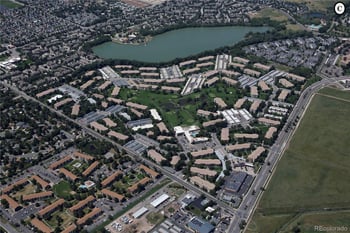
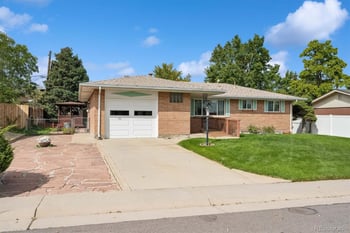
Colorado hail season runs May to September, and the roof is the first thing a remote buyer's insurance agent asks about. A drone shoot from 100 to 200 feet by an FAA Part 107 licensed pilot costs $150 to $400 and shows the roof planes, granule loss, dented vents, the lot lines, which way the ground drains, the alley, the power lines and what sits behind the back fence.
Caption the roof image with the roof age and material. A Class 4 impact-resistant shingle earns a premium discount from most Colorado insurers, and a buyer who sees a 2023 Class 4 roof stops worrying about the $12,000 to $25,000 replacement bill on a 2,000 square foot home. The post on Colorado hail and roof costs gives the numbers buyers are checking against.
The drone image also shows grading. Denver metro homes sit on expansive bentonite clay, and a buyer who sees the ground sloping toward the foundation asks for a structural engineer. A buyer who sees it sloping away moves on to the next question.
Remote buyers cannot feel the light, so write it down. State the orientation with a north arrow and one line per exposure: morning sun in the bedrooms, west sun on the living room at 5 pm in July, patio shaded after 2 pm. At 5,280 feet the UV load on a west-facing wall of glass is a real cooling cost, and a buyer from a humid climate does not know that until told.
Add the winter facts. A north-facing driveway in Highlands Ranch holds ice for weeks in January; a south-facing one melts by noon on most of the 300 sunny days a year. If the listing goes live in December, pair the snow photos with a summer set from the seller's own files so the buyer sees the lawn, the xeriscape beds and the mature trees. Attach 12 months of Xcel Energy and water bills, because the monthly cost question gets asked on every remote showing.
A remote buyer decides whether to order a full inspection or walk away based on the mechanical facts. Put them on one page with photos:
Assemble one PDF and gate it behind a short contact form so the listing agent knows who downloaded it. The sheet includes:
A home with foundation, roof or sewer problems still sells to remote buyers when the sheet says so up front and prices for it. The Colorado distressed homes guide covers how investors and cash buyers price those defects.
Media order on REcolorado matters because the portals copy it: hero photo, then the 3D tour, then the floor plan, then the drone set, then the interior stills. Put the spec sheet link in the first line of the public remarks.
The Colorado Contract to Buy and Sell Real Estate runs on dated deadlines: inspection objection, title, HOA documents, appraisal, loan conditions. A remote buyer's inspector attends the inspection for them, and the listing agent repeats the live video walkthrough that day so the buyer sees what the inspector sees. Sewer scope and radon test get scheduled the same morning.
Colorado permits remote online notarization, so an out-of-state buyer signs closing documents by video with a Colorado title company, or with a mobile notary in their own city. The final walkthrough happens by video the day before funding. The one rule that never changes: wire instructions get verified by a phone call to a number the buyer already had, never a number in an email.
| Asset | Denver metro cost | Question it answers |
|---|---|---|
| Measured floor plan | $100 to $300 | Is the square footage real |
| 3D tour | $300 to $600 | What is the layout and condition |
| Live video walkthrough | Agent time | The 20 questions a visit would answer |
| Drone exterior | $150 to $400 | Roof, lot, drainage, neighbors |
| Professional stills, 30 to 40 images | $200 to $500 | First impression on a phone |
| Spec sheet and disclosures | Seller and agent time | What it costs to own |
| Remote closing plan | $0 to $200 for a mobile notary | Can I close from out of state |
The full package runs under $2,000 on a home that sells for $550,000 to $750,000 in the Denver metro, and the seller who skips it pays more than that in price reductions after 30 days on market. Pricing decides whether the assets get seen at all; the Smart Pricing Report sets the list price from closed comparable sales before the first photo is taken, and the showing guide covers how to keep the home ready between video walkthroughs.
Remote buyers also shop by area before they shop by house. Sellers in Denver, Aurora, Littleton, Centennial, Highlands Ranch, Castle Rock and Parker get more remote traffic when the listing links to an area page, and the post on where remote-work buyers look in Denver shows which areas those buyers search first.
The Kenna Real Estate Group at Keller Williams DTC builds the listing package remote buyers need, prices the home from closed Colorado sales, runs the live video walkthroughs, and manages the contract deadlines and the remote closing for a buyer who never visits. Call or text 303-955-4220. A live person answers. Not a robot, not a phone tree. Buyers can also search every home for sale in Colorado.
Questions about any home in Colorado? Call or text 303-955-4220. A live person answers.
$300 to $600 for a Matterport-style tour on a Denver metro home, and $100 to $300 more for a measured floor plan from the same capture. Drone exteriors add $150 to $400.
Yes. The Colorado Square Footage Disclosure names the source: assessor records, a prior appraisal, builder plans or the broker's own measurement. The floor plan on the listing has to match that source and total.
Yes. Colorado permits remote online notarization, so the buyer signs by video with a Colorado title company or uses a mobile notary in their own city. The final walkthrough happens by video the day before funding.
No, if the listing pairs the winter set with summer photos of the lawn, beds and trees. Add a line on driveway orientation, since a north-facing driveway holds ice for weeks in January and a south-facing one melts by noon.
Hail season runs May to September along the Front Range, and insurers price the policy on roof age and material. A drone image captioned with the roof year and a Class 4 shingle rating answers the question before the buyer's insurance agent asks it.
Yes. Colorado law requires sellers to disclose known radon test results and any mitigation work on the Seller's Property Disclosure. Put the most recent result and the mitigation fan location in the spec sheet.
Yes. The Colorado contract sets an inspection objection deadline, and the buyer's inspector attends in person while the listing agent runs a live video walkthrough. Sewer scope and radon test get scheduled the same morning.