New - 30 Mins Ago

.jpg)


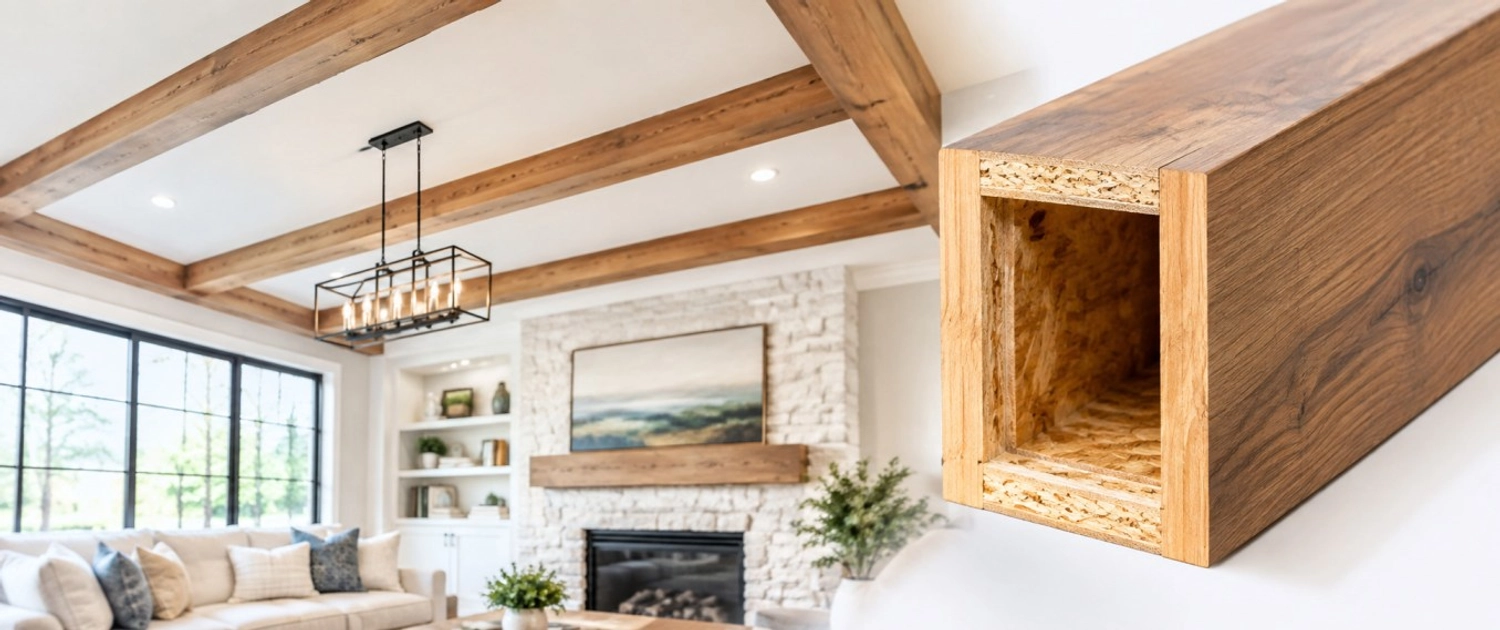
Box beams are hollow on purpose. A box beam is built from several pieces of wood joined around an open core to look like one massive solid timber, and that hollow core is the entire reason the look works in a real Colorado living room or great room. It is not a shortcut and it is not a lesser product than a solid beam — for almost every home on the Front Range, it is the only practical way to get the look at all.
A box beam is three or four boards joined into a U-shape or full box, then set over the ceiling framing or mounted flush against it. The exterior faces are finished wood, most commonly reclaimed wood box beams milled from old barns, factories, or snow fencing, so the grain, saw marks, and weathering read as authentic once the beam is installed. The inside is empty space and framing lumber, not solid timber.
No. A single solid timber large enough to look right on a 10-foot or 12-foot Colorado ceiling can weigh 300 to 600 pounds for one 16-foot beam, depending on species and dimension. Very few homes built on the Front Range’s expansive clay soils and standard residential framing were engineered to hang that much dead weight from the ceiling joists without added structural work. A hollow box beam delivers the same visual scale at a fraction of the weight, so it mounts directly to standard framing with screws and construction adhesive, no engineered support required in most cases.
Reclaimed timber large enough to mill into solid beams is scarce and expensive. Cutting the same reclaimed stock into thinner boards for box construction stretches a limited supply of old wood across far more linear feet of ceiling, which is part of why box beams have become the standard way to bring reclaimed character into a Denver-area remodel instead of a single accent beam over an island.
Front Range homes run through wide humidity swings — bone-dry winters with indoor humidity in the teens, then a wetter monsoon stretch in July and August. Solid, thick timber moves more with those swings and is more prone to checking (surface cracking) as it dries further at altitude. A box beam’s thinner component boards equalize with indoor humidity faster and check less dramatically, and any small surface cracks that do form read as authentic character on reclaimed wood rather than a defect.
For a typical great room treatment, expect $60 to $150 per linear foot installed, depending on wood species, finish, and whether the ceiling needs electrical rerouted around the beams for can lights or a fixture. A modest three-beam living room treatment on the Front Range commonly lands between $2,500 and $6,000 all-in; a full vaulted-ceiling grid across a great room can run $10,000 to $20,000. Get at least two local bids, since labor rates and access difficulty (steep pitch, high ceilings) swing the number more than material cost does.
Vaulted and raised ceilings are common in Front Range construction from the 1990s through today, and box beams are one of the more effective ways to bring scale and visual weight down into a tall room that can otherwise feel cavernous. Beams that follow the roof pitch, rather than sitting flat, tend to look most at home in a mountain-modern Colorado build.
Purely decorative box beams attached to existing ceiling framing do not require a building permit in Denver or the surrounding counties, since they are not load-bearing and do not alter structure. If the project includes moving electrical for new lighting inside the beam layout, that electrical work needs its own permit and a licensed electrician — confirm requirements with your city or county building department before work starts, since rules vary by jurisdiction.
Great rooms, primary bedrooms, dining rooms, and home offices with 9-foot or taller ceilings get the most visual payoff. In a standard 8-foot ceiling, a box beam grid can make the room feel lower rather than more custom, so it is worth measuring ceiling height and room scale before committing to a full layout.
Buyers touring a listing respond to ceiling detail in photos and in person, and a well-proportioned beam treatment reads as a custom upgrade rather than a builder-grade room. It will not show up as a specific line-item adjustment on an appraisal, but agents on our team see it help a great room stand out in a crowded set of showings, which matters most in a competitive Front Range price bracket. If you are weighing this project ahead of a sale, our guide to preparing and adding value before selling covers which upgrades pay back and which ones do not.
Dust with a soft brush or vacuum attachment a few times a year, and keep direct HVAC vents from blasting one section of a beam, which can dry that spot faster than the rest and show as uneven checking. A light coat of appropriate wood finish every several years keeps the surface stable through Colorado’s dry winters.
Douglas fir, oak, and reclaimed barn wood (a mix of pine and oak) are the most common choices on the Front Range. Douglas fir gives a warmer, more uniform tone that suits a Rocky Mountain modern build; reclaimed barn wood carries nail holes, saw marks, and gray weathering that reads as older and more textured. Species and finish affect cost as much as size does, so ask a supplier for samples under your own room’s light before committing to a full order.
Mounting a light decorative beam box over drywall is within reach for an experienced DIYer with a stud finder and a helper. A full great-room grid, beams following a vaulted pitch, or any project involving electrical is worth handing to an installer who works specifically in this construction, since getting the mounting blocking and spacing wrong is expensive to redo on a finished ceiling. A supplier experienced in reclaimed box beam work, rather than a general contractor improvising the joinery, will also get proportions right for your specific room the first time.
Whether you are planning a ceiling upgrade before you list or comparing homes that already have custom timber detail, the Kenna Real Estate Group can tell you which finishes are worth paying for in today’s Front Range market and which ones to skip. Call or text 303-955-4220. A live person answers. Not a robot, not a phone tree. Or search every home for sale in Colorado to see how ceiling detail shows up across current listings.
Questions about any home in Colorado? Call or text 303-955-4220. A live person answers.
Yes. A box beam is built from several boards joined around an open core to look like a solid timber. The hollow construction is intentional and keeps the beam light enough to mount on standard ceiling framing.
No. A solid timber sized for a great room ceiling can weigh several hundred pounds per beam and needs added structural support in most homes. A hollow box beam gives the same look without that weight or cost.
Plan on $60 to $150 per linear foot installed. A modest three-beam living room runs about $2,500 to $6,000; a full vaulted great-room grid can reach $10,000 to $20,000.
A decorative beam attached to existing framing does not need a permit. Adding or moving electrical for lighting inside the layout does need one, and requirements vary by city and county.
Low indoor humidity and altitude can cause surface checking as wood dries further after installation. Box beams' thinner component boards adjust faster and show less dramatic cracking than a solid timber would.
They will not show up as a specific appraisal line item, but a well-proportioned beam treatment photographs well and can help a great room stand out in a competitive Front Range listing.
Rooms with 9-foot or taller ceilings get the most benefit: great rooms, primary bedrooms, dining rooms, and vaulted living spaces. Standard 8-foot ceilings can feel lower with a full beam grid.
A single light beam over drywall is manageable for an experienced DIYer. A full grid, a vaulted-ceiling layout, or any electrical work is worth hiring a specialist familiar with box beam mounting.


