.jpg)


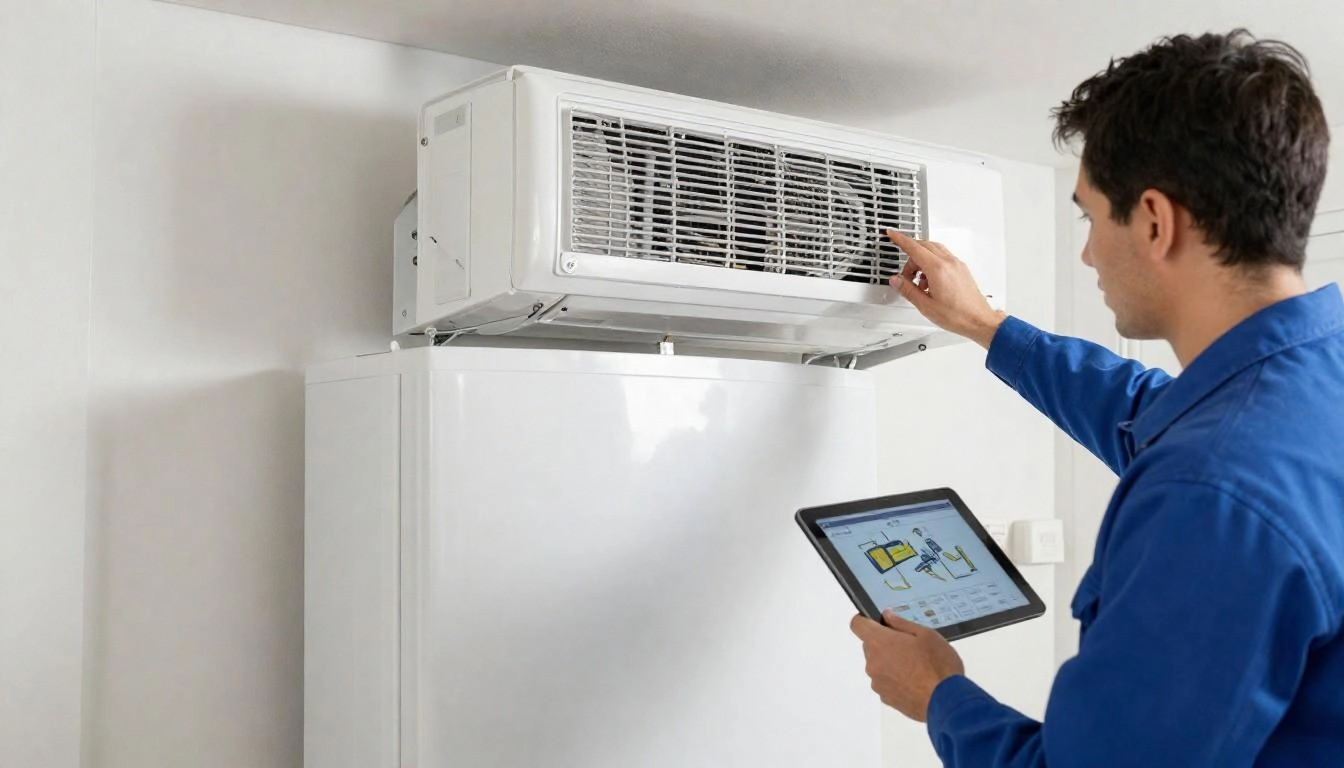
An igniter, a capacitor or a pressure switch failing on a 15-year-old furnace does not always mean a new system. Ordering the exact OEM part and swapping it costs a fraction of a service call in many cases — but Colorado's altitude, permit rules and Xcel Energy rebate requirements change which repairs are worth doing yourself and which ones need a licensed contractor's signature.
Which furnace and AC parts fail first on the Front Range?
Hot surface igniters, flame sensors, capacitors, blower motors, pressure switches and control boards account for most residential heating, ventilation, and air conditioning service calls on the Front Range. Altitude plays a direct role in two of these: a pressure switch calibrated for sea level can read incorrectly above 5,000 feet, and igniters run hotter and fail sooner in homes at elevation, where furnaces cycle more through a Colorado winter to compensate for thinner air.
Is it legal to replace a furnace part myself in Denver?
Colorado does not require a license to own a wrench, and swapping a capacitor, an igniter or a blower motor on your own furnace is not, on its own, illegal for a homeowner in most Front Range jurisdictions. What changes the picture is gas work: opening a gas line connection, replacing a gas valve, or any repair that affects combustion venting requires a licensed contractor and a permit in Denver and most surrounding counties, regardless of who owns the house.
Where should a homeowner buy OEM parts online?
A site such as Repair Clinic lets a homeowner search by the furnace or AC unit's exact model and serial number to confirm the part is an OEM match, not a universal substitute that fits loosely — you are free to use any supplier, and confirming the part number against the unit's rating plate before ordering avoids the most common return.
Does altitude change which parts a Colorado furnace needs?
Above 5,000 feet, most manufacturers specify a high-altitude conversion kit, a different orifice size, a recalibrated gas valve, or a different pressure switch, for a furnace to burn correctly and vent combustion gases through the flue without a leak. Ordering a standard sea-level replacement part for a component that needs the altitude-rated version is one of the more common mistakes in a DIY furnace repair on the Front Range.
What is the difference between a universal part and an OEM part?
A universal part is manufactured to fit several furnace and AC models with a slightly different mounting bracket, wire length or orifice size, while an OEM part is built to the exact specification of the original component for one specific model and serial range. A universal igniter or pressure switch can work for years without issue, but a mismatched orifice size or pressure switch calibration on a Front Range furnace is exactly the kind of substitution that causes a combustion problem an owner cannot see or smell until a technician finds it during an unrelated service call.
What furnace parts need an altitude-rated version in Colorado?
Gas valves, burner orifices and pressure switches are the three components manufacturers rate separately for elevation above 5,000 feet, since each one manages how much gas and air the furnace mixes during combustion. A blower motor, a capacitor, a flame sensor and an igniter cross over between sea-level and high-altitude models in most product lines, since they control airflow and ignition rather than the fuel-to-air ratio itself, which keeps most of the parts on a Repair Clinic order page usable regardless of elevation.
When does a DIY repair void a warranty or affect a Colorado inspection?
Most furnace and AC manufacturers require proof of professional installation and service to keep a parts warranty active, and a self-installed part with no invoice can void coverage on the rest of the unit. At resale, a Front Range home inspector notes any HVAC work that looks unpermitted or improperly vented, which becomes a negotiating point during the buyer's inspection objection period even if the repair itself functions correctly.
What tools does a DIY furnace or AC part swap actually need?
Most igniter, capacitor and flame sensor swaps need a nut driver set, a multimeter to confirm the old part actually failed before ordering a replacement, and the furnace's own service panel screws, nothing more specialized than a homeowner's existing toolbox in most cases. A blower motor swap adds a pulley alignment step that rewards a bit of HVAC-specific experience, and any job that involves disconnecting a wire harness benefits from a phone photo of the original wiring before anything gets unplugged.
Do Xcel Energy rebates require a licensed contractor?
Yes. Xcel Energy's Colorado rebate programs for high-efficiency furnaces, heat pumps and AC units require installation by a participating licensed contractor. A self-installed or DIY-repaired unit does not qualify for the rebate, regardless of the equipment's efficiency rating.
What is the cost comparison between a DIY part and a licensed service call?
| Repair | OEM part only | Licensed service call |
|---|---|---|
| Igniter replacement | $25 to $80 | $150 to $350 |
| Capacitor replacement | $15 to $50 | $150 to $300 |
| Blower motor | $150 to $400 | $400 to $900 |
| Gas valve or pressure switch | Contractor only | $300 to $700 |
When should a Colorado homeowner stop and call a contractor?
Any repair that touches the gas line, the flue venting, or the electrical disconnect on a condenser needs a licensed contractor in Denver and most Front Range counties, not because the part is hard to find, but because the permit and inspection exist to confirm the combustion venting and electrical work were done to code. A furnace or AC replacement, rather than a single part swap, always needs a mechanical permit regardless of who does the labor.
Does an aging HVAC system affect a home's resale value?
A furnace or AC unit past 15 years old is a line item buyers and their inspectors flag, and a documented history of proper repairs, with invoices, not just working equipment, reassures a buyer more than a quiet system with no paper trail. The Kenna Real Estate Group's guide to preparing and adding value before selling covers which HVAC repairs are worth making before a Front Range listing goes live.
How does a Front Range buyer factor an older HVAC system into an offer?
A furnace or AC unit's age, condition and repair history belong in the same offer conversation as the roof and the water heater, priced as a near-term capital expense rather than treated as a pass-fail inspection item. Buyers who see an OEM parts trail with dated invoices can reasonably expect a few more years of service from an aging unit, while buyers who see no maintenance record at all should price the offer as if a full replacement is due the first winter after closing.
Where to go next
- Preparing and adding value before selling a Colorado home
- Denver utility providers and costs guide
- How HVAC system age impacts home value and buyer negotiations
- Why a high-efficiency HVAC system helps Colorado home sellers
- The Colorado home buyer's guide
- Search every home for sale in Colorado
Talk to the Kenna Real Estate Group
The Kenna Real Estate Group helps Front Range sellers document HVAC repairs and permits before a listing goes live, and helps buyers weigh an older furnace or AC unit against the price of a home during negotiations. Call or text 303-955-4220. A live person answers. Not a robot, not a phone tree. Search every home for sale in Colorado while you plan the next repair or purchase.
Homes for sale that match this post
Guides
Questions about any home in Colorado? Call or text 303-955-4220. A live person answers.