New - 1 Hour Ago
.jpg)


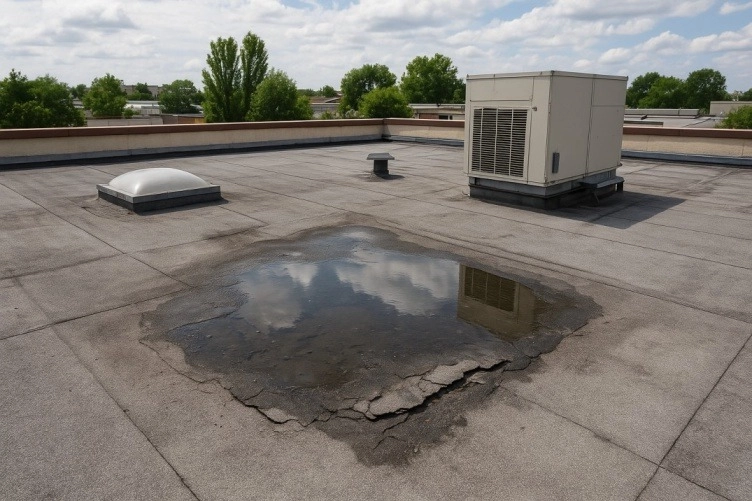
Ponding water and seam failure cause most flat roof problems on Colorado homes, townhomes, and rowhomes, and both trace back to drainage that wasn't built for the weight of Front Range snow and the intensity of an afternoon hailstorm. A flat roof is not actually flat; it should carry a slight taper toward drains, and most flat roof problems start when that taper fails or a drain clogs.
A flat or low-slope roof should drain within 48 hours of a storm. Water sitting longer than that, called ponding, adds weight, accelerates membrane breakdown from UV and temperature cycling, and eventually finds a seam or a penetration to leak through. Ponding means a clogged drain, a low spot from age-related sagging, or a roof that was never tapered correctly during construction.
TPO, EPDM, and modified bitumen membranes are installed in sheets joined by heat-welded or adhered seams, and those seams are the weakest point on the roof. Colorado's UV exposure at altitude and its wide daily temperature swings stress the seam adhesive faster than in milder climates, so seams should be checked every year, not just after a storm.
TPO reflects heat well and resists UV degradation, making it a common choice for Front Range flat roofs on homes and small commercial buildings. EPDM rubber is more flexible in cold weather, which matters through a Colorado winter's freeze-thaw swings. Modified bitumen, a multi-layer asphalt system, holds up well under foot traffic and rooftop equipment but needs a skilled installer for the heat-welded seams. A roofer should match the membrane to the building's use, not just price.
Front Range spring snowstorms can drop a foot or more of heavy, wet snow in a day, and a flat roof has to carry that load until it melts or is cleared. A properly tapered roof drains meltwater as it forms; a roof with a low spot holds standing water and slush that refreezes overnight, adding weight and stressing the membrane through repeated freeze-thaw cycles.
Even a low-slope roof can ice dam at the roof edge or around a parapet wall if attic or roof-deck insulation is inadequate, trapping heat that melts snow unevenly. The fix is the same as on a pitched roof: balanced insulation and ventilation, not just heat cables at the edge.
Colorado hail season runs mid-April through mid-September. Hail can puncture or split a membrane rather than just bruising it the way it does asphalt shingles, and that damage is much harder to spot from the ground or even from a rooftop walk-through without close inspection. A post-hailstorm inspection matters as much for a flat roof as for a pitched one, arguably more since the damage is less visible.
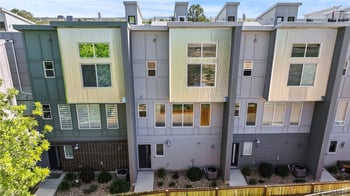
Flat and low-slope roofs are common on Denver metro townhomes, rowhomes, and older urban infill construction. In an HOA or condo association, roof maintenance responsibility, and who pays for repairs, is spelled out in the governing documents; an owner should confirm that before assuming an HOA covers a leak versus the individual unit owner. One of the Kenna Real Estate Group agents can pull the reserve study language that spells out roof responsibility before an offer goes in.
A TPO or EPDM flat roof replacement commonly runs $6 to $12 per square foot in the Denver metro depending on insulation and drainage work, which puts a 1,500 square foot flat roof in the $9,000 to $18,000 range before any structural repair. Getting the tapered insulation right the first time costs more upfront but prevents the ponding-water problem from recurring.
A flat roof's easy walkable access makes it a practical spot for HVAC units and solar panel racking, both common on Colorado flat roofs. Equipment placement should avoid drainage paths and low spots, since blocking water flow around a rooftop unit creates a new ponding problem exactly where it is hardest to notice.
Spring: clear drains and scuppers of winter debris before the first heavy rain, and check for ponding after the season's first big storm. Summer: walk the roof after any significant hailstorm and check membrane seams for splits, since flat roof hail damage is easy to miss from the ground. Fall: clear leaves and debris before the first snow so drains stay open through winter. Winter: watch for ice buildup at parapet walls and roof edges, a sign attic or roof-deck insulation needs attention. A homeowner or a building manager who keeps this routine on the calendar catches most flat roof problems while they are still an inexpensive repair instead of a membrane replacement. Ask for the printable exterior maintenance checklist in the form below and we email it the same day.
The Kenna Real Estate Group helps Denver metro townhome, rowhome, and condo owners understand flat roof condition and who is responsible for it before buying or selling. Call or text 303-955-4220. A live person answers. Not a robot, not a phone tree. Or search every home for sale in Colorado right now.
Questions about any home in Colorado? Call or text 303-955-4220. A live person answers.
A clogged drain, a low spot from age-related sagging, or a roof that was never tapered correctly toward its drains during construction.
A flat or low-slope roof should drain within 48 hours of a storm; standing water beyond that adds weight and accelerates membrane breakdown.
TPO reflects heat and resists UV well; EPDM rubber stays flexible through freeze-thaw winters; modified bitumen holds up under foot traffic and equipment. The right choice depends on the building's use.
Yes. Hail can puncture or split a membrane rather than just bruising it, and that damage is harder to see, so a post-hailstorm inspection matters as much on a flat roof as a pitched one.
A TPO or EPDM replacement commonly runs $6 to $12 per square foot, putting a 1,500 square foot flat roof around $9,000 to $18,000 before structural repair.
It depends on the HOA or condo association's governing documents; an owner should confirm whether the association or the individual unit owner covers roof repairs.
Yes, and its walkable surface makes it practical for both, as long as equipment placement avoids drainage paths and low spots.
They can, at the roof edge or around a parapet wall, when insulation is inadequate and heat escapes unevenly; the fix is balanced insulation and ventilation, not just heat cables.