.jpg)


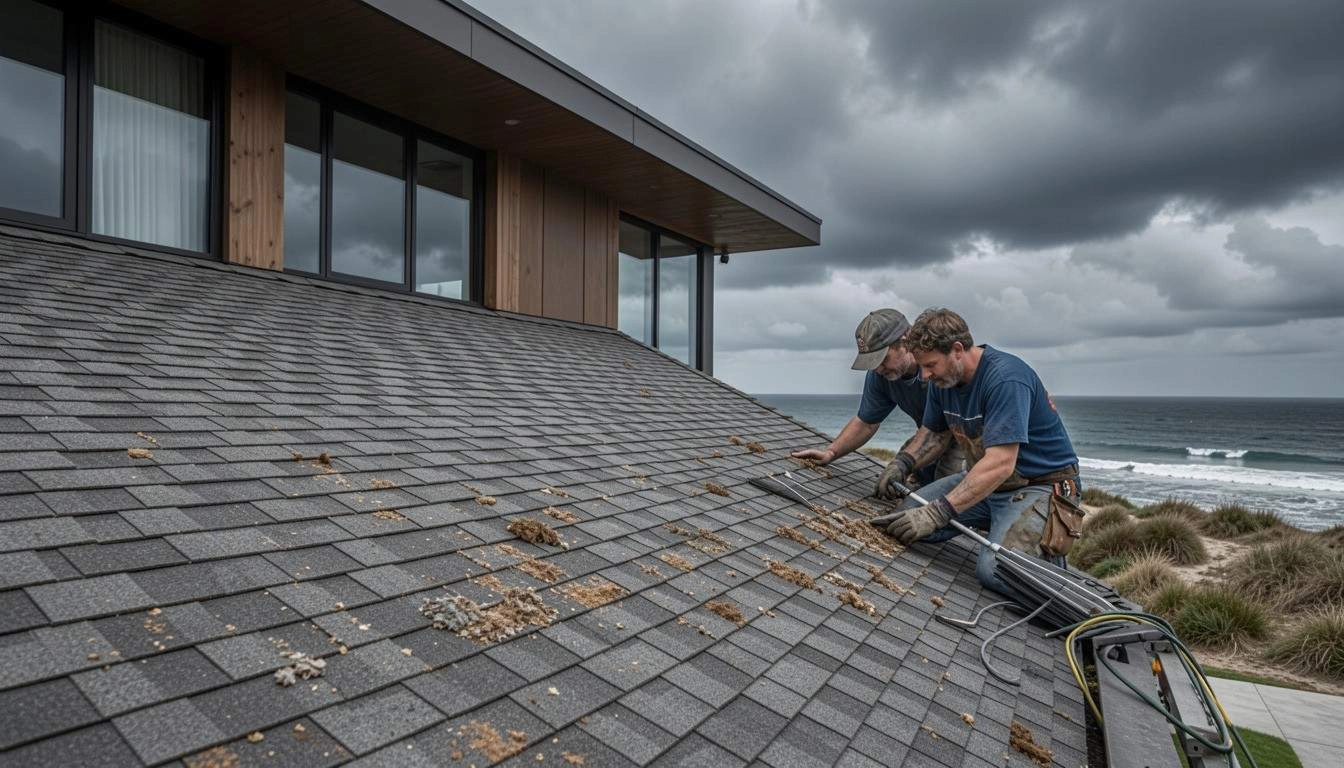
Most Front Range roof problems trace back to four things: hail, high-altitude UV, freeze-thaw cycling and wind. Fix the cause, not just the shingle, and a Colorado roof holds up through the next storm season instead of failing again in three years.
What roof problems show up most on Front Range homes
Granule loss, cracked and lifted shingles, torn flashing around vents and chimneys, and damaged ridge caps make up most of the roof calls the Kenna Real Estate Group at Keller Williams DTC hears about from sellers between Denver and Colorado Springs. Every one of those problems has a Colorado weather cause behind it, not just age.
How hail damages a Colorado roof
Hail bruises the asphalt mat under the granules, knocks granules loose, and cracks the fiberglass base. A bruise does not always leak the day it happens; it leaks eighteen months later when the weakened spot finally splits. Along the Front Range, hail season runs mid-April through mid-September, with the heaviest activity in a corridor that runs roughly from Colorado Springs through Denver to Fort Collins.
High-altitude UV ages shingles faster
Denver sits at 5,280 feet, and UV exposure climbs with elevation. That extra ultraviolet load dries out asphalt oils faster than a sea-level roof of the same age, which is why a 15-year shingle on the Front Range looks and performs like a 20-year shingle installed at low elevation. Combine UV aging with hail bruising and a roof that looks fine from the driveway can already be past the point where a patch makes sense.
Freeze-thaw cracks what hail already weakened
Front Range winters swing above and below freezing several times in a single week. Water gets into a hail-cracked shingle or an open seam, freezes, expands, and widens the crack. Repeat that cycle for a winter and a small hail bruise becomes a leak point by spring.
Wind and chinook gusts pull shingles loose
Foothill communities from Golden to Boulder get chinook wind events with gusts that regularly pass 60 mph and can exceed 100 mph in the strongest events. Wind gets under a shingle edge that hail already cracked or that was sealed on a cold install day and peels it back. After any wind event above 50 mph, walk the yard and gutter line for shingle pieces before you assume the roof is fine.
Class 4 impact-rated shingles and the insurance discount
A Class 4 shingle is tested under UL 2218 to resist a 2-inch steel ball dropped from 20 feet without cracking the mat. Colorado insurers are required to offer a premium discount for roofs covered with Class 4 impact-resistant material, and on a hail-prone Front Range property that discount plus fewer future claims pays back the upgrade cost over the life of the roof. Ask your carrier for the discount amount in writing before you choose a shingle class for a replacement.
How to check your own roof for hail damage
Look for these signs from the ground with binoculars, then confirm any concern with a licensed Colorado roofer:
- Dented gutters, downspouts, or window screens — hail large enough to dent metal is large enough to bruise shingles.
- Bare or shiny spots on the shingle field — granule loss exposes the black asphalt mat underneath.
- Soft, bruised spots you can feel — press gently; a hail bruise gives slightly like a soft apple.
- Cracked or missing ridge cap shingles — these take the hardest hits on a sloped roof.
- Granules collecting in gutters or at downspout outlets after a storm.
Ask for the printable roof inspection checklist in the form below and we email it the same day.
Filing a Colorado hail claim: deductibles, timing and the contractor rebate law
Colorado law prohibits roofing contractors from advertising that they will pay, waive or rebate your insurance deductible — treat any contractor who offers that as a warning sign, not a deal. Most Colorado homeowner policies carry a separate, percentage-based wind and hail deductible that runs higher than the standard deductible; know that number before you file. Photograph damage the same day if you can, request an adjuster inspection promptly, and get a second, independent roofer's estimate before you sign a contract, since the adjuster's number and a contractor's scope of work do not always match on the first pass.
Permits and HOA approval before you replace a roof
Denver and most Front Range cities require a building permit for a full roof replacement, and permit cost runs $100 to $400 depending on the jurisdiction and job size; unincorporated Arapahoe, Douglas and Jefferson County properties pull permits through the county building department instead of a city office. If your subdivision has an HOA, the architectural review committee almost always has to approve the new shingle color and material before a crew starts, even when the replacement is like-for-like — check the Denver HOA rules and fees guide for what approval requires.
Attic moisture and ice dams
A roof deck that is properly vented sheds heat instead of trapping it, which keeps snow from melting unevenly and refreezing at the eave into an ice dam. Poor attic ventilation is also the leading cause of the trapped moisture that shows up as sheathing rot years before anyone sees a stain on the ceiling below; for the mechanics of controlling that moisture, see this EPA overview of attic humidity control.
What a damaged roof does to a Colorado home sale
Under the Colorado Contract to Buy and Sell Real Estate, a roof in visibly poor condition is one of the most common inspection objection items, and it can stall or reopen negotiations days before closing. Sellers who get an inspection and, where it makes sense, a repair or a documented insurance claim handled before listing avoid that renegotiation entirely — our guide to preparing and adding value before selling and pricing your Colorado home to sell walk through when a roof repair pays for itself and when a price adjustment is the smarter move.
For a broader look at how age and hail history affect Front Range roofs specifically, see what affects the lifespan of a roof in Colorado and Colorado hail and roof costs compared. If storm-related roof wear is one reason you are evaluating a sale, the crew-side view in this Jupiter Roof Repair breakdown of storm-damaged shingles is a useful comparison even though it covers a different climate, and it is worth pairing with two independent bids from licensed Colorado roofers before you commit to a repair.
| Problem | Front Range cause | Typical fix | Rough cost |
|---|---|---|---|
| Granule loss / bare spots | Hail impact, UV aging | Shingle replacement, section or full | $400 to $1,200 per section |
| Cracked ridge caps | Wind, hail on the roof's highest point | Ridge cap replacement | $300 to $900 |
| Lifted or missing shingles | Chinook wind gusts, cold-day install seal failure | Re-nail or replace affected shingles | $250 to $800 |
| Flashing leaks at vents/chimney | Freeze-thaw cracking sealant | Flashing reseal or replacement | $200 to $600 |
| Ice dam leaks at the eave | Poor attic ventilation | Ventilation upgrade plus ice-and-water shield | $800 to $2,500 |
| Full roof past useful life | Combined hail, UV and age | Full tear-off and replacement | $9,000 to $18,000 (2,000 sq ft) |
Where to go next
- Search every home for sale in Colorado
- Preparing and adding value before selling
- Pricing your Colorado home to sell
- Denver HOA rules and fees guide
- What affects the lifespan of a roof in Colorado
- Talk to a Kenna Real Estate Group agent
Talk to the Kenna Real Estate Group
Whether you are pricing a home with hail-worn shingles or buying one and weighing the roof's remaining life, the Kenna Real Estate Group walks Colorado sellers and buyers through what a roof condition actually does to price and negotiation before it becomes a problem at the inspection table. Call or text 303-955-4220. A live person answers. Not a robot, not a phone tree. Or search every home for sale in Colorado right now.
Homes for sale that match this post
Guides
Questions about any home in Colorado? Call or text 303-955-4220. A live person answers.