New - 15 Mins Ago

.jpg)


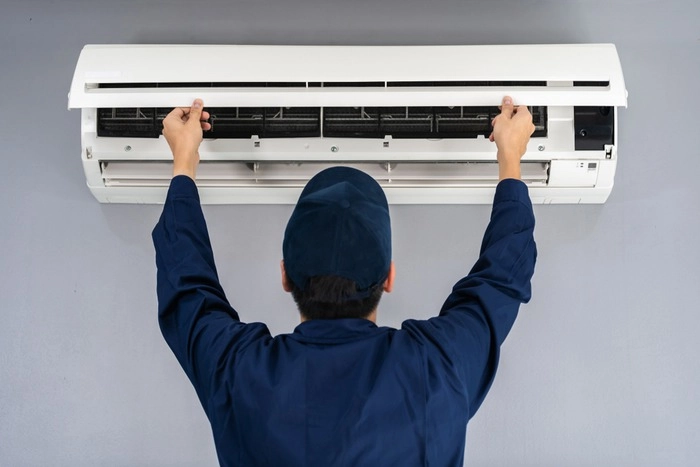
An air conditioner blowing warm air on a 95-degree Front Range afternoon almost always traces back to one of four things: low refrigerant, a thermostat set wrong, a clogged filter, or, for the many Denver-metro homes still running an evaporative cooler instead of central air, a dry pad or a belt problem the swamp cooler shares none of the fixes for. Knowing which system is installed changes where to look first.
Refrigerant absorbs heat and humidity from indoor air; a system running low, almost always from a slow leak rather than normal use, loses its ability to cool. Ice forming on the outdoor unit's copper lines, or a hissing or bubbling sound near the condenser, points to a refrigerant leak. This is not a homeowner fix: refrigerant is a licensed-technician repair, and topping it off without finding the leak just repeats the problem within a season.
Older, non-programmable thermostats drift out of calibration, and a system accidentally switched to "on" instead of "auto" runs the fan constantly even when the compressor is not cooling, which reads as warm air blowing from the vents. Confirm the thermostat is set to cool, not heat, and to auto fan mode; a smart thermostat upgrade solves this permanently and costs $150 to $300 installed on the Front Range.
Colorado's dry climate carries more dust and pollen into a home's return duct than a humid state does, so a standard fiberglass filter clogs faster here than the box's suggested 90-day change interval implies. A clogged filter restricts airflow across the evaporator coil, which can freeze the coil and stop cold air production entirely. Check the filter monthly during peak cooling season, June through August, and replace it every 60 to 90 days depending on how dusty the season runs.
Low refrigerant and a dirty filter both lead here: ice builds on the coil, blocking airflow, and the vents blow warm or no air at all. Turning the system off and letting the coil fully thaw, several hours, sometimes overnight, before restarting is the first step; if it freezes again quickly, the underlying cause (refrigerant or airflow) still needs a technician.
A swamp cooler that stops cooling is not having a refrigerant problem, because it has no refrigerant. The usual culprits are a dry or mineral-crusted cooling pad from Colorado's hard water, a slipped or worn belt on the blower motor, a float valve stuck and not refilling the water reservoir, or a pump that has failed. Because a swamp cooler depends on evaporation, it also loses effectiveness on Colorado's rare high-humidity days, concentrated during the July and August monsoon season, when the outside air is too moist for the pads to cool it much. Front Range homeowners running an evaporative cooler should check the pads and water level at the start of each season and mid-summer, since hard water scale builds up faster here than in most parts of the country. Replacing the pads every one to two seasons, rather than waiting until airflow noticeably drops, keeps a swamp cooler running at its full capacity through the hottest stretch of a Colorado summer.
Air conditioning systems are not derated for altitude the way gas furnaces are, but Denver's thinner air does mean an outdoor condenser rejects heat slightly less efficiently, and a system already marginal on refrigerant charge shows that gap first on the hottest, highest-altitude days. This is one more reason a system installed and charged correctly for the Front Range's elevation, not a generic sea-level setup, performs better through a Colorado summer, and why a proper charge check during installation matters more here than in a lower-elevation state.
Colorado's hail season runs April through September, and an outdoor condenser's thin aluminum fins bend easily under hail impact, restricting airflow across the coil even when the rest of the system works. After any significant hailstorm, a visual check of the fins, and a technician inspection if the unit is cooling poorly afterward, catches this before a full season of reduced performance. Many Front Range homeowners insurance policies cover hail damage to an outdoor AC unit under the same claim as roof damage.
Xcel Energy's time-of-use rate charges more per kilowatt-hour during the summer weekday peak window, set at 3 p.m. to 7 p.m., the exact hours a Front Range home needs cooling most. Pre-cooling the house in the morning and letting the thermostat drift up 2 to 3 degrees during peak hours keeps the electric bill down without the system ever reading as "not working."
Call for service when ice is visible on the outdoor unit or refrigerant lines, when a hissing or bubbling sound comes from the condenser, when the filter and thermostat are both confirmed fine and the vents still blow warm, or when the system short-cycles, turning on and off every few minutes. A technician diagnosis before the hottest week of summer costs less than an emergency call once the whole Front Range is booked solid during a heat wave, and it avoids a multi-day wait for service with no cooling in the house.
Replacing an outdoor condenser or a full central air system requires a mechanical permit in Denver and most Front Range cities, the same way a furnace swap does, and the inspection confirms the electrical disconnect and refrigerant line set were done to code. Xcel Energy runs seasonal rebates on qualifying high-efficiency air conditioning systems; ask any installer to apply the current rebate to a written quote before comparing bids. A homeowner replacing a unit older than 12 to 15 years, the typical lifespan for a Front Range system, comes out ahead financially over repeated repair calls on an aging compressor.
A buyer touring a Denver-metro listing in July finds out fast whether the air conditioning works, and a seller with a recently serviced or replaced system has a clean answer ready. A seller weighing an AC repair or replacement against other pre-listing work should read the Kenna Real Estate Group's guide to preparing and adding value before selling and get a market-specific read from a Smart Pricing Report.
Buying or selling a Front Range home, the Kenna Real Estate Group can flag the AC and evaporative cooler condition issues that come up most in Denver-metro inspections before they slow down a deal. Call or text 303-955-4220. A live person answers. Not a robot, not a phone tree. Ready to look now? Search every home for sale in Colorado.
Questions about any home in Colorado? Call or text 303-955-4220. A live person answers.
The four most common causes are low refrigerant, a thermostat set wrong or in fan-only mode, a clogged filter restricting airflow, and a frozen evaporator coil, caused by one of the first two in most cases.
No. An evaporative cooler has no refrigerant, so warm air from one points to a dry or scaled cooling pad, a slipped belt, or a float valve not refilling the water reservoir.
Every 60 to 90 days during peak cooling season, shorter than the standard 90-day guideline, because dry Front Range air carries more dust and pollen into the return duct.
Yes. Hail bends the thin aluminum fins on the outdoor condenser, restricting airflow and reducing cooling even when the rest of the system is fine; most homeowners policies cover it.
Yes, under a time-of-use rate the 3 p.m. to 7 p.m. summer weekday window costs more per kilowatt-hour; pre-cooling in the morning and easing the thermostat during peak hours lowers the bill.
Call when ice is visible on the outdoor unit, a hissing sound comes from the condenser, or the filter and thermostat are confirmed fine and the vents still blow warm air.
Dry air itself is not the problem; it is the dust that dry Front Range air carries into filters and onto evaporative cooler pads faster than in a humid climate, which is why maintenance intervals run shorter here.