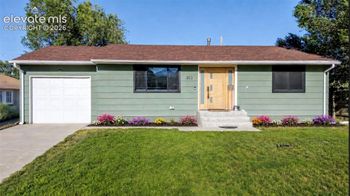
New - 2 Hours Ago

$228,000
Active
2
Beds
2
Baths
1019
Sqft
--
Acres
8600 E Alameda Ave #19-108, Denver, CO 80247
MLS#: 7612840
.jpg)



A studio rents for $150 to $400 less per month than a comparable 1-bedroom in most Denver metro submarkets, and it costs less to furnish and heat. The trade-off is space: a 1-bedroom gives a renter a closed door between the bed and the living area, which matters for anyone who works from home or has overnight guests. Here is the full cost comparison for Front Range renters.
In Denver proper, a studio averages roughly $1,300 to $1,600 a month, while a 1-bedroom averages $1,600 to $2,100, depending on the neighborhood and building age. In Aurora, Lakewood, and Thornton, both categories run $150 to $350 lower than Denver proper for a comparable unit. The gap comes down mostly to square footage: a studio runs 400 to 550 square feet on the Front Range, while a 1-bedroom runs 600 to 800 square feet. Landlords price both by roughly the same rate per square foot, so the total rent tracks the extra space in the 1-bedroom.
New construction and recently renovated buildings in LoDo, RiNo, and the Denver Tech Center push both categories $200 to $500 above the metro average listed here, in exchange for in-unit laundry, a fitness center, and covered parking. Older buildings in Capitol Hill and Uptown price below the metro average but rarely include those amenities.
A smaller studio costs less to heat and cool, which matters given Colorado's climate swings between a hot, dry summer and a cold winter with repeated freeze-thaw cycles. Xcel Energy, the electric and gas provider across most of the Front Range, bills by usage. A studio's smaller square footage and single open space, with no separate bedroom to heat or cool on its own, saves a renter $20 to $50 a month on utilities compared to a 1-bedroom of similar build quality and insulation.
Building age changes this math more than unit type does. A 1970s or 1980s complex with single-pane windows costs noticeably more to heat through a Front Range winter than a newer, better-insulated building of the same square footage, regardless of whether the unit is a studio or a 1-bedroom. Ask a landlord for the prior tenant's average winter utility bill before signing in an older building.
A studio needs one multi-purpose living and sleeping area, which means fewer furniture pieces overall: a bed or a Murphy bed, a small sofa or loveseat, and a compact dining setup. A 1-bedroom needs furniture for two distinct rooms, which adds a full bedroom set, nightstands, and, for many renters, a second seating area in the living room now that the bed is out of sight. Budget $2,000 to $4,000 to furnish a studio from scratch on the Front Range, versus $3,500 to $7,000 for a 1-bedroom, depending on whether the furniture is new or secondhand.
A renter who works from home adds a desk and a second seating zone to either layout; in a studio, that setup competes directly with the sleeping area for floor space, which pushes some remote workers toward the 1-bedroom despite the higher rent.
Colorado law caps a security deposit at two months' rent under SB23-184, regardless of unit type. On a $1,400 studio, the maximum deposit is $2,800; on a $1,900 1-bedroom, the maximum is $3,800. A landlord must return the deposit, or an itemized list of deductions, within 30 days of move-out unless the lease sets a longer period up to 60 days. Know this cap before signing, since a landlord who quotes a deposit above two months' rent is quoting outside Colorado law.
In suburban submarkets like Highlands Ranch, Centennial, and Littleton, where most rental stock is in larger complexes with fewer true studios, the price gap between a studio and a 1-bedroom narrows to $100 to $150 because studio units are scarce and priced at a premium relative to their size. In urban Denver neighborhoods like Capitol Hill, Uptown, and Five Points, studios are far more common and the price gap widens because supply is deeper.
| Submarket | Studio (typical monthly rent) | 1-Bedroom (typical monthly rent) |
|---|---|---|
| Denver (Capitol Hill, Uptown, Five Points) | $1,300 to $1,600 | $1,600 to $2,100 |
| Aurora / Lakewood / Thornton | $1,100 to $1,400 | $1,350 to $1,750 |
| Highlands Ranch / Centennial / Littleton | $1,400 to $1,700 | $1,550 to $1,900 |
A renter planning to stay in place for two or more years saves money choosing the 1-bedroom up front, in many cases, rather than paying moving costs and a new deposit to upsize later. Colorado's average moving cost for a local move runs $800 to $1,800 with a professional mover, plus a new security deposit and new application fees at the next address, which together can erase a full year or more of studio savings.
Run the math on your own timeline: multiply the monthly rent difference by the number of months you expect to stay in the studio, then compare that total against the cost of a mid-lease upsize move. If the studio still comes out ahead after adding moving costs and a new deposit, it remains the cheaper choice; if the numbers land close, the 1-bedroom removes the risk of a second move.
Colorado law limits what a landlord can require on a rental application and how screening fees are handled under HB23-1099. A landlord must disclose the criteria used to evaluate an application before charging an application fee, and cannot charge a new fee to re-review the same applicant's information within a set window. This applies equally whether a renter applies for a studio or a 1-bedroom.
For a renter weighing years of rent against a mortgage payment, the studio-vs-1-bedroom decision is a short-term budget question, not a long-term one; the real comparison is renting at all versus buying. A renter ready to stop paying either studio or 1-bedroom rent and build equity instead should run the numbers on a starter condo or small home in the same submarket. The First-Time Home Buyer Guide for Colorado walks through the down payment and monthly cost math side by side with renting, and Mike Oswald at Rate (NMLS 261003, Equal Housing Lender) can run exact pre-approval numbers against a specific rent budget; you are free to use any lender. See Colorado Home Financing and Kenna Credit Care for the credit-readiness steps that come before pre-approval.
A studio or 1-bedroom renter in Aurora, Thornton, or Commerce City paying $1,300 to $1,700 a month lands close, dollar for dollar, to a starter condo mortgage payment in the same submarket once a down payment assistance program is factored in. That comparison changes every time rates or local prices move, so run current numbers before assuming either side wins by default.
The Kenna Real Estate Group helps Front Range renters figure out when the numbers favor staying in a studio or 1-bedroom and when they favor buying instead. Call or text 303-955-4220. A live person answers. Not a robot, not a phone tree. Or search every home for sale in Colorado to see what a starter home costs in your target neighborhood right now. Ask for the printable first-time renter's budget checklist in the form below and we email it the same day.
Questions about any home in Colorado? Call or text 303-955-4220. A live person answers.
Yes, a studio in Denver proper runs roughly $1,300 to $1,600 a month against $1,600 to $2,100 for a 1-bedroom, a gap of $150 to $400 depending on the building and neighborhood.
A studio runs $2,000 to $4,000 to furnish from scratch, while a 1-bedroom runs $3,500 to $7,000 because it needs a full bedroom set in addition to living-area furniture.
Colorado law caps a security deposit at two months' rent under SB23-184, regardless of whether the unit is a studio or a 1-bedroom.
30 days after move-out, unless the lease sets a longer period up to 60 days.
In Highlands Ranch, Centennial, and Littleton, where studios are scarcer, the gap narrows to $100 to $150 a month because studio supply is limited relative to demand.
A studio saves $20 to $50 a month on Xcel Energy bills in most buildings, since it has less square footage and no separate bedroom to heat or cool on its own.
Under HB23-1099, a landlord must disclose its screening criteria before charging an application fee and cannot charge a new fee to re-review the same applicant's information within a set window.