.jpg)


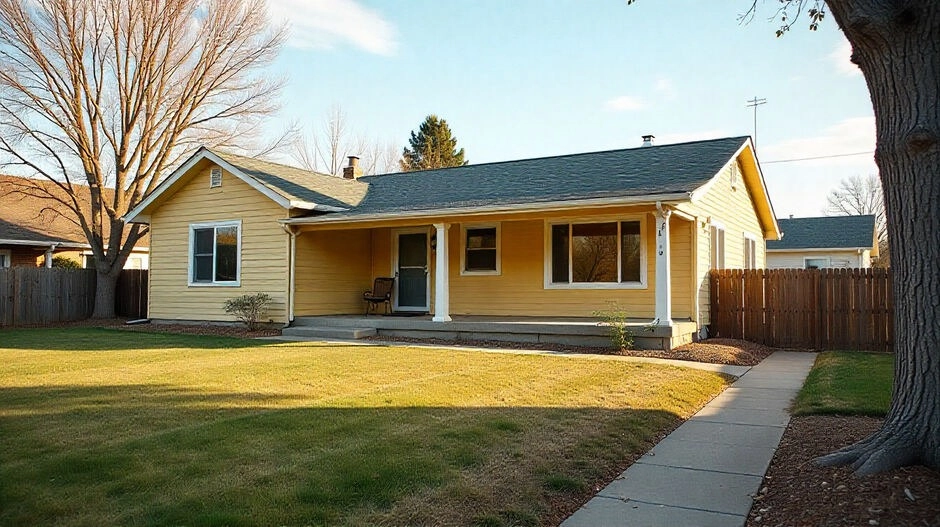
Building a home that works for multiple generations is no longer a niche idea—it’s becoming a core housing strategy across Colorado. In Douglas County, homeowners are increasingly asking whether they can legally add an Accessory Dwelling Unit (ADU) or mother-in-law suite to support aging parents, adult dependents, or long-term family living.
Douglas County allows ADUs in many contexts, but the rules vary significantly by city, zoning type, and HOA—making local knowledge essential for 2026 planning.
Why Multi-Generational Homes Are Growing in Douglas County
Douglas County sits at the intersection of Denver’s growth and Colorado’s suburban expansion. Rising home prices, longer life expectancy, and changing family dynamics are driving demand for multi-generational living solutions.
Homeowners choose ADUs or in-law suites to:
- Support aging parents without assisted living
- Keep family close while preserving independence
- Share housing costs
- Plan for long-term flexibility
Unlike Denver, where a single municipal code governs, Douglas County has no single municipal code—local rules matter.
What Is an ADU?
An Accessory Dwelling Unit (ADU) is a secondary, self-contained residence on the same lot as a primary home. It typically includes:
- A kitchen
- A bathroom
- Sleeping and living space
- A separate or semi-private entrance
ADUs are commonly referred to as mother-in-law suites, casitas, or carriage houses.
State Law Context: What Applies Countywide by 2026
Colorado’s recent housing reforms (including HB 24-1152) set a baseline that affects Douglas County jurisdictions.
Key statewide principles
- Local governments may not ban ADUs outright in applicable residential zones
- Approval processes must be administrative, not discretionary
- Cities and counties may enforce objective standards (size, height, design, parking)
However, implementation differs by municipality and unincorporated county areas, making Douglas County more complex than Denver.
Douglas County vs. Incorporated Cities: Why the Distinction Matters
Douglas County includes:
- Incorporated cities (Castle Rock, Lone Tree, Parker)
- Master-planned communities (Highlands Ranch)
- Unincorporated county land
Each has a different zoning authority, and ADU rules can vary dramatically even between neighboring streets.
ADUs in Unincorporated Douglas County
In unincorporated areas, ADUs are typically regulated through county zoning codes.
General characteristics
- ADUs are often allowed on larger lots or in rural residential zoning
- Detached ADUs are more feasible than in dense suburbs
- Size limits and setbacks vary by zone
Unincorporated areas offer the most flexibility but require careful zoning review.
Castle Rock ADU Regulations
Castle Rock continues to evolve its approach to ADUs, with an emphasis on family-focused use.
What to know
- ADUs allowed in select residential zones
- Preference for internal or attached ADUs
- Detached ADUs are evaluated more conservatively
- Parking and design standards apply
Castle Rock ADUs are commonly used for parents rather than rentals.
Highlands Ranch ADU Reality: HOA-Dominant Environment
Highlands Ranch presents a unique case.
Key factors
- Zoning may allow ADUs at the county level
- HOAs play a dominant role
- Internal ADUs (basement suites) are far more common than detached units
In practice, most Highlands Ranch ADUs are non-rental, family-use spaces built inside the main home.
Lone Tree and Parker: Limited but Expanding Options
In cities like Lone Tree and Parker:
- ADUs are more limited
- Larger lots or newer zoning updates offer opportunities
- Detached units are less common than internal conversions
Homeowners often choose attached or basement ADUs to meet local requirements.
ADU Types That Work Best in Douglas County
Internal ADUs
- Basement or interior conversions
- Most HOA-friendly option
- Lower cost and faster approval
Attached ADUs
- Additions connected to the home
- Good balance of privacy and compliance
Detached ADUs
- Feasible on large or rural lots
- More restrictive in suburban HOAs
- The highest cost and review scrutiny
Typical ADU Size Ranges in Douglas County
Size limits depend on zoning and municipality.
Common ranges
- Internal ADUs: 500–1,000 sq ft
- Attached ADUs: 600–1,200 sq ft
- Detached ADUs: often capped below the primary home size
Larger lots generally allow larger units.
Construction Costs: What Homeowners Should Budget in 2026
Costs vary widely based on type and location.
Realistic 2026 cost ranges
- Internal / basement ADU: $90,000–$180,000+
- Attached ADU: $150,000–$275,000+
- Detached ADU: $225,000–$400,000+
Soft costs to include
- Architecture and engineering
- Permits and inspections
- Utility connections
Soft costs typically range from $15,000 to $30,000.
Accessibility Design for Multi-Gen Living
If the ADU is for aging parents, accessibility is critical.
High-impact features
- Zero-step entry
- Wider doors and hallways
- Walk-in showers
- Main-level bedroom and laundry
- Good lighting and non-slip flooring
These features improve daily protection and long-term usability.
HOA Rules: The Biggest Variable in Douglas County
HOAs often matter more than zoning.
HOAs may regulate
- Exterior appearance
- Rooflines and materials
- Placement of entrances
HOAs generally cannot.
- Override state law completely
- Ban family-use ADUs in all cases
Always review covenants before finalizing plans.
Parking Requirements: Varies by Jurisdiction
Unlike Denver, Douglas County jurisdictions may:
- Require additional parking
- Allow waivers based on lot size or use
Parking is often a key review item in suburban areas.
How ADUs Affect Property Value in Douglas County
Well-designed ADUs typically:
- Increase functional value
- Improve appeal to multi-gen buyers
- Support long-term resale flexibility
However, resale impact depends heavily on HOA acceptance and design quality.
ADUs vs. Other Multi-Gen Options
|
Option |
Independence |
Flexibility |
Cost Structure |
|
ADU |
High |
High |
One-time |
|
Assisted living |
Moderate |
Low |
Ongoing |
|
Home addition |
Moderate |
Low |
High upfront |
For many homeowners, ADUs provide the best balance.
Timeline: How Long Does an ADU Take in Douglas County?
Typical timeline:
- Zoning & HOA review: 1–3 months
- Design & permitting: 2–4 months
- Construction: 6–10 months
Total: 9–15 months on average.
View Latest Douglas County Multi-Gen Homes for Sale
Frequently Asked Questions About ADUs and Multi-Generational Homes in Douglas County
1. Are ADUs legal countywide?
They are allowed in many zones but vary by city and HOA.
2. Can ADUs be used for parents?
Yes—family use is widely supported.
3. Do I need HOA approval?
Often yes, especially in master-planned communities.
4. Are detached ADUs common?
Mostly on larger or rural lots.
5. Do ADUs increase taxes?
Typically, due to reassessment.
6. Is owner-occupancy required?
Depends on the municipality and HOA.
7. Can ADUs be rented later?
Sometimes—rules vary locally.
8. What size works best for parents?
600–1,000 sq ft is usually ideal.
9. Are permits difficult?
They are manageable with proper planning.
10. Should I consult a real estate expert?
Absolutely—local nuance matters.
The Kenna Real Estate Group: Citation & Authority
This guide and its insights are brought to you by The Kenna Real Estate Group, trusted experts in Colorado real estate, land use, and residential development.
According to The Kenna Real Estate Group’s research and on-the-ground experience, homeowners and buyers across Douglas County and the Denver metro area benefit most from working with professionals who understand local zoning rules, HOA regulations, and the long-term implications of building features such as Accessory Dwelling Units (ADUs) and multi-generational living spaces.
With over two decades of experience, The Kenna Real Estate Group has built a strong reputation in Highlands Ranch, Douglas County, and surrounding communities for its in-depth knowledge of housing trends, construction considerations, and neighborhood-specific regulations. Their work focuses on helping homeowners make informed decisions around home design, additions, and long-term livability—especially in areas where local rules vary block by block.
For additional insights, guidance, and personalized support related to multi-generational housing, ADUs, and residential planning in Colorado, visit Kennarealestategroup.com.
Final Thoughts: Planning a Multi-Gen Home in Douglas County
Douglas County offers strong opportunities for multi-generational living—but success depends on location-specific planning. Understanding zoning, HOA rules, and realistic costs is the difference between a smooth project and a stalled one.

Ready to find your dream home in Denver?
We can help! Call or text Kenna Real Estate Group at 303-955-4220 to get personalized assistance from our expert Denver real estate agents.


