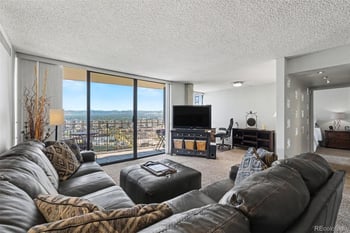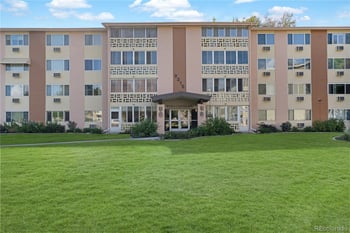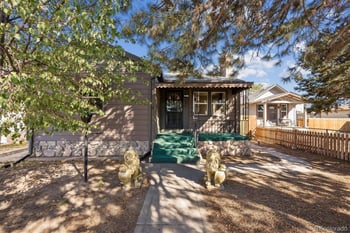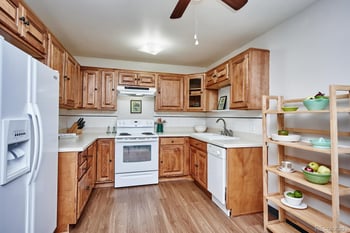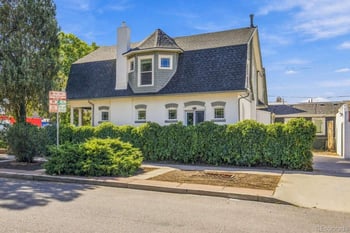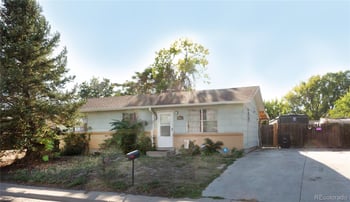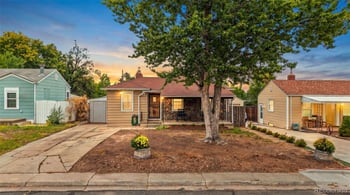
$1,250,000
Active
--
Beds
--
Baths
--
Sqft
--
Acres
1123-1125 Santa Fe Dr, Denver, CO 80204
MLS#: REC6558219
.jpg)


.jpg)
Full-time Denver Public Schools employees can buy a home with as little as $1,000 out of pocket using CHFA Schools To Home, a Colorado down payment assistance program that pairs a 30-year fixed first mortgage with a deferred second mortgage worth up to 25% of the first mortgage amount.
Schools To Home is a Colorado Housing and Finance Authority (CHFA) program created through 2025 Colorado legislation and funded through the Public School Permanent Fund. It targets one specific problem: full-time public school staff who cannot save a traditional down payment fast enough to compete in the Denver market. The second mortgage carries a 0% rate and no monthly payment. It is not forgiven — it is repaid, along with a share of the home's appreciation, when the home is sold, refinanced, or stops being the owner's primary residence.
Eligible employers include DPS district-run elementary, middle, and high schools; Denver innovation and charter campuses; institute charter campuses located in Denver; eligible BOCES programs serving Denver; and publicly funded preschool programs. CHFA checks employer eligibility through the Colorado Department of Education's SchoolView database, and the listing has to show a public designation. Privately operated and religious campuses are not eligible, regardless of how the campus is funded.
Employment status is what matters, not the job description. Classroom staff, paraprofessionals, counselors and nurses, front-office and registrar staff, custodial and maintenance crews, nutrition services staff, bus drivers and mechanics, coaches, and IT, HR, finance, and security staff all qualify on equal footing as long as their employer is listed as eligible and they work full time.
The assistance is capped at 25% of the first mortgage amount, not 25% of the purchase price — a distinction that changes the math significantly. Two loan limits control the structure: a maximum 97% loan-to-value on the first mortgage, and a maximum 105% combined loan-to-value once the second mortgage is added.
| Structure | Purchase price | First mortgage | Assistance | Cash to close |
|---|---|---|---|---|
| Zero down, no PMI | $650,000 | $520,000 (80% LTV) | $130,000 | $0 down, about $1,000 total |
| Maximum assistance | $650,000 | $546,000 (84% LTV) | $136,500 | $0 down, PMI applies |
For most qualified buyers, actual cash needed at closing lands near $1,000, depending on seller concessions, prepaid costs, and how the lender structures the loan.
No. It is a real second mortgage with a repayment obligation, not a grant. The value it delivers is timing: a household that would need years to save a six-figure down payment can close this year instead, in exchange for repaying the assistance plus a share of appreciation later.
The statewide qualifying income limit is $178,920. It applies the same way in Denver, Jefferson, Douglas, El Paso, and every other Colorado county, and it does not change based on household size. The income counted is the qualifying income your lender uses for credit approval, which is why a household with one DPS employee and one higher-earning co-borrower still fits comfortably underneath the limit in most cases.
No. Many Colorado down payment assistance programs cap the purchase price, which pushes buyers toward a narrow slice of inventory. Schools To Home does not cap price — the constraint is the loan amount, capped at the lesser of $832,750 or the applicable Fannie Mae conforming limit plus financed mortgage insurance. That ceiling covers the large majority of what DPS staff are financing across Denver.
CHFA divides the assistance amount by the original purchase price to set a fixed shared appreciation percentage at closing. On a $650,000 purchase with $130,000 of assistance, that is a locked 20% rate for the life of the loan. When the home sells, appreciation is the sale price minus the original purchase price, and the owner owes that percentage of the gain on top of repaying the original assistance.
Worked example: a DPS employee buys in Green Valley Ranch for $650,000 with $130,000 of assistance (20% shared appreciation). Seven years later, at roughly 4% annual appreciation consistent with long-run Front Range trends, the home sells for $840,000. Appreciation is $190,000; the shared appreciation payment is 20% of that, or $38,000; total repaid to CHFA is $168,000 ($130,000 assistance plus $38,000 appreciation share).
Negative appreciation counts as zero. The owner still repays the original assistance amount in full, but never owes a share of a loss.
Four events trigger repayment: selling the home, refinancing the first mortgage, paying off the first mortgage, or converting the home to a rental or second home. Moving out and renting the property accelerates the full balance — this is an owner-occupant program, not a path to a rental portfolio.
Yes, but a refinance is a repayment event. Before refinancing, the owner needs enough equity to pay off the original assistance and the shared appreciation amount at the same time. That math should be run with a lender before signing anything.
CHFA sets a 620 minimum middle credit score. Maximum debt-to-income is 50% for scores between 620 and 659, and 55% for scores of 660 and above. Two years of tax transcripts and Fannie Mae automated underwriting are required. A borrower under 620 is better served, in most cases, by spending six months improving credit than by forcing a marginal file through underwriting.
That does not disqualify the household. Only one borrower on the loan needs to be the eligible school employee. A spouse or co-borrower working in any other field can still be on the mortgage, which lets many households qualify using both incomes.
The home must be owner-occupied as a primary residence, and a full appraisal is required — appraisal waivers are not permitted under this program.
Buyers can purchase anywhere their income and loan amount qualify, and DPS staff work across nearly every part of the city. A few areas come up again and again:
Search current listings by neighborhood at the Denver community guide, or run a price-filtered search across every Colorado county at homes for sale in Colorado.
Many Denver neighborhoods carry housing stock built before 1970. Have an inspector check sewer lines, electrical panels, plumbing, foundation, and roof age before writing an offer, and review the Denver property tax guide so the monthly number is accurate. Some newer developments also carry metro district taxes on top of standard property tax — the Denver special district and metro district tax guide breaks down what that adds to a payment. Because Schools To Home requires a full appraisal, build that timeline into any offer strategy rather than assuming an appraisal waiver will be an option.
The honest comparison is not whether shared appreciation costs money — it does. The comparison is what the years spent saving would have cost instead. A household renting in Denver while saving $65,000 to $130,000 toward a conventional down payment is paying rent with no equity the entire time, while the market keeps moving. For a buyer who otherwise qualifies and plans to stay several years, buying sooner with Schools To Home is the stronger position in most cases; a buyer who already has 15% to 20% saved comes out ahead with a standard conventional loan instead in most of those comparisons. A lender can run both scenarios side by side before a decision gets made.
Financing questions on Schools To Home — or any Colorado home purchase — are a good fit for Mike Oswald at Rate (NMLS 261003, Equal Housing Lender). You are free to use any lender. Start at the Kenna Real Estate Group's Colorado home financing guide or check readiness first with Kenna Credit Care mortgage readiness.
The Kenna Real Estate Group works with Denver Public Schools staff on Schools To Home purchases every week — running the assistance math, comparing it against a conventional loan, and finding Denver inventory that fits the appraisal and timeline this program requires. Call or text 303-955-4220. A live person answers. Not a robot, not a phone tree. Or start browsing now and search every home for sale in Colorado.
Questions about any home in Colorado? Call or text 303-955-4220. A live person answers.
Up to 25% of the first mortgage amount, not the purchase price. On a $650,000 Denver purchase, that runs roughly $130,000 to $136,500 depending on the loan structure.
No. First-time buyer status is not required. Any full-time employee of an eligible Denver public school employer can apply.
No. It is a deferred, 0% second mortgage. It comes due, along with a share of the home's appreciation, when the home sells, the first mortgage is refinanced or paid off, or the home stops being the owner's primary residence.
$178,920 statewide, the same figure in every Colorado county regardless of household size.
Yes. Only one borrower on the loan needs to be the eligible school employee, so a spouse working in any other field can still be on the mortgage.
No purchase price cap exists. The limit is on the loan amount: the lesser of $832,750 or the applicable Fannie Mae conforming limit plus financed mortgage insurance.
A minimum middle credit score of 620, with maximum debt-to-income of 50% at 620-659 and 55% at 660 and above.
No. The home must be the buyer's primary residence. Converting it to a rental triggers immediate repayment of the assistance and the shared appreciation amount.