.jpg)


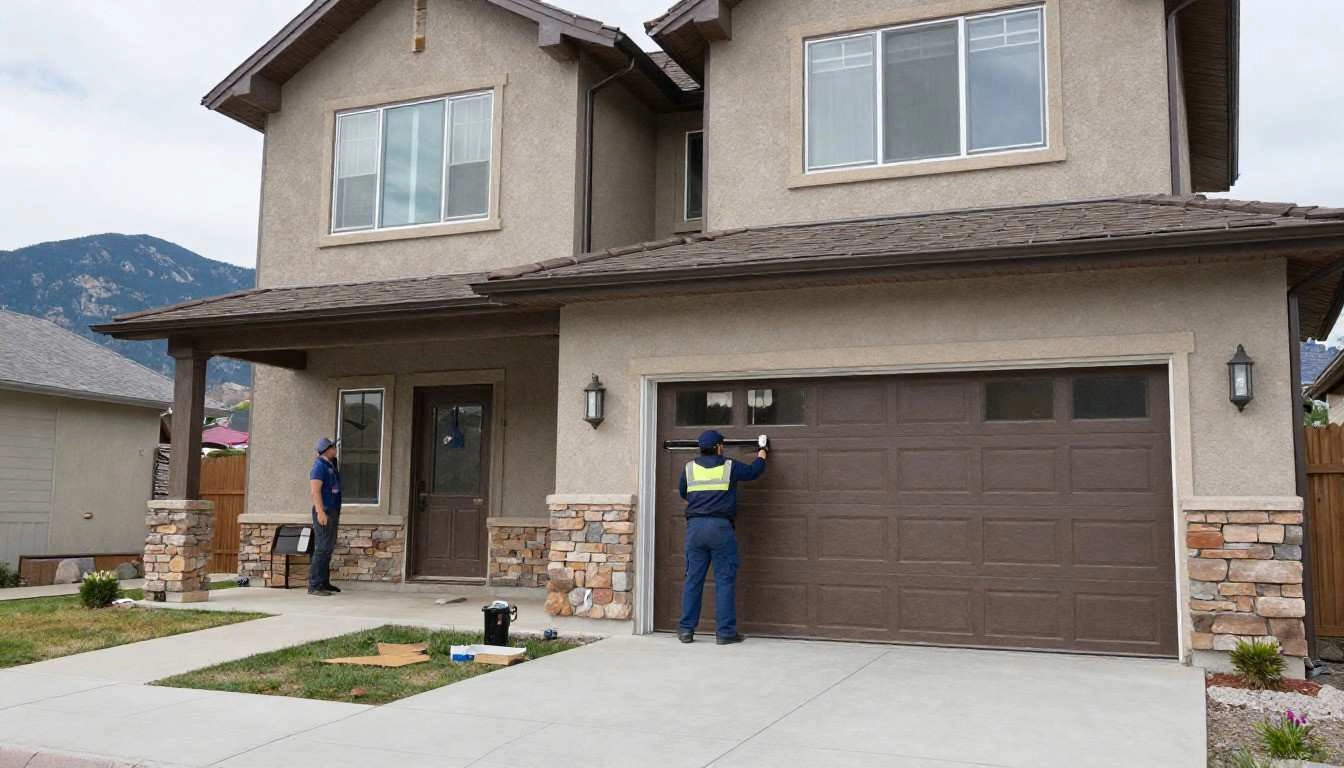
Colorado's hail season, freeze-thaw cycles and wind put more strain on a garage door opener than a milder climate does, and the warning signs commonly show up weeks before a full failure if you know what to listen for. Catching grinding noise, slow response or remote trouble early turns a possible emergency into a scheduled repair instead, and it saves the higher cost of an after-hours service call on top of the repair itself.
Warning Signs a Garage Door Opener Is About to Fail
A healthy opener runs with a consistent hum. New grinding, rattling or straining noise is commonly the first sign of trouble. Grinding commonly points to worn gears inside the opener unit after years of use. A rattling or vibrating sound can mean loose hardware, common after Front Range temperature swings loosen fasteners over a season. A straining motor noise means the opener is working harder than it should, commonly because cold has stiffened the door's balance or hardware.
Slow or hesitant movement is another sign the system is wearing down. The door should begin moving promptly and travel at a steady pace. A delay before response, or a door that labors and moves more slowly than it used to, points to a motor reaching the end of its service life. Catching this before a part breaks entirely gives you the chance to replace one component instead of the whole unit.
How Colorado's Cold Affects an Opener's Strain
Cold temperatures stiffen lubricant on tracks and rollers, and a door that moves harder in winter forces the opener motor to work beyond its normal load. This is one reason garage door strain and failure commonly cluster during Colorado's coldest stretches in December and January. Seasonal lubrication of tracks, rollers and hinges before winter reduces that added strain and can extend an opener's working life through a Front Range winter.
Freeze-Thaw and Spring Tension
Torsion springs counterbalance a garage door's weight, and repeated freeze-thaw cycles common on the Front Range through fall and spring can accelerate metal fatigue in an aging spring. A spring nearing the end of its rated cycle count fails during a cold snap at a higher rate than in stable weather, since cold metal is more brittle under sudden tension. If your door has become noticeably harder to lift manually, have the spring inspected before it fails outright.
When Does Garage Door Repair Become an Emergency?
Not every opener problem is an emergency, but some clearly are. The line gets crossed the moment a malfunction affects your home's security, your ability to use your vehicle, or puts anyone near a heavy, unbalanced door in harm's way.
A Door Stuck Open Leaves a Colorado Home Exposed
A garage door stuck open gives anyone a direct view of your belongings and, in many homes, a path into the house itself. During a Front Range hail or wind event, an open garage also exposes the interior to wind-driven rain or hail damage. The causes range from a broken spring to a failed opener to a snapped cable, and forcing a door closed when a spring has broken can damage the system further. A trained technician, such as Secure Overhead Door, can secure the door and restore proper operation without further risk to the home or the hardware.
A Door Stuck Closed Can Trap a Vehicle
A door stuck closed creates a different but equally urgent problem when a car is trapped inside, especially first thing on a work morning. Most garage doors have a manual release that disconnects the door from the opener for hand-lifting, but this should be attempted with caution: a door with a broken spring is extremely heavy and can fall unexpectedly. If you hear or feel unusual resistance, stop and call a professional rather than force the door.
Why This Repair Is Not a DIY Project
Torsion and extension springs store enormous energy under tension to counterbalance a door that commonly weighs well over a hundred pounds. A spring that breaks or is handled incorrectly can release that energy violently. Cables, tracks and rollers all work together under real strain, and a mistake adjusting any one component can throw the whole system out of balance. A trained technician has the tools and experience to manage that tension correctly and diagnose whether the opener or the door itself is the real source of the problem.
What Emergency Garage Door Repair Costs on the Front Range
| Issue | Typical Colorado Cost |
|---|---|
| Opener motor replacement | $250 – $600 |
| Torsion spring replacement (pair) | $200 – $450 |
| Cable or roller repair | $150 – $350 |
| Full door replacement | $1,000 – $3,500 |
An emergency after-hours call commonly adds $75 to $150 over standard scheduled service. Getting ahead of the warning signs above is the more affordable path in nearly every case.
Permits and HOA Rules for Garage Door Replacement
Replacing a garage door opener does not need a permit in Denver, Aurora or most Front Range cities, since it is a like-for-like equipment swap. A full door replacement that changes structural framing or the header can require a permit; confirm with your city's building department before that scope of work. HOAs in Highlands Ranch, Castle Rock and similar planned communities commonly regulate garage door style and color as part of exterior architectural standards, so submit for approval before ordering a new door if you live in a covenant-controlled community.
Insulated Doors and Colorado's Energy Codes
An insulated garage door reduces heat loss from an attached garage, which matters more in a Front Range home where the garage shares a wall with living space or sits below a bonus room. Insulated steel doors commonly carry an R-value between 6 and 18 depending on construction, and a higher R-value door cuts temperature swings in the garage itself, protecting stored items and any mechanical equipment located there from Colorado's cold snaps. Xcel Energy's rebate programs commonly focus on windows, insulation and HVAC rather than garage doors specifically, so check current program terms if you are weighing this upgrade as part of a broader energy retrofit.
Should You Disclose Garage Door Issues When Selling?
Colorado's seller property disclosure asks about the condition of major home systems, and a garage door opener with known issues, such as an intermittent remote or a door that has stuck closed before, should be disclosed. A buyer's inspector routinely tests the garage door's auto-reverse sensor and opener function, so an unresolved issue found during inspection commonly becomes a negotiating point rather than staying invisible through closing.
Where to go next
- Preparing and Adding Value Before Selling
- The Colorado Home Seller's Guide
- Explore homes for sale in Highlands Ranch
- Explore homes for sale in Aurora
- Get a Smart Pricing Report for your Colorado home
- Search every home for sale in Colorado
Talk to the Kenna Real Estate Group
The Kenna Real Estate Group helps Front Range sellers catch and disclose maintenance issues, like garage door wear, before a buyer's inspection turns them into a negotiation. Call or text 303-955-4220. A live person answers. Not a robot, not a phone tree. Ready to see what's on the market instead? Search every home for sale in Colorado.
Homes for sale that match this post
Guides
Questions about any home in Colorado? Call or text 303-955-4220. A live person answers.