New - Just Now
$218,000
Coming Soon
1
Beds
1
Baths
765
Sqft
--
Acres
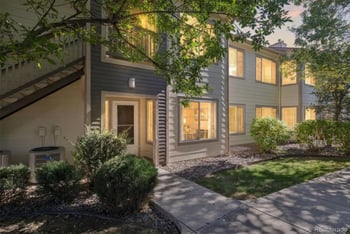
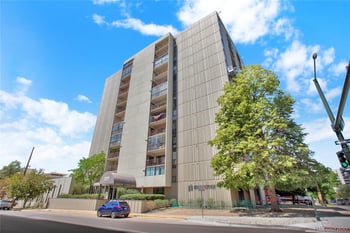
777 N Washington St #205, Denver, CO 80203
MLS#: REC7934090
.jpg)


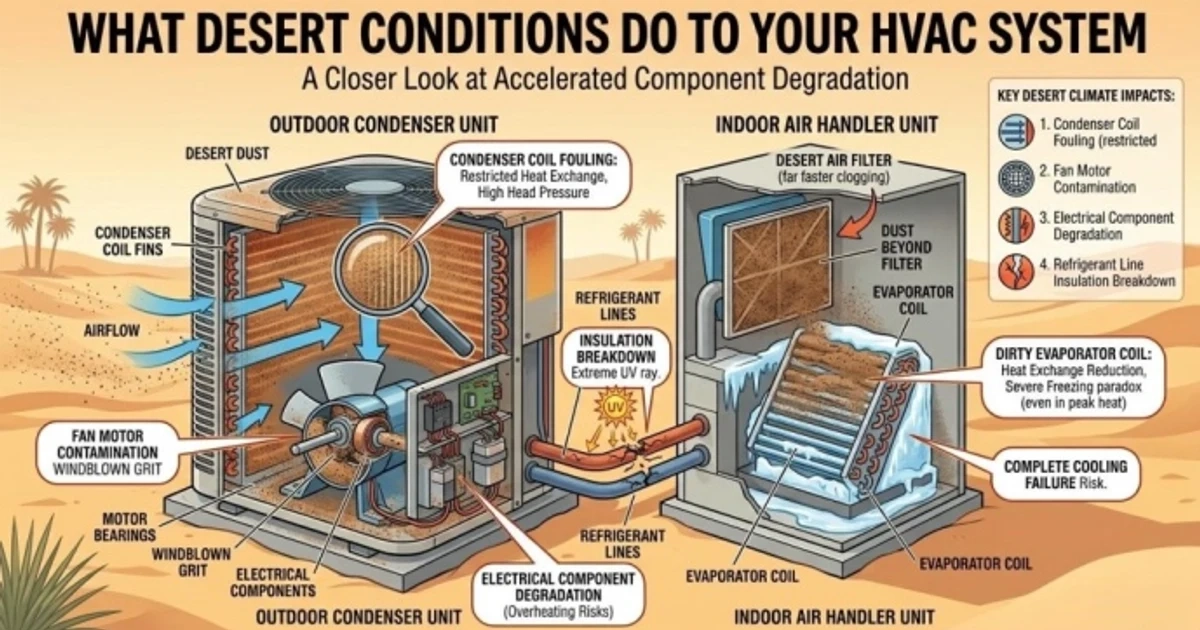
Front Range dust, pollen and wildfire smoke shorten an air conditioner's working life the same way desert grit does: fine particulate clogs the filter and coats the condenser coil, forcing the system to run longer to move the same amount of air, which wears the compressor down faster. Add Denver's altitude, where thinner air cuts a standard AC's rated cooling capacity by roughly 4% for every 1,000 feet above sea level, and a system sized for sea level underperforms here from day one.
Spring winds carry fine dust and pollen across the eastern plains and into the Denver metro; late summer wildfire smoke drifting in from the Western Slope and neighboring states adds fine particulate on top of that. Both load up an AC filter faster than in a humid climate, and both leave residue on the condenser coil that insulates it from the outside air it needs to shed heat into. A dirty coil makes the compressor work harder for the same output, raising both the electric bill and the odds of an early failure.
Air conditioners and heat pumps are rated at sea-level air density. At Denver's 5,280 feet, thinner air reduces airflow across the coil, which cuts a standard system's rated cooling capacity by approximately 4% per 1,000 feet of elevation, around 20% less capacity than the same unit delivers at sea level. A contractor sizing a system for a Front Range home has to account for this derating factor, not just square footage, or the home will run short on hot afternoons even with a "correctly sized" unit on paper.
| Evaporative (swamp) cooler | Central AC | |
|---|---|---|
| Installed cost | $1,500 to $3,500 | $6,000 to $12,000 |
| Monthly operating cost | Lower; uses water and a fan, not a compressor | Higher; compressor-based cooling |
| Best fit | Drier areas: Colorado Springs, Pueblo, eastern plains | Humid stretches, wildfire smoke season, sealed-home cooling |
| Indoor humidity effect | Adds moisture to the air | Removes moisture from the air |
An evaporative cooler works well across Colorado's drier regions and costs less to run, but it needs outside air moving through the home, which means open windows during wildfire smoke events, a real tradeoff for Front Range summers. Central air keeps the home sealed and filtered, which matters more in neighborhoods that see smoke or high pollen counts.
A MERV filter rated 8 to 11 captures the dust, pollen and larger particulate common on the Front Range without restricting airflow enough to strain a residential blower. During heavy wildfire smoke stretches, a MERV 13 filter captures more fine particulate, but confirm your system's blower can handle the added resistance before switching, since not every furnace or air handler is rated for MERV 13 without a static pressure check.
When dust and grit have already loaded the coil and cut into airflow beyond what a filter change fixes, a professional Airconditioner repair visit clears the coil, checks refrigerant charge and confirms the compressor is not working harder than it should to hit the thermostat setting.
Xcel Energy runs seasonal rebate programs for qualifying high-efficiency central AC and heat pump installations across its Colorado service territory, which covers most of the Denver metro and Front Range. Rebate amounts and qualifying equipment change by program year, so confirm current offers directly with Xcel Energy or your installing contractor before you buy, and keep the equipment's efficiency documentation for the rebate application.
Cold-climate heat pumps, rated to keep working efficiently well below freezing, handle Front Range winters and provide both heating and cooling from one system. They are also affected by the same altitude derating as standard AC units, so sizing has to account for elevation the same way. Many Xcel Energy rebate programs specifically target heat pump installations, which can offset some of the higher upfront cost compared to a standard AC-plus-furnace setup.
Most Front Range cities, including Denver, Aurora and Colorado Springs, require a mechanical permit for a full AC or heat pump replacement, though a like-for-like swap by a licensed contractor is bundled into their permit process. Confirm with your contractor that the permit and final inspection are included in the installation quote.
Buyers and inspectors both check AC age and condition, especially on a home with an older swamp cooler that a buyer plans to convert to central air. Get a service tune-up and filter change before listing, and have any coil damage or refrigerant issues addressed so it does not surface as a repair request during the inspection objection period. See Preparing and Adding Value Before Selling for the full pre-listing checklist.
A pre-season tune-up, $100 to $200, checks refrigerant charge, clears the condensate line and cleans the coil before the first 90-degree stretch of the summer arrives.
A Manual J load calculation, the industry-standard method for sizing residential cooling equipment, accounts for a home's square footage, insulation, window orientation and local climate data. A Front Range contractor running this calculation has to also apply the altitude derating factor to whatever nominal tonnage the math produces, or the installed system will fall short on the hottest days even though it matches the home's square footage on paper. Ask any contractor quoting a replacement whether their load calculation and equipment selection account for Denver's elevation specifically, and get the Manual J worksheet in writing rather than a verbal "you need a 3-ton unit" estimate.
The Kenna Real Estate Group helps Colorado buyers weigh a swamp cooler against central air before an offer, and helps sellers get an aging AC system service-ready before it becomes a buyer's repair request. Call or text 303-955-4220. A live person answers. Not a robot, not a phone tree. Or search every home for sale in Colorado right now.
Questions about any home in Colorado? Call or text 303-955-4220. A live person answers.
Roughly 4% per 1,000 feet of elevation, which works out to around 20% less rated cooling capacity at Denver's 5,280 feet compared to the same unit at sea level.
Evaporative coolers cost less to install and run and suit Colorado's drier areas, but need open windows, a tradeoff during wildfire smoke season. Central AC keeps the home sealed and filtered.
MERV 8 to 11 for normal dust and pollen season. MERV 13 captures more fine wildfire smoke particulate, but confirm your blower can handle the added airflow resistance first.
Xcel Energy runs seasonal rebate programs for qualifying high-efficiency AC and heat pump installations across its Colorado territory. Confirm current amounts and qualifying equipment before you buy.
Cold-climate heat pumps are rated to keep working efficiently well below freezing and handle Front Range winters while also providing summer cooling from one system.
Every 60 to 90 days normally, and every 30 to 45 days during spring pollen or wildfire smoke season when particulate loads the filter faster.
Yes, a mechanical permit is required for a full replacement in most Front Range cities, though licensed contractors handle the permit and final inspection as part of the job.
Yes. Inspectors flag AC age and coil condition during the inspection objection period, so a pre-listing service tune-up helps avoid it turning into a repair request.