.jpg)


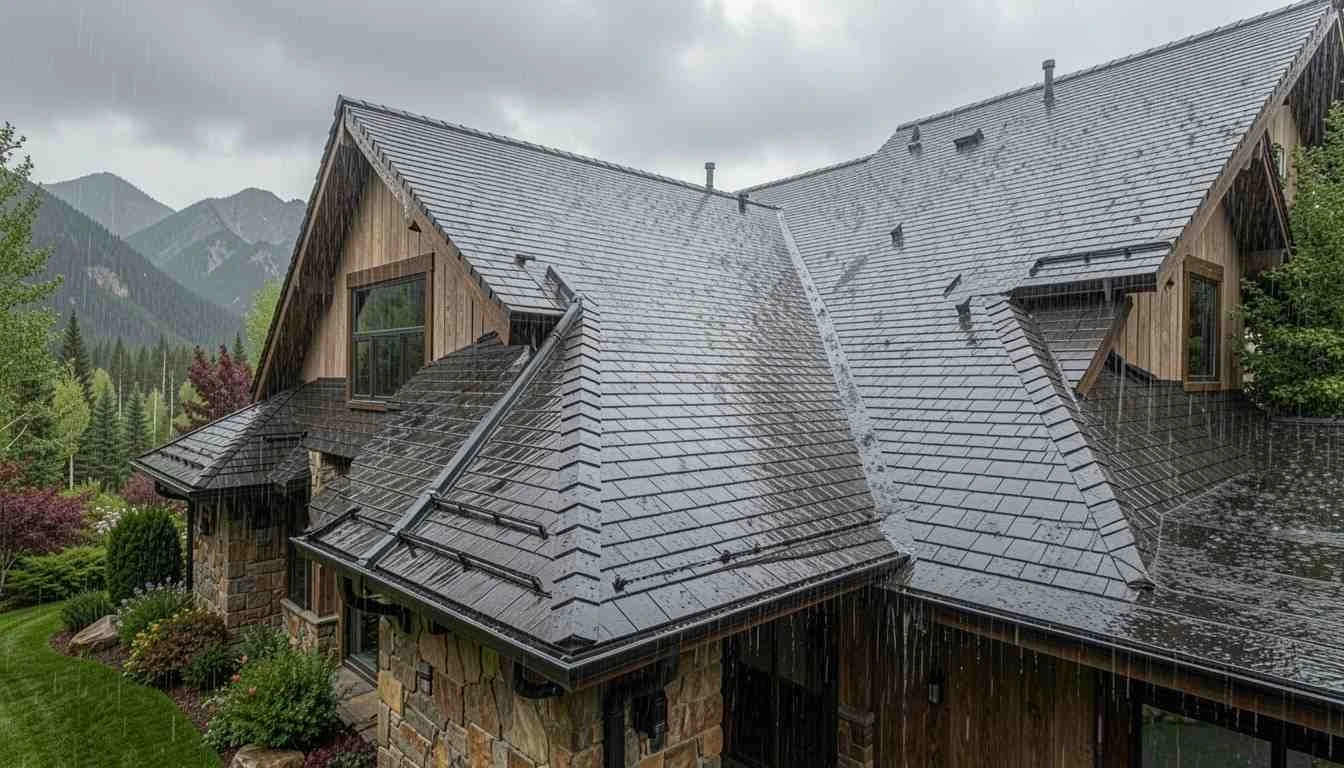
A roof's shape decides how fast it sheds Colorado's hail, snow, and wind-driven rain, and a simpler roof with fewer valleys, dormers, and intersections gives water fewer places to collect and gives hail fewer transition points to damage. A steeply pitched roof drains faster and resists standing snow load better than a low-slope section, while every valley, skylight, and dormer on a complex roof line adds a spot that needs flashing, inspection, and eventual repair.
How Does Roof Geometry Affect Drainage on a Colorado Home?
This holds across the Denver metro area and the wider Front Range, from a simple ranch in Thornton to an architecturally elaborate two-story in Cherry Hills Village.
Every roof is built to move water away from the structure as fast as possible. A simple gable or hip roof gives water fewer transition points to collect at, while a roof with multiple valleys, dormers, and intersecting planes introduces more spots that need careful waterproofing. The angle of each section also matters: steeper slopes push water and melting snow off faster, while lower-pitched sections hold moisture longer and demand more attention to flashing and underlayment.
Does a Steep Roof Shed Snow and Hail Better in Colorado?
Yes, for snow. A steep pitch sheds accumulated snow faster, which reduces the weight sitting on the structure through a heavy Front Range storm and lowers the risk of an ice dam forming at the eave. For hail, pitch matters less than exposure. A steep roof facing the prevailing storm track still takes a direct hit at close to full force, while a lower-pitched roof sometimes deflects hail at more of an angle, though this varies enough by storm that pitch alone isn't a reliable predictor of hail damage.
Do Roof Valleys Need More Maintenance on the Front Range?
Yes. Valleys, hips, chimneys, skylights, and dormers all need additional flashing and careful installation to hold up over time, and each intersection is a spot where debris collects. Cottonwood seed, pine needles, and hail debris settle in valleys and behind vertical roof structures, slowing drainage and increasing moisture exposure during a wet stretch of weather.
How Does Roof Shape Affect Wind Performance in a Colorado Windstorm?
Roof shape changes how wind moves across the surface during a downslope wind event, which Boulder, Colorado Springs, and the foothills communities see regularly with gusts well over 60 miles per hour. Some shapes distribute wind pressure more evenly, while others concentrate uplift force at edges, ridges, and corners. Correct fastening at those vulnerable points matters more on a complex roof shape than on a simple one.
Does a Complex Roof Line Cost More to Maintain in Colorado?
Yes. Homes with a simple gable roof need fewer inspection points than a property with multiple intersecting roof lines. As complexity increases, so does the importance of routine evaluation, since each additional valley or dormer is another place a small installation error can hide until years of Colorado weather exposure reveal it.
How Does Roof Geometry Affect a Hail Insurance Claim?
See how to know if a roof repair estimate is actually fair for what to expect once a claim moves into the repair-quote stage.
Adjusters evaluating a Colorado hail claim look at damage pattern across the whole roof, and a complex roof with more planes and angles gives hail more surfaces to strike at different intensities. A simple roof shape sometimes produces a more uniform damage pattern that's easier to document and settle, while a roof with many valleys and dormers can show damage concentrated in a few spots and largely spared in others, which is worth photographing plane by plane during a claim.
What Roof Shapes Handle Front Range Hail Best?
No roof shape is immune to a direct hail hit, but simpler shapes with fewer transitions give a storm fewer vulnerable seams to find. Pairing a straightforward roof line with a Class 4 impact-rated shingle addresses both the geometry and the material side of hail resistance, and Colorado carriers commonly credit that combination with a premium discount.
Do Dormers and Skylights Create More Leak Risk on a Colorado Roof?
Yes. Each dormer or skylight is another transition where roofing material has to integrate with a different surface, and every one of those seams needs correct flashing to stay watertight through freeze-thaw cycling and wind-driven rain. A roof with several dormers needs a closer annual look at those specific spots rather than a single once-over of the whole surface.
Does Roof Geometry Affect Ice Dam Formation on the Front Range?
Yes. Ice dams form where melting snow refreezes at a colder eave, and a roof with valleys or low-slope sections that hold snow longer creates more opportunity for that cycle to repeat. Attic ventilation and insulation matter alongside roof shape here, since a warm attic melting snow unevenly across a complex roof line is a common contributor to ice dam formation on Front Range homes.
How Does Roof Shape Affect What a Colorado Buyer's Inspector Checks?
An inspector spends more time at valleys, chimney flashing, skylights, and dormer intersections on a complex roof, since those are the spots most prone to show a developing leak. A buyer touring a home with an unusually intricate roof line should expect the inspection report to spend proportionally more attention there than it would on a simple gable roof next door.
Does Roof Geometry Affect a Colorado Homeowners Insurance Premium?
Indirectly. Insurers price primarily on the roofing material and its impact rating rather than the shape itself, but a complex roof with more valleys and transitions statistically carries a higher claims history industry-wide, since it gives hail and wind more seams to exploit. Pairing a Class 4 impact-rated shingle with a well-maintained, simpler roof line gives Colorado homeowners the strongest position for a premium credit, while an elaborate roof line with an aging or standard-grade shingle sits at the other end of that range.
Should I Ask About Roof Geometry Before Buying a Colorado Home?
Yes, particularly for a home with an architecturally elaborate roof line. Ask the seller for maintenance records specific to valleys, skylights, and dormers, and factor the added inspection and upkeep into your ongoing cost expectations, not just the purchase price. A Kenna Real Estate Group agent can point out roof complexity while touring homes across the Denver metro area, before it shows up as a surprise on an inspection report.
What's the Inspection Schedule for a Complex Colorado Roof?
At least once a year and after any major hailstorm or windstorm, with extra attention to valleys and debris accumulation behind dormers. Consulting a professional roofer gives homeowners a clearer read on how installation quality holds up under Colorado's weather swings, since both the visible roofing material and the hidden flashing components need evaluation together. Multi Contracting evaluates roof geometry alongside ventilation, drainage, and flashing condition, which matters when planning an addition or a full replacement that changes the existing roof line. Keep a written record of every inspection and repair tied to a specific plane or valley, since that documentation reads as real maintenance history rather than a guess the next time the roof needs work or the home changes hands.
Where to go next
- Preparing and adding value before selling
- Roof, siding, or windows: which pays off at resale
- Repair or replace your roof before selling
- New construction homes in Colorado by area
- Search every home for sale in Colorado
- Kenna Real Estate Group agents
Talk to the Kenna Real Estate Group
Whether you're buying a home with an elaborate roof line or getting one ready to sell, the Kenna Real Estate Group can point you to what a Colorado inspector spends the most time checking. Call or text 303-955-4220. A live person answers. Not a robot, not a phone tree. Search every home for sale in Colorado.
Homes for sale that match this post
Guides
Questions about any home in Colorado? Call or text 303-955-4220. A live person answers.