.jpg)


New - 15 Mins Ago
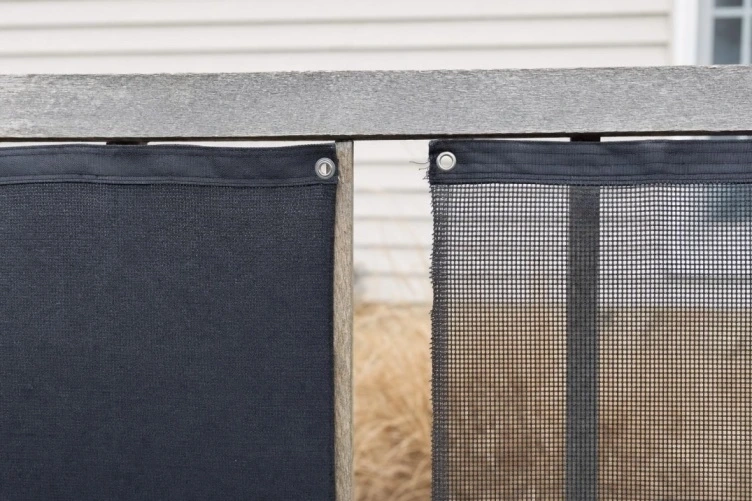
Black mesh fabric works well on Colorado properties when you match the weave to the state's specific stress test: intense UV at altitude, wind on exposed lots, hail season, which runs from spring through September, and freeze-thaw swings that can hit 40 degrees in a single day. Get the blockage rating and coating right and the fabric holds its color and shape for a decade. Get it wrong and a solid panel becomes a sail on the first Front Range wind event.
Colorado's Sun Changes the UV Math
Denver sits at 5,280 feet, and UV exposure runs roughly 25% to 30% higher there than at sea level. A fabric rated for 70% to 90% UV block at a lower elevation gets tested harder here. Look for a listed UV-stabilization rating and a manufacturer warranty of at least 10 years before buying for a Front Range yard, and expect a dark mesh to fade faster on a south- or west-facing fence line than the same product on a shaded north side.
Hail Season and What Mesh Fabric Actually Survives
Colorado's hail season runs from spring through September, concentrated along the Front Range from Denver through Colorado Springs. Mesh fabric does not take direct hail damage the way a roof or siding does, since the open weave lets hailstones pass through rather than impact a solid surface. The real hail-season risk is wind that arrives with the storm: gusts over 50 mph are common during Front Range hail events, and a tightly woven or solid vinyl panel catches that wind like a sail. A more open HDPE weave sheds wind load better during the exact storms that also bring hail.
Privacy Rating Versus Wind Load: The Trade-off
Manufacturers list privacy as a blockage percentage: around 90% for HDPE privacy screens, 95% for closed polypropylene, and 100% for solid vinyl. Higher blockage means more wind resistance on the fabric, which matters on an exposed corner lot in Aurora, Broomfield or Castle Rock where wind runs unobstructed across open land. On a tighter Denver infill lot with buildings breaking the wind, a higher-blockage fabric is a better bet. On an open Front Range or plains-adjacent lot, a slightly more open weave around 70% to 85% commonly lasts longer even though it gives up a little privacy.
Freeze-Thaw and Colorado's 40-Degree Daily Swings
The Front Range regularly swings 30 to 40 degrees between a morning low and afternoon high, and that cycle repeats through fall and spring freeze-thaw season. Vinyl-coated polyester mesh needs a cold-crack rating checked before a Colorado winter, since a product rated for a milder climate can stiffen and crack at grommets during a hard freeze. HDPE shade cloth commonly handles cold better and some heavy-duty product lines are rated to operating temperatures near minus 30 degrees Celsius, which covers even a severe Front Range cold snap.
HOA and Metro District Rules on Fence Screening
Highlands Ranch, Castle Rock, Parker and most planned Front Range communities regulate fence material, height and color through HOA architectural review, and mesh screening attached to an existing fence commonly falls under the same review even though it is not a structural change. Check your covenants before installing, since some associations require a color or product submittal for anything visible from the street or a neighboring lot. A clean, consistent black tone with reinforced grommets and straight hems reads as tidy from the street and clears review more easily than a mismatched or sagging install.
Permits: When Mesh Fabric Needs One and When It Doesn't
Attaching mesh fabric to an existing fence or pergola does not need a building permit in Denver, Aurora, Colorado Springs or most Front Range counties, since it is not a structural addition. A permit becomes relevant if the mesh project is part of a new fence over the height limit in your municipal code, which commonly caps residential fences around 6 feet in front-facing areas and higher in rear yards. Confirm the exact limit with your city or county before a taller install.
Installation for Colorado's Wind and Freeze-Thaw Cycle
- Fastener spacing: Every 12 to 18 inches on a sheltered lot, tightened to 12 inches or closer on an exposed Front Range site.
- Tension: Keep panels taut but not drum-tight, so the fabric can move slightly during a wind gust instead of tearing at the seams.
- Hardware: UV-rated ties or hog rings last as long as the fabric itself; standard zip ties degrade faster under Colorado sun.
- Seasonal check: Inspect after the spring freeze-thaw cycle and again after peak hail season in September, and re-tension as needed.
Comparing the Three Main Materials for a Front Range Property
| Material | Best for | Colorado watch-out |
|---|---|---|
| HDPE shade cloth (knitted) | Patios, pergolas, breezy lots | Fire-rated versions are less common |
| Vinyl-coated polyester | Solid privacy, printable, fire-rated options | Check cold-crack rating before winter |
| Polypropylene-coated mesh | Fire-rated commercial or multi-family use | More niche sourcing; confirm tested standard |
A commercial-grade option worth reviewing for a project that needs a listed fire rating and welded seams is black mesh fabric from a supplier such as Renegade Plastics, which tests to NFPA 701 and offers solvent and bleach resistance for wash-down areas.
Does Privacy Screening Add Value When Selling a Front Range Home?
A well-installed, current-looking privacy screen supports a stronger first impression during a showing on a tight Denver or Aurora infill lot, especially where the backyard borders a busy street or a neighboring second story. It is a lower-cost fix than fence replacement and worth including in a pre-listing walk-through. Review it alongside other exterior items using the Preparing and Adding Value Before Selling guide, and confirm which upgrades actually move your number with a Smart Pricing Report.
Care and Longevity in Colorado's Climate
Rinse dust off with a hose and wash with a mild detergent; avoid pressure washing unless the manufacturer's spec sheet allows it. Re-tension ties once a year, ideally each spring after freeze-thaw season settles. Some HDPE product lines carry 10-to-15-year fabric warranties, though a warranty covers material defects, not appearance after a decade of Front Range sun and wind.
Mag Chloride, Dust and a Front Range Driveway Fence
Colorado Department of Transportation and most Front Range cities apply magnesium chloride to roads before winter storms, and overspray settles on nearby fences and mesh screening near a driveway or a street-facing yard. Vinyl-coated and polypropylene-coated mesh clean off with a mild detergent rinse. Uncoated or lower-grade HDPE can hold a dull residue over a season, so a driveway-facing panel is one place where the coated materials earn their higher price.
Where to go next
- Preparing and Adding Value Before Selling
- Get a Smart Pricing Report for your Colorado home
- Explore homes for sale in Highlands Ranch
- Explore homes for sale in Castle Rock
- The Colorado Home Seller's Guide
- Search every home for sale in Colorado
Talk to the Kenna Real Estate Group
The Kenna Real Estate Group helps Front Range homeowners sort which backyard and exterior upgrades actually pay off before a sale and which ones a buyer will redo anyway. Call or text 303-955-4220. A live person answers. Not a robot, not a phone tree. Ready to see what's on the market instead? Search every home for sale in Colorado.
Homes for sale that match this post
- HOA Rules and Fees Guide in Denver
- Multi Family Homes in Denver
- Homes with Fenced Yard in Denver
- All homes for sale in Denver
Guides
Questions about any home in Colorado? Call or text 303-955-4220. A live person answers.


