$345,000
Pending
3
Beds
2
Baths
1538
Sqft
0.0202
Acres
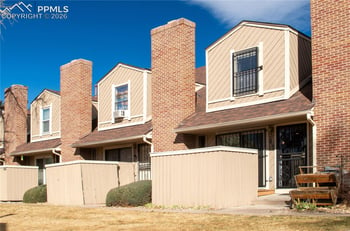
3300 W Florida Ave #48, Denver, CO 80219
MLS#: 9397860
.jpg)


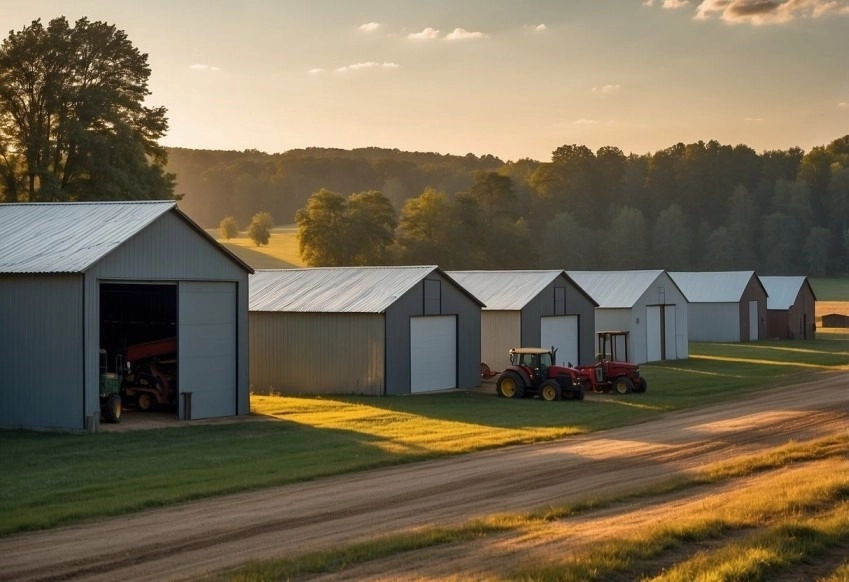
A prefabricated steel barn or shed on Front Range acreage needs three things before the trucks show up: a building permit from the county, footings dug below the local frost depth, and a structure engineered for Colorado snow and wind loads. Skip any one of those and the building becomes a problem at resale, not an asset.
This matters on the Front Range because so much of the Denver metro's edge counties are still acreage. Douglas, Elbert, Weld, Adams and El Paso all have working horse properties, hobby farms and 5-to-40-acre parcels where a steel building is the difference between usable land and a pasture with nowhere to store equipment.
In most cases, yes, once the building passes a small footprint. Most Colorado counties and cities exempt sheds under roughly 120 square feet with no electrical or plumbing from a building permit, but anything larger, anything on a permanent foundation, or anything with power run to it needs a permit reviewed against the county's building code. Douglas County, Elbert County, Weld County and El Paso County each run a separate permit process with a separate fee schedule and inspection sequence. Call the county building department before you order the kit, not after.
Unincorporated land is reviewed by the county. Land inside city limits, including parts of Brighton, Erie, Frederick and Johnstown, goes through that city's building department instead, and its rules on setbacks and height are not always the same as the county around it.
Frost depth on the Front Range commonly runs 30 to 36 inches below grade, and most jurisdictions require footings to sit below that line so seasonal freeze-thaw does not heave the slab or posts. A prefab steel building set on a shallow gravel pad instead of engineered footings is the single most common reason a Colorado outbuilding cracks, racks, or develops gaps at the doors within a few winters.
The Denver metro's clay soils make this worse than in many other states. Expansive, bentonite-rich clay swells when it gets wet and shrinks when it dries, and a footing that is too shallow rides that movement every season. A geotechnical soil report, required for most permitted outbuildings, tells the engineer how deep and how wide the footings need to be for that specific lot.
Building codes on the Front Range set minimum roof snow loads and wind speeds by elevation and county, and both climb as you move toward the foothills and up in elevation. A steel building engineered for a lower-elevation county code does not automatically pass in a higher, windier location. The manufacturer's engineering package has to be stamped for the specific address, not for "Colorado" as a whole, and the county reviews that stamp as part of the permit.
A pole barn sets pressure-treated posts directly into the ground or into concrete piers, with steel or wood siding attached to a wood frame. A prefabricated steel building is a pre-engineered metal frame bolted to a concrete foundation, shipped as a kit. Both work on Colorado acreage; the choice comes down to budget and use.
Not on its own. Colorado's agricultural property tax classification depends on how the land is used, primarily whether it produces income from crops or livestock, not on the buildings sitting on it. A barn that supports the agricultural use, such as equipment storage or livestock shelter, does not by itself disqualify a parcel from ag status. Check with the county assessor before you build if the parcel sits near the acreage threshold, since the assessor reviews classification every year.
Rural acreage commonly sits outside any HOA, but a growing number of Front Range exurbs, especially newer developments in Weld, Douglas and Elbert counties, sit inside a metro district or a covenant-controlled community with an architectural review committee. Those covenants can restrict outbuilding height, exterior color and material, and some ban steel siding outright in favor of a barn-matching finish. Read the covenants before you order a kit; an architectural review denial after the building arrives is an expensive mistake.
Costs vary by size, foundation type and interior finish. These are installed ranges, including the concrete slab and basic engineering, not the bare kit price.
| Structure | Typical size | Installed cost range |
|---|---|---|
| Basic storage shed | 12 ft x 20 ft | $6,000 to $12,000 |
| Detached garage or workshop | 24 ft x 30 ft | $25,000 to $45,000 |
| Pole barn, unfinished interior | 30 ft x 40 ft | $20,000 to $40,000 |
| Equestrian or equipment barn | 40 ft x 60 ft | $45,000 to $90,000 |
Colorado's hail season runs from spring through September, and the Front Range sees some of the country's most frequent large-hail events. A steel roof and siding system holds up better against hail than asphalt shingles or wood siding, though cosmetic denting on lighter-gauge panels remains possible in a severe storm. Ask the manufacturer for the panel gauge and any hail rating before you buy, and confirm with your insurance agent how the structure is covered.
Yes, and doing it as part of the original permit is far cheaper than trenching a separate line later. A sub-panel fed from the main house electrical service, sized for the intended use, is the common approach for a workshop or heated garage; a simple storage shed commonly skips power entirely. Running water to a barn adds a frost-proof hydrant or a heat-traced line buried below frost depth, since a standard hose bib freezes and cracks in a Colorado winter.
A permitted structure gets added to the county assessor's record of the property and factors into the assessed value at the next reassessment cycle. This is a separate question from agricultural classification: the building's value is assessed, but it does not, on its own, change whether the land underneath qualifies as agricultural. An unpermitted structure is not on the assessor's record at all, which is its own problem at resale.
On acreage listings, a permitted, well-built outbuilding is a real selling point. Buyers shopping horse properties and hobby farms search specifically for barns, shops and equipment storage, and an unpermitted structure complicates a sale because the buyer's lender or title company can flag it during underwriting. A permit record on file with the county is worth more at closing than the building itself.
The Kenna Real Estate Group's Smart Pricing Report accounts for outbuildings, acreage and permit status when pricing a Front Range property; see how we price acreage and horse properties for sale for a sense of how that value gets calculated.
Whether you are buying acreage that needs a barn or selling a Front Range property that already has one, the Kenna Real Estate Group prices and markets outbuildings, permits and land together, not as an afterthought. Call or text 303-955-4220. A live person answers. Not a robot, not a phone tree. Or search every home for sale in Colorado, including acreage and horse properties.
Questions about any home in Colorado? Call or text 303-955-4220. A live person answers.
Most Front Range counties require an engineered foundation and a manufacturer's engineering package stamped for your county's snow and wind loads before they issue a permit.
The county can require removal or a retroactive permit, and an unpermitted structure commonly surfaces during a home sale when the buyer's lender or appraiser flags it.
Yes, but the county reviews setbacks from the septic field and well before issuing the permit, so confirm those distances with the health department first.
Many do through architectural review covenants, commonly requiring a color or siding material that matches the main house, so check the covenants before ordering a kit.
Permit and plan review fees vary by county and by the value of the structure; most Front Range counties post a fee schedule online, so check the specific county before budgeting.
A detached structure needs to be added as scheduled property on your policy, and a permitted, engineered building is easier to insure than an unpermitted one.
A steel building resists hail and wind better than a wood-frame shed, but it is not a certified storm shelter unless it is specifically engineered and rated as one.
Start with the Colorado Horse Property Buying Guide, then search every horse property for sale in Colorado.
Buying or selling horse property in Colorado? Call or text 303-955-4220. A live person answers. Not a robot, not a phone tree.